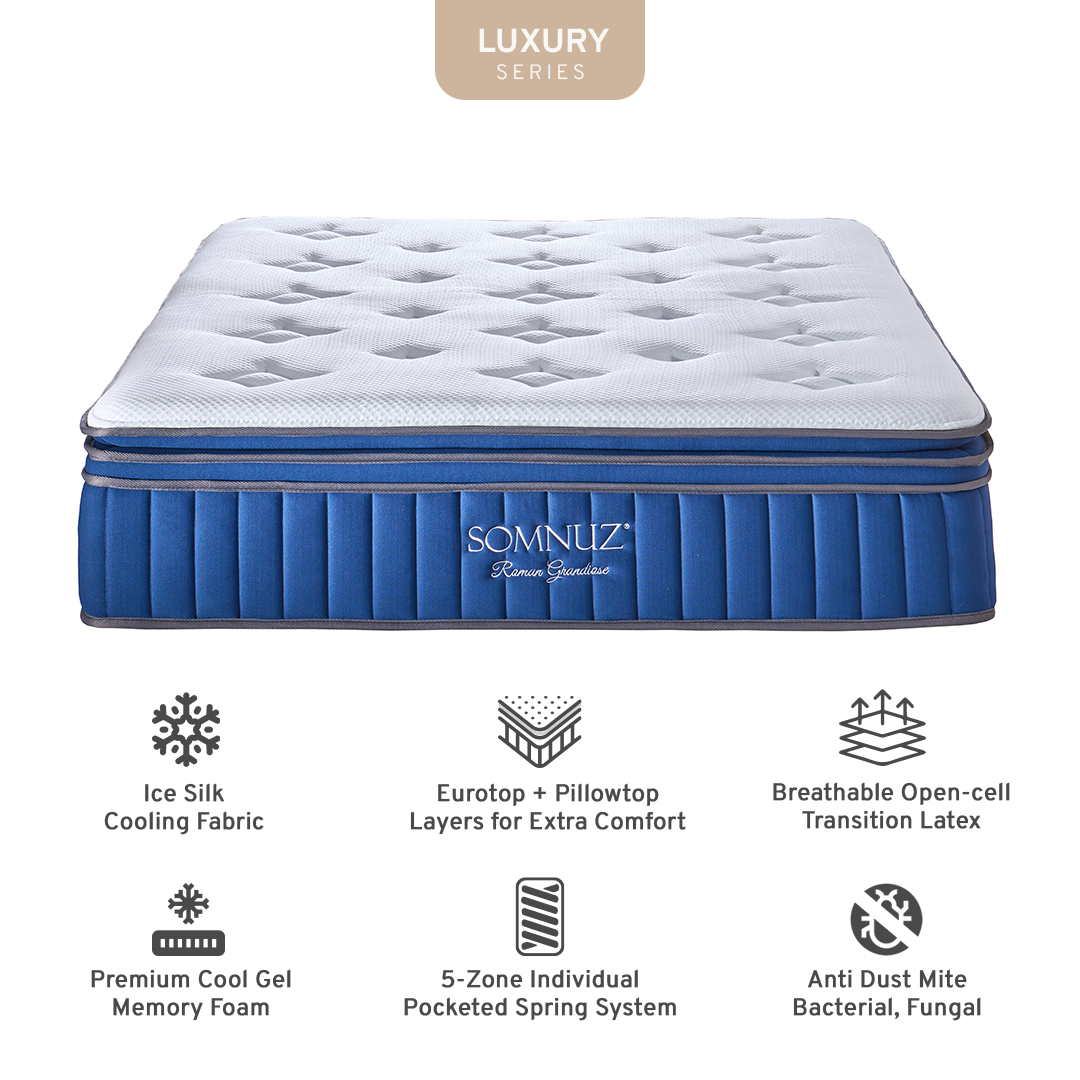


The best mattress for combination sleepers should make movement feel easy. If you shift between side, back, and sometimes front sleeping, you need a mattress that supports different positions without feeling too soft, too hard, or difficult to turn on.
Combination sleepers often need balance. A very soft mattress may feel comfortable at first, but it can make turning harder if the body sinks too deeply. A very firm mattress may feel stable, but it may not offer enough cushioning when sleeping on the side.
For Singapore homes, breathability matters too. If you move often because the mattress feels warm or stuffy, your sleep may feel less settled. A suitable mattress should support movement, comfort, and airflow through the night.
What Combination Sleepers Need
Combination sleepers change positions during sleep. This means the mattress needs to perform well in more than one way.
A good mattress should offer:
-
Balanced comfort
-
Responsive support
-
Ease of movement
-
Moderate cushioning
-
Stable edges
-
Breathability
- Motion control if shared
Side sleeping may need shoulder and hip cushioning. Back sleeping may need steadier support. If you move often, the surface should not feel like it holds you down.
The best mattress for combination sleepers should adapt to your movement without losing stability.
Why Responsiveness Matters
Responsiveness refers to how quickly the mattress reacts when you move. A responsive mattress makes turning feel easier.
If a mattress is too slow to respond, you may feel stuck. This can happen with some deep contouring surfaces. If a mattress is too bouncy, it may feel less settled, especially for couples.
A balanced responsive feel often works well. It gives enough comfort when lying still and enough lift when turning.
This is why combination sleepers often prefer medium to medium-firm mattresses rather than very soft or very hard options.
Mattress Types to Compare
A latex mattress may suit combination sleepers who prefer a buoyant, responsive surface. It can feel easier to move on and may suit those who dislike deep sinking.
A pocketed spring mattress may suit those who want responsive support with reduced motion transfer. This can be helpful for couples where one person moves often.
A memory foam mattress may suit combination sleepers who enjoy cushioning, but it should not feel so deep that turning becomes difficult. A slightly firmer or more responsive memory foam design may be better than a very plush one.
Hybrid mattresses can also work well because they may combine cushioning with support and responsiveness.
The right choice depends on your body, preferred feel, and how often you change positions.
Choose the Right Firmness
Combination sleepers usually need a firmness that works across positions. Medium or medium-firm comfort is often a practical starting point, but it still depends on body weight and preference.
If you are lighter, a medium mattress may feel firmer to you. If you are heavier, the same mattress may feel softer. This is why testing matters.
When trying a mattress, do not stay in one position only. Move from side to back, then back to side. Notice whether the mattress supports you in each position and whether turning feels natural.
A good mattress should feel comfortable in motion, not only when lying still.
Breathability for Restless Sleepers
Some people change positions because the mattress feels warm. In Singapore’s humid climate, heat comfort can affect how settled the night feels.
Look for breathable materials, a suitable cover, and bedding that does not trap too much warmth. If your room has limited airflow, consider using a fan, air-conditioning dry mode, or lighter sheets.
A mattress protector should also be breathable. A thick or plasticky protector may reduce comfort, especially for sleepers who move often.
The best mattress for combination sleepers should help you feel comfortable enough to settle naturally.
Motion Control for Couples
If you are a combination sleeper sharing a bed, motion control matters. Frequent turning can disturb a partner if the mattress transfers movement strongly.
Pocketed spring, foam, latex, and hybrid mattresses can all manage motion differently. Test this in person if possible. Ask your partner to lie still while you move between positions, then switch.
Edge support also matters. If you move often, stable edges can help the mattress feel secure across the full surface.
A shared mattress should support movement without making the bed feel restless.
When to Replace Your Current Mattress
Your current mattress may not suit combination sleeping if it makes movement difficult or feels uncomfortable in certain positions.
Consider replacing it if:
-
You feel stuck when turning
-
The mattress dips in the middle
-
It feels too soft or too firm
-
You wake often to adjust position
-
It feels too warm
-
Your partner feels your movement strongly
-
The edges feel weak
- The mattress no longer feels supportive
You can compare options through the Somnuz mattress collection and think about which mattress type supports movement best.
For extra guidance, Somnuz’s Sleep Well page can help you understand comfort, support, and fit.
Try the Mattress in More Than One Position
Combination sleepers should test mattresses differently from people who sleep in one position. Do not only lie still on your back for a few seconds.
Try your usual side position, then roll to your back. Turn again. Sit at the edge. Check whether the mattress feels stable and easy to move on.
At a mattress showroom Singapore, you can try the range in person and receive calm showroom guidance based on how you actually sleep.
The best mattress for combination sleepers should support movement, comfort, and breathability throughout the night.
Frequently Asked Question
What is the best mattress for combination sleepers?
The best mattress for combination sleepers is usually balanced, responsive, and supportive across different positions. It should allow easy movement without feeling unstable.
Is memory foam good for combination sleepers?
Memory foam can work if it is not too deep or restrictive. Combination sleepers may prefer a more responsive memory foam feel.
Is latex good for combination sleepers?
Latex may suit combination sleepers because it often feels buoyant and responsive, making it easier to change positions.
Should combination sleepers choose firm or soft?
A medium or medium-firm feel is often a practical starting point, but the right firmness depends on body weight, comfort preference, and sleeping positions.
What should couples look for if one person is a combination sleeper?
Look for motion control, edge support, responsiveness, and a comfort level that suits both sleepers.
Find a Mattress That Moves With You
The best mattress for combination sleepers should support side, back, and shifting sleep positions without making movement feel difficult. Good value comes from choosing balanced comfort, breathability, and responsiveness for Singapore’s humid conditions.
Browse the Somnuz mattress collection to compare mattress options for different sleep styles. Or visit our showroom for honest guidance on finding a mattress that suits how you naturally sleep.