

How to Cure Insomnia
Many people search for how to cure insomnia when what they really want is a better way to fall asleep.
But better sleep often starts with the basics, such as your mattress, pillow, room temperature, bedtime habits, and overall bedroom setup. These factors all affect how easy it feels to relax at night.
If you want a broader guide to better sleep, start with our sleep well page. If you want to have better options for your bed setup, you can compare our mattresses.
1. Use a Good Mattress
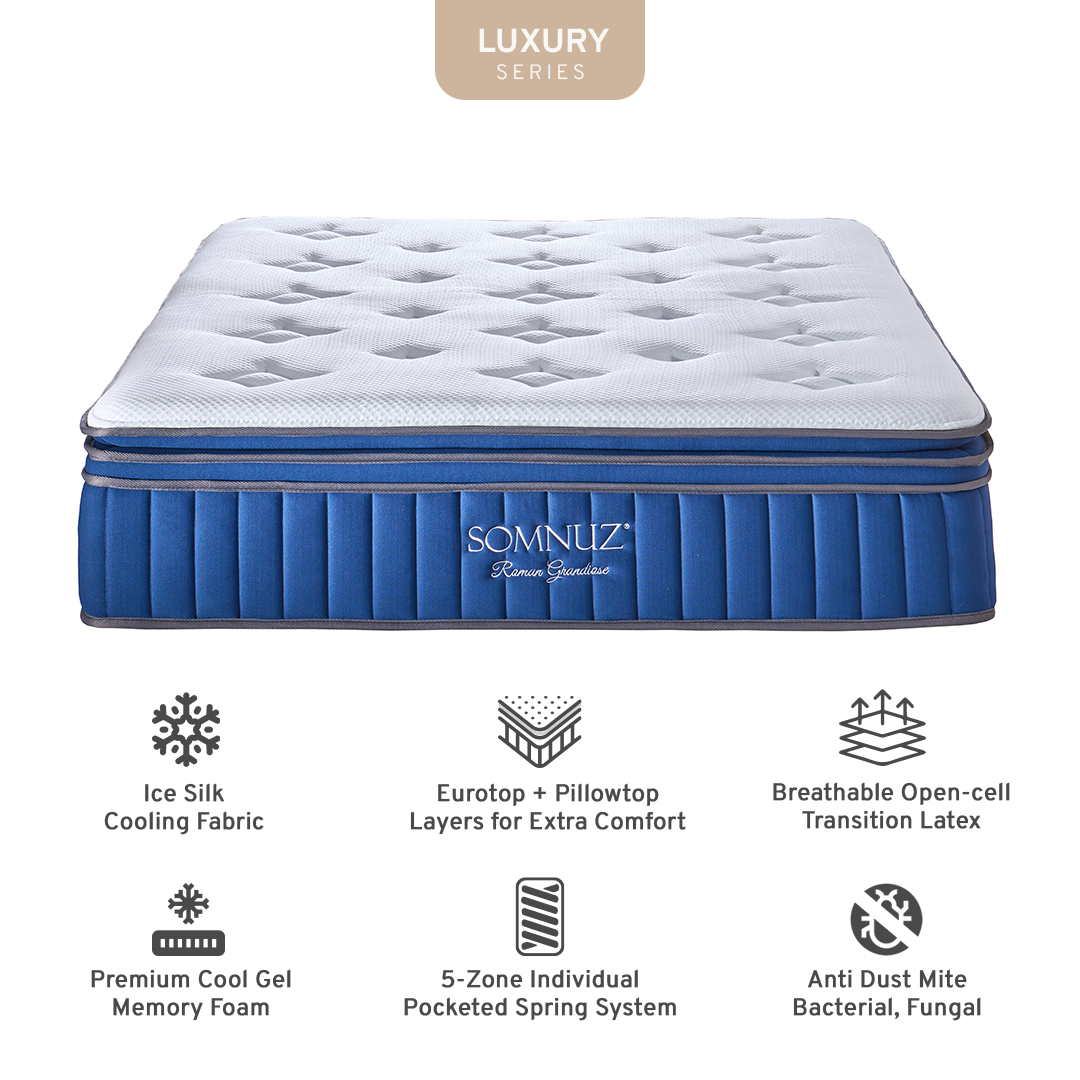
If you want to improve sleep naturally, the first thing to review is your mattress, which affects support, comfort, airflow, and how stable your body feels when you lie down. If it sags, traps heat, feels uneven, or no longer suits your sleeping style, it may quietly work against a better night’s rest.
A more suitable mattress can help create a sleep surface that feels calmer and easier to settle into. Somnuz offers different options for different sleep needs.
- Somnuz Comforto suits sleepers who want a cooler and more breathable feel.
- Somnuz Comfort Night suits those who prefer a softer and more cushioned surface.
- Somnuz Roman Supreme suits sleepers who want a firmer and more supportive feel.
- Somnuz Comfy is a balanced everyday option for practical comfort and value.
If your current bed no longer feels right, browse all our mattresses to narrow down the best match for your sleep style.
2. Keep Your Bedroom Cool and Comfortable
A warm, stuffy bedroom can make it harder to relax at the end of the day. In Singapore, heat and humidity can affect comfort at night, so it helps to keep your room feeling cool, fresh, and easy to sleep in.
Use bedding that feels light and breathable. Avoid layering too much if it makes the bed feel heavy or warm. Good airflow, a comfortable room temperature, and a sleep surface that does not trap heat can all help create a more restful environment.
You can also improve your overall setup with our throws & blankets and other sleep essentials that make the bedroom feel more comfortable.
3. Build a Consistent Bedtime Routine
Sleep often feels easier when your evenings follow a familiar pattern. A bedtime routine does not need to be long or complicated. It simply needs to help your day slow down in a steady way.
Try going to bed and waking up at similar times each day, where possible. Even small routines can help signal that the day is ending and rest is coming next.
This could be as simple as washing up, changing into comfortable clothes, dimming the lights, and spending a few quiet minutes away from work.
4. Reduce Light, Noise, and Screen Stimulation Before Bed
A bright, noisy, or busy bedroom can make it harder to feel sleepy. Late-night screen use, strong lighting, and constant stimulation can keep your mind active when you are trying to wind down.
Try lowering the lights later in the evening. Keep noise low if possible. Put some distance between bedtime and long phone scrolling, work messages, or anything that keeps your brain alert. Even a small change here can help the room feel calmer and more sleep-friendly.
A restful night often starts before your head touches the pillow. The quieter your environment feels, the easier it may be to ease into sleep.
5. Use the Right Pillow and Bedding
A mattress matters, but it is only one part of a good sleep setup. Pillows and bedding also shape how comfortable your bed feels each night.
A pillow that feels too high, too flat, or too firm may make it harder to feel settled. Bedding that feels too heavy or too warm can also affect comfort. Sometimes the answer is not one big change, but a few smaller changes that work together.
If your bed no longer feels inviting, it may be time to improve the full setup. Browse our Somnuz pillows to build a sleep space that feels more complete.
6. Make Your Bed a Place for Rest
It helps when your bed feels connected to rest, not stress. If possible, avoid turning the bed into a space for work, endless scrolling, or late-night problem-solving.
Your bedroom just needs to feel calmer than the rest of your day. When your bed becomes a space that feels quiet, comfortable, and predictable, it may be easier to wind down when night comes.
If comfort and flexibility are important to your routine, you can also explore [Adjustable Bed] options to improve how your sleep space works for you.
7. Give Yourself Time to Wind Down
One reason sleep can feel difficult is that many people go straight from activity to bedtime without a buffer in between. A short wind-down period can help bridge that gap.
You do not need an elaborate routine. Quiet reading, light stretching, soft music, or a calm shower can all help. The activity matters less than the signal it sends. You are telling your body that the active part of the day is ending.
Even 15 to 30 minutes of slower, quieter time before bed can help make your nights feel more settled.
Create a Better Sleep Setup At Home
Trying to improve sleep does not always mean making one big change. Often, it means improving the whole setup little by little. Start with the bed itself. Then look at the pillow, the bedding, the room temperature, and the flow of your evening.
When all of these parts work better together, the bedroom can feel more supportive, more comfortable, and more restful. That is often the real goal behind searches for how to cure insomnia. People want a sleep routine and sleep space that finally feels easier to live with.