

Arthritis affects joints throughout the body, and sleep is one of the times when joint discomfort is most directly influenced by the sleeping surface. For seniors in Singapore managing arthritis, the right mattress can contribute meaningfully to more comfortable, less disrupted nights.
What Arthritis Means for Mattress Needs
Arthritis creates joint pain and inflammation that can be aggravated by pressure on affected joints during sleep. The hips, shoulders, knees, and spine are common locations for arthritic involvement, and these are also the primary contact points between the body and the mattress during sleep.
A mattress that creates concentrated pressure at these points will cause discomfort that can disrupt sleep or cause stiffness that is worse in the morning. A mattress that distributes load more evenly and accommodates the body's shape reduces this concentrated pressure.
Key Considerations for Arthritic Sleepers
Pressure Relief
This is the most important consideration for seniors with arthritis. A mattress that conforms to the body's shape and reduces localised pressure at arthritic joints is significantly more comfortable than one that provides uniform resistance regardless of body shape.
Memory foam's body-contouring properties make it well-suited to pressure relief. A memory foam mattress softens under body heat and weight, distributing load across a larger surface area and reducing the pressure at joint contact points. In Singapore's climate, open-cell foam with a breathable cover manages warmth effectively.
Natural latex provides responsive cushioning that accommodates the body's shape without the deeper sinking of memory foam. A latex mattress in a medium to medium-soft specification provides pressure relief with a more immediately responsive feel.
Appropriate Firmness
A mattress that is too firm maintains full resistance at arthritic contact points, not providing the pressure relief that arthritic joints need. A mattress that is too soft allows deep sinking that can leave joints in positions that increase discomfort over a night of sleep.
Medium to medium-soft tends to suit most arthritic sleepers well, though individual variation exists. Side sleepers generally need more surface cushioning than back sleepers.
Ease of Movement
Seniors with arthritis often have difficulty with movement transitions, including getting in and out of bed. Total bed height is a relevant factor. A sleeping surface at approximately knee height, around 55 to 60 centimetres from the floor, allows a seated position on the bed's edge with feet flat on the floor, making standing up considerably easier.
A mattress that is not overly deep-sinking also makes movement during the night easier. Memory foam's slower response to movement can feel like resistance for some seniors. A latex mattress with its more immediate return may feel easier to move on.
Temperature in Singapore's Climate
Seniors often have different thermoregulatory responses than younger adults. In Singapore's warmth, a breathable mattress construction is particularly important. Natural latex and pocketed spring or hybrid options manage sleeping temperature better than dense foam.
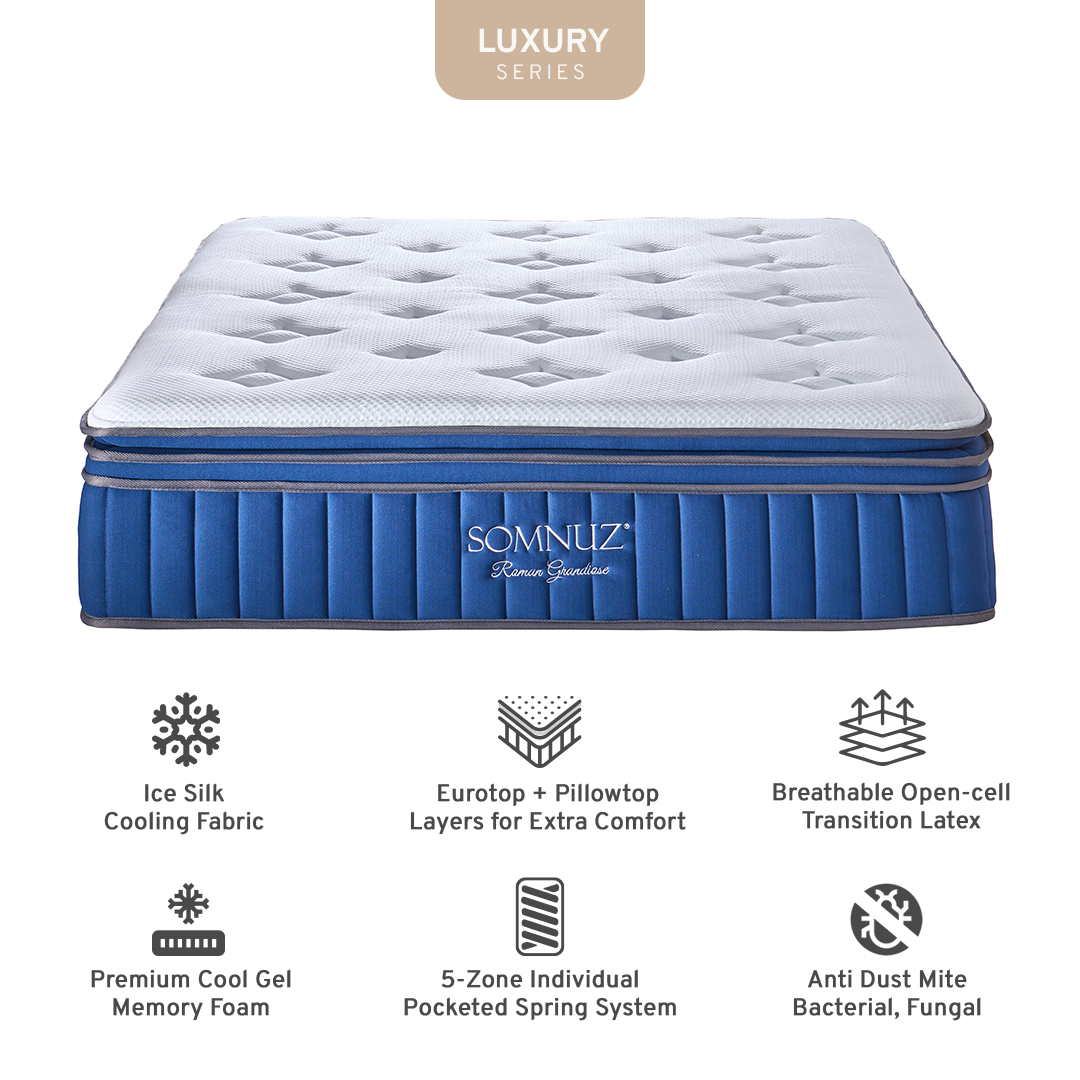
The Somnuz mattress collection includes options suited to Singapore's conditions across different firmness levels. For guidance on what suits arthritic sleep needs, visit our showroom in Singapore to try options in the relevant sleeping position. The Sleep Well resource page provides broader guidance. Always consult a healthcare provider for specific medical guidance related to arthritis management.
Frequently Asked Questions
What mattress firmness suits seniors with arthritis?
Medium to medium-soft tends to suit most arthritic sleepers by providing pressure relief at affected joints without allowing excessive sinking. The right firmness depends on sleeping position and which joints are most affected.
Is memory foam good for arthritic joints?
Memory foam's body-contouring properties can significantly reduce pressure at arthritic contact points, making it well-suited to arthritic sleepers. In Singapore's climate, open-cell construction with a breathable cover is preferred.
Is a firm mattress recommended for arthritis?
Not generally. A firm mattress does not provide the pressure relief that arthritic joints benefit from. A medium to medium-soft surface with good contouring properties tends to be more appropriate.
What bed height is best for seniors with arthritis?
A total sleeping height of approximately 55 to 60 centimetres allows a comfortable seated position on the bed edge with feet flat, making standing easier. Very high or very low beds make the transition to standing more difficult for those with joint concerns.
Can a mattress topper help arthritic seniors?
A medium-soft topper in latex or open-cell foam can add meaningful pressure relief to an existing firmer mattress without full replacement. This can be a practical interim solution if the underlying mattress is still structurally sound.
Should seniors with arthritis consult a doctor about mattress choice?
Yes. A healthcare provider familiar with the specific arthritis presentation, joints involved, and degree of involvement can provide useful guidance on sleeping positions and surface requirements tailored to the individual.
Find a Mattress That Supports Comfortable Sleep With Arthritis
The right pressure relief and appropriate firmness make a meaningful difference to arthritic sleep.
Browse the Somnuz mattress collection across different constructions. Or visit our showroom in Singapore to try options in your sleeping position.