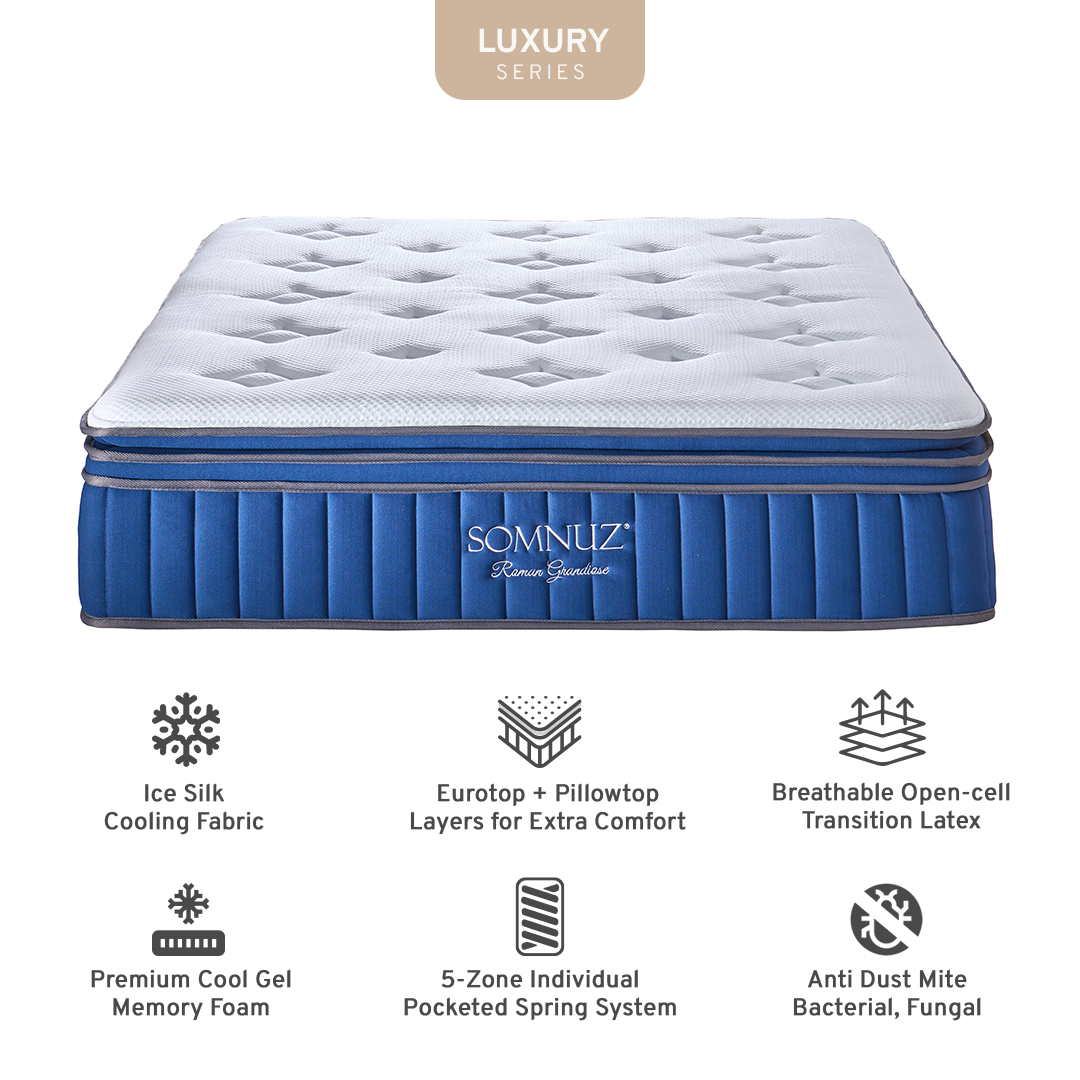


The best mattress pressure point relief does not come from softness alone. It comes from the right balance of cushioning, support, breathability, and fit.
Many people notice pressure around the shoulders, hips, lower back, knees, or heels when their mattress does not support the body evenly. Some mattresses feel soft at first but allow too much sinking. Others feel stable but do not give enough cushioning where the body carries more weight.
For Singapore homes, the right mattress also needs to feel comfortable in humid nights, suit shared sleeping spaces, and support everyday rest without making the bedroom feel warmer than it needs to. This guide explains what to look for so you can compare your options with more confidence.
What Pressure Point Relief Really Means In A Mattress
Pressure point relief means the mattress helps your body rest more evenly across the sleep surface.
When one part of the body carries too much pressure, sleep can feel less settled. This often happens around areas that press more deeply into the mattress.
Common pressure areas include:
- Shoulders
- Hips
- Lower back
- Knees
- Heels
A good pressure-relieving mattress should cushion these areas while still keeping the rest of the body supported. This is why the best choice is not always the softest mattress.
If a mattress is too soft, the body may sink unevenly. If it is too firm, the shoulders and hips may not get enough cushioning. A better fit usually sits between both extremes, with enough give for comfort and enough support for stability.
Why Firmness Alone Does Not Decide Comfort
Firmness matters, but it does not tell the full story.
Two mattresses can both be called medium-firm but feel different once you lie down. One may have a close, body-hugging feel. Another may feel more lifted and responsive. This difference often comes from the materials, comfort layers, and support system inside the mattress.
Soft, Medium, And Firm Feel Explained Simply
Here is a simple way to understand firmness:
- Soft feel: More cushioning with deeper sink
- Medium feel: A balanced feel that works for many sleepers
- Medium-firm feel: Steadier support with some cushioning
- Firm feel: Less sink and a more stable surface
For pressure point relief, the goal is not to chase one firmness label. The goal is to find a feel that suits your body shape, sleep position, and comfort preference.
Side sleepers often need more cushioning around the shoulders and hips. Back sleepers usually need a balanced surface that supports the lower back. Stomach sleepers often prefer a steadier feel that limits deep sinking around the midsection.
Comfort is personal. A mattress that feels supportive for one person may feel too firm or too soft for another.
Mattress Materials That Can Support Pressure Point Relief
Different mattress materials ease pressure in different ways. Knowing how each one feels can help you compare more confidently.
Memory Foam For Close Contouring
Memory foam is often linked with pressure point comfort because it can contour closely around the body. This helps spread weight more evenly across the mattress surface.
For sleepers who feel pressure around the shoulders, hips, or knees, memory foam mattress options may offer a more cushioned and body-hugging feel.
The main thing to consider is heat. Some memory foam mattresses can feel warmer if the materials are not designed with airflow or cooling support in mind. In Singapore’s humid climate, breathability matters as much as cushioning.
Latex For Responsive Cushioning
Latex has a more responsive feel. It can cushion the body without the same deep sink that some memory foam mattresses provide.
This can suit sleepers who want pressure relief but still prefer easier movement on the mattress. It may also appeal to people who dislike feeling “stuck” in bed.
Latex mattress options can be useful for those who want a balance of comfort, bounce, and breathability. This is especially relevant in Singapore homes where airflow and cooling comfort are practical concerns.
Pocketed Springs And Hybrid Support
Pocketed springs are designed to move more independently than older spring systems. This can help the mattress respond to the body with more targeted support.
When paired with a suitable comfort layer, pocketed spring mattress options can offer steady support, better airflow, and reduced partner disturbance.
This matters for couples sharing a bed in HDB, condo, or landed homes. Less motion transfer can make the bed feel more settled when one person changes position or gets in and out of bed.
Hybrid mattresses often combine comfort layers with spring support. This can be a practical choice for shoppers who want cushioning for pressure areas and a more stable support base.
Match Pressure Relief To Your Sleep Position And Home
The best mattress choice depends on how you sleep and how your bedroom feels at night.
Singapore homes often have shared sleeping spaces, compact bedrooms, and warm nights. This means comfort is not only about pressure relief. It is also about cooling, partner movement, room fit, and ease of daily use.
Side Sleepers
Side sleepers usually place more pressure on the shoulders and hips.
A mattress that is too firm may not allow these areas to settle comfortably. A mattress that is too soft may let the hips sink too much. A balanced mattress should cushion the shoulders and hips while keeping the spine better supported in a natural resting position.
Side sleepers may want to pay close attention to comfort layers, contouring, and how the mattress feels after lying on it for more than a few minutes.
Back Sleepers
Back sleepers often need a mattress that supports the lower back without feeling hard.
A balanced medium or medium-firm feel may work well for many back sleepers, but the right choice depends on body weight and comfort preference. The mattress should feel stable under the lower back while still offering enough surface cushioning for comfort.
Back sleepers should avoid choosing purely based on a “firm is better” assumption. Too much firmness can feel uncomfortable, while too much softness may reduce support.
Couples And Shared Beds
Couples often need to balance two sets of comfort needs.
One person may prefer more cushioning. The other may want a firmer feel. This is where motion control, edge support, breathability, and balanced firmness become important.
For couples, reduced partner disturbance can make a real difference. A mattress that absorbs movement well may help the bed feel calmer when one person turns, sits up, or gets out of bed.
Good airflow also matters. Shared beds can feel warmer, especially in humid Singapore nights. Breathable materials and cooling comfort layers can help the mattress feel more comfortable for longer.
How To Compare Mattress Options With More Confidence
The right choice becomes clearer when you compare comfort, support, cooling, and fit together.
Instead of focusing on one feature, compare the full sleep experience. This helps you avoid choosing a mattress that feels good for five minutes but does not suit your nightly routine.
Use this checklist when comparing mattresses:
- Surface cushioning
- Firmness level
- Support feel
- Cooling and breathability
- Ease of movement
- Motion control
- Room and bed frame fit
- Delivery and after-sales support
- Showroom guidance and comparison support
For a clearer side-by-side view, you can compare our mattresses by comfort type, material, support feel, and sleeping needs.
This helps you narrow down your options before visiting in person or making a purchase online.
Best Mattress Pressure Point Relief In Singapore Starts With The Right Fit
The best mattress pressure point relief in Singapore should feel supportive, breathable, and suited to your body.
Softness can help with cushioning, but support keeps the mattress from feeling unstable. Cooling helps the sleep surface feel more comfortable in humid weather. Motion control matters for couples. Clear guidance matters when you want to choose with confidence instead of guessing.
Somnuz is built around that kind of buying journey. You can review the Somnuz mattress collection online, compare comfort levels, and choose based on how you sleep.
For many shoppers, the most helpful step is trying different feels in person. At the end of the day, pressure point comfort is easier to understand when you can lie down, compare firmness, and ask practical questions. You can visit our showroom for guidance before choosing the mattress that feels right for your home.
Find The Mattress That Fits Your Comfort Needs
Choosing a mattress should feel clear, calm, and supported.
Somnuz helps you compare comfort, support, cooling, and fit with practical guidance before and after purchase. Start with the collection online, narrow your options by sleep position and comfort preference, then try the range in person for added confidence.
Frequently Asked Questions
What is the best mattress for pressure point relief?
The best mattress for pressure point relief is one that balances cushioning and support. It should give enough comfort around the shoulders, hips, and lower back without allowing the body to sink unevenly. The right choice depends on your sleep position, body type, and comfort preference.
Is a soft mattress always better for pressure points?
No. A soft mattress may feel comfortable at first, but too much sink can reduce support. Pressure point relief works best when the mattress cushions heavier areas of the body while still keeping the rest of the body steady.
Which mattress is better for shoulder and hip pressure?
Side sleepers often need more cushioning around the shoulders and hips. Memory foam, latex, or hybrid mattresses may help, depending on how much contouring and responsiveness you prefer. The mattress should not feel too hard under these areas or too soft under the hips.
Can couples choose one mattress for different pressure points?
Yes, but couples should compare comfort carefully. A balanced medium or medium-firm mattress may suit many shared beds, especially when it also offers motion control and breathable comfort. Trying the mattress together can help both sleepers judge support and movement.
Does Singapore’s humid weather affect mattress comfort?
Yes. Warm and humid nights can make some mattresses feel less comfortable if they trap heat. Breathable materials, airflow, and cooling comfort layers are useful factors to consider, especially for shared beds and compact bedrooms.
Should I try a mattress in person before buying?
Trying a mattress in person can help you compare firmness, cushioning, cooling feel, and support more clearly. It is especially useful if you are choosing for pressure point comfort, shared sleep, or a specific sleep position.