

The desire for a non-toxic mattress is understandable. You spend a significant portion of your life in direct contact with your mattress, and wanting that surface to be free from harmful substances is a legitimate health consideration. Understanding what non-toxic actually means in mattress terms, and what certifications provide meaningful independent confirmation, helps you make a well-informed choice.
What Non-Toxic Means in Mattress Terms
Technically, everything is made of chemicals, including water and natural materials. When people search for a non-toxic mattress, they typically mean a mattress that is free from specific substances of concern, including certain flame retardants, volatile organic compounds, heavy metals, formaldehyde, and other identified problematic chemicals used in some mattress manufacturing.
A mattress cannot be literally chemical-free, but it can be free from specific substances at defined safety thresholds. Independent certification is the most reliable way to confirm this.
Certifications That Mean Something
OEKO-TEX Standard 100
This certification tests every component of a textile product for harmful substances and confirms they fall within defined safety limits. For a mattress, this applies to the cover fabric, foam components, and other textile elements. OEKO-TEX is one of the most widely recognised and rigorous textile safety certifications available.
CertiPUR-US
Specifically for foam mattress components, CertiPUR-US certification confirms that the foam was made without certain flame retardants, heavy metals, formaldehyde, and other prohibited substances, and that VOC emissions fall within defined limits. For any foam component in a mattress, this is the most meaningful certification available.
GOLS (Global Organic Latex Standard)
For latex mattresses or latex components, GOLS certification confirms that the latex meets organic standards from the plantation through to the finished product. It confirms both the material origin and the manufacturing process.
GOTS (Global Organic Textile Standard)
For organic cotton and other organic textile components, GOTS certification applies. This is relevant for mattress covers and comfort layer materials using certified organic cotton.
Which Materials Tend to Be Cleaner
Natural materials generally carry lower chemical content than synthetic alternatives when sourced and processed responsibly. A latex mattress made from certified natural latex is one of the most commonly recommended options for those prioritising lower chemical content. Natural latex with GOLS certification provides the most rigorous independent confirmation.
A memory foam mattress with CertiPUR-US certification has been tested to confirm it meets defined standards for prohibited substances and emissions, providing a meaningful assurance even though memory foam is a synthetic material.
Organic cotton covers with GOTS certification avoid the pesticide residues associated with non-organic cotton cultivation.
What Non-Toxic Claims Without Certifications Mean
A mattress marketed as non-toxic or chemical-free without supporting certifications is making an unverified claim. The absence of certification does not mean the product is unsafe, but it does mean the claim cannot be independently confirmed. For those for whom this matters, certifications provide the verifiable basis that marketing language alone cannot.
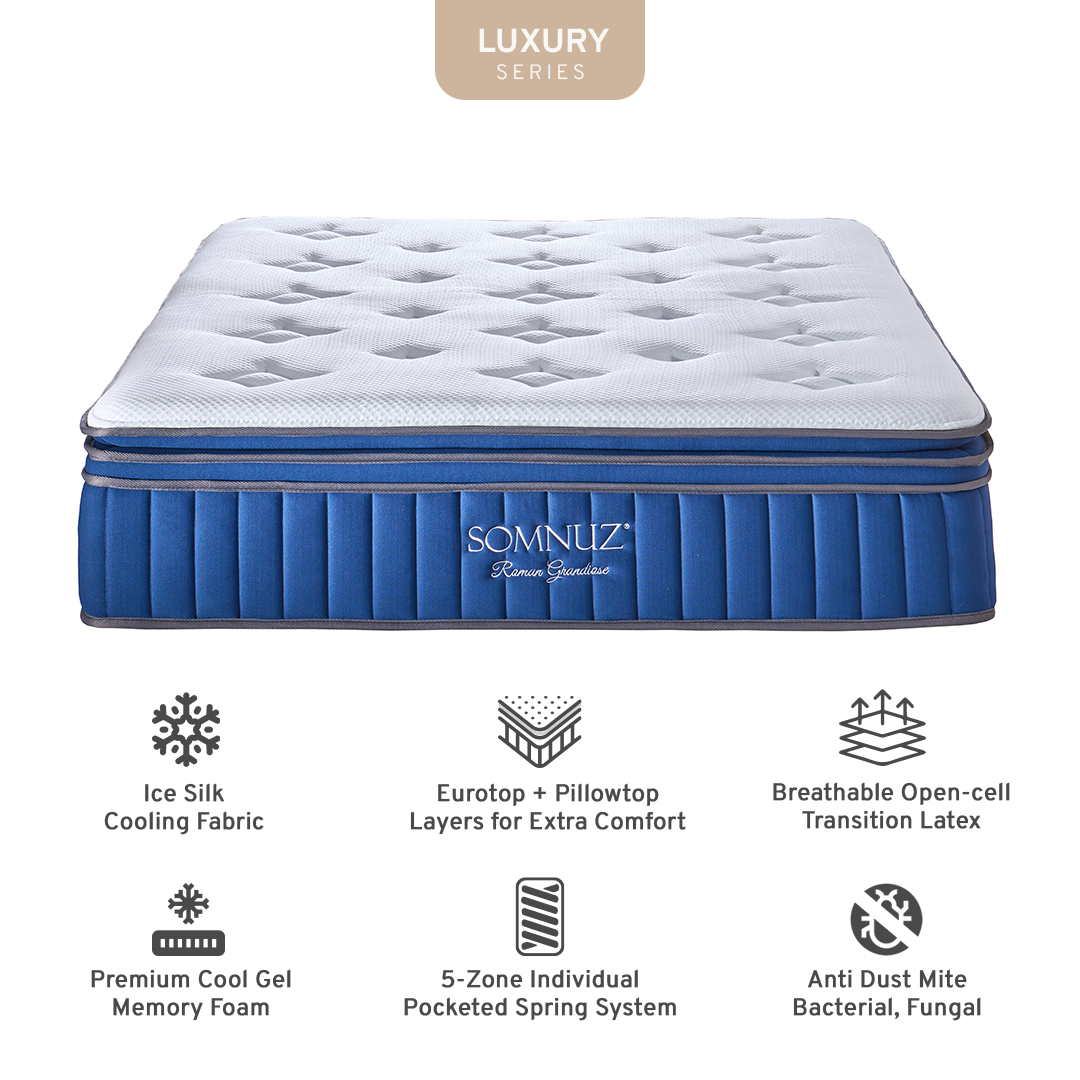
The Somnuz mattress collection includes options with relevant material certifications. For guidance on what suits your needs and priorities, visit our showroom in Singapore. The Sleep Well resource page covers broader sleep environment guidance.
Frequently Asked Questions
What does non-toxic mean for a mattress?
In practical terms, it means a mattress free from specific substances of concern, including certain flame retardants, heavy metals, formaldehyde, and other identified problematic chemicals, confirmed at defined safety thresholds through independent certification.
Which mattress certifications confirm low chemical content?
OEKO-TEX Standard 100 on textiles, CertiPUR-US on foam, GOLS on organic natural latex, and GOTS on organic textile materials are the most widely recognised independent confirmations.
Is a natural latex mattress non-toxic?
Certified natural latex with GOLS certification meets organic standards from source to product. It is one of the most commonly recommended materials for those prioritising lower chemical content, provided it carries the relevant certification.
Does off-gassing from a new mattress indicate toxicity?
Most new mattresses, particularly foam ones, produce some off-gassing smell when first unwrapped. For foam with CertiPUR-US certification, VOC levels have been tested within defined limits. Airing a new mattress in a well-ventilated room before use is a sensible precaution regardless of certification.
Is a more expensive mattress automatically safer?
No. Price does not guarantee the presence or absence of specific substances. Certifications on the specific materials provide more reliable confirmation of safety than price level.
What is the most non-toxic mattress option for Singapore?
A mattress with GOLS-certified natural latex, GOTS organic cotton cover, and relevant certifications on any foam components provides the highest level of independently confirmed low-chemical content. Natural latex also manages Singapore's climate well due to its inherent breathability.
Find a Mattress You Can Feel Good About
Independent certifications provide the most reliable confirmation of material safety.
Browse the Somnuz mattress collection for options with relevant certifications. Or visit our showroom in Singapore for honest guidance on what suits your priorities.