

Sleep is often the part of camping that people underestimate until it goes wrong. A night on the wrong surface leaves you stiff, tired, and counting the hours until you can get back to your own bed. A night on the right camping mattress, one that suits the conditions and the way you sleep, is a genuinely comfortable experience.
Whether you are planning a family camping trip, a weekend hike in Malaysia, or a glamping stay somewhere in the region, this guide helps you understand what to look for in a camping mattress so that sleep is one less thing to worry about while you are away.
Why a Camping Mattress Matters More Than You Might Think
It is easy to assume that roughing it for a night or two means accepting poor sleep as part of the experience. But there is a meaningful difference between basic and genuinely uncomfortable, and much of that difference comes down to what you sleep on.
A camping mattress serves two practical purposes. It provides cushioning between your body and the ground, reducing pressure on your hips, shoulders, and other contact points. And it provides insulation, creating a barrier between you and the ground surface, which draws heat away from your body more quickly than the air above you.
In a tropical climate like Singapore's, warmth retention is less of a concern than it would be in a cold-weather environment. But cushioning and moisture resistance remain important, particularly when you are sleeping on uneven ground or in humid outdoor conditions.
Getting this right means you wake up rested and ready for the next day rather than stiff and reluctant to move.
The Main Types of Camping Mattress
Understanding the options available makes it much easier to choose the right one for your trip.
Self-Inflating Mattresses
A self-inflating mattress uses open-cell foam inside a sealed outer shell. When you open the valve, air is drawn in as the foam expands, partially inflating the mattress on its own. You can top it up with a few breaths for your preferred firmness, then seal the valve.
These mattresses offer a good balance of cushioning, insulation, and packability. They are thicker and heavier than a basic foam pad but more compact than a full air mattress. For car camping or trips where weight is not the primary concern, self-inflating options are a practical and comfortable choice.
Thickness varies, with thicker models providing more cushioning but taking up more space when packed. Most self-inflating mattresses pack down to a manageable roll, making them straightforward to transport in a vehicle or large bag.
Air Mattresses
An air mattress is inflated using a pump, either manual, battery-powered, or electric. They can be made quite thick and comfortable, and larger models can accommodate two people.
For family camping trips, or for glamping setups where comfort is the priority, a good quality air mattress is a practical option. The main considerations are the quality of the construction, particularly the seams and valve, and how you will inflate and deflate it at the campsite.
In humid conditions, moisture can accumulate inside an air mattress if it is not dried and stored properly. Ensuring it is clean and dry before packing away extends its life considerably.
Foam Sleeping Pads
A foam sleeping pad is the simplest and lightest option. It does not inflate or deflate, it cannot puncture, and it requires no maintenance. For hikers and backpackers where pack weight matters significantly, a closed-cell foam pad is often the preferred choice.
The trade-off is cushioning. A foam pad provides a firm, basic sleeping surface rather than the cushioned feel of a self-inflating or air mattress. For one or two nights and a good sleeping bag, it is workable. For multiple nights or anyone who finds firm surfaces uncomfortable, the extra weight of a self-inflating option is often worth carrying.
Inflatable Sleeping Pads
Inflatable sleeping pads are distinct from air mattresses in that they are designed specifically for backpacking, using lightweight materials and a compact packed size. They inflate fully by mouth or with a small pump sack and can be quite comfortable despite their minimal weight.
For those who want a comfortable camping experience without adding significant weight to their pack, a quality inflatable pad offers a reasonable compromise between comfort and portability.
What to Consider for Camping in the Region
Most camping trips from Singapore involve destinations in Malaysia, Indonesia, or other parts of Southeast Asia, where conditions share certain characteristics with Singapore's own climate.
Warmth and humidity are the main environmental factors to keep in mind. A camping mattress with good moisture resistance on the outer surface is more durable and more hygienic in these conditions. Closed-cell foam and well-sealed air mattresses handle moisture better than open materials.
Ground surfaces vary from soft grass to hard-packed soil or wooden platform floors at organised campsites. A mattress with adequate thickness, generally at least 5 centimetres, provides reasonable cushioning on most surfaces. On harder ground, more thickness is noticeably more comfortable.
Insects and ground-level pests are a consideration at many campsites in the region. Keeping your sleeping surface off the ground using a camp cot, or using a thick enough mattress to avoid feeling every irregularity beneath you, is worth thinking about depending on where you are camping.
Camping With Children: What Changes
Camping with children introduces a few additional considerations when it comes to sleep surfaces.
Children are lighter than adults, which means they need less thickness to feel comfortable on a given surface. A standard self-inflating pad that an adult might find borderline adequate is often perfectly comfortable for a child.
Size matters practically too. Children's sleeping pads and smaller air mattresses are available and make more efficient use of tent space than adult-sized alternatives.
For younger children especially, ensuring the sleeping surface has some form of containment, whether a low-walled air mattress or a mat with a light sleeping bag, reduces the chance of them rolling off during the night.
Coming Home: The Difference Your Own Mattress Makes
One of the things many people notice after a camping trip is how much they appreciate their own bed on return. This is not just familiarity. It is the difference that proper support, consistent firmness, and a well-ventilated sleeping surface make to the quality of rest you get.
If you find yourself consistently sleeping better at home than anywhere else, that is a good sign that your home mattress is doing its job well. If the reverse is true, and you are sleeping more comfortably on a camping mat than on your own mattress, that is worth paying attention to.
A worn mattress that has lost its support, developed uneven areas, or retained heat poorly will affect your sleep quality in ways that accumulate over time. If your mattress is approaching eight to ten years of age, or if you are noticing stiffness or poorer sleep at home, it may be time to assess whether it is still serving you well.
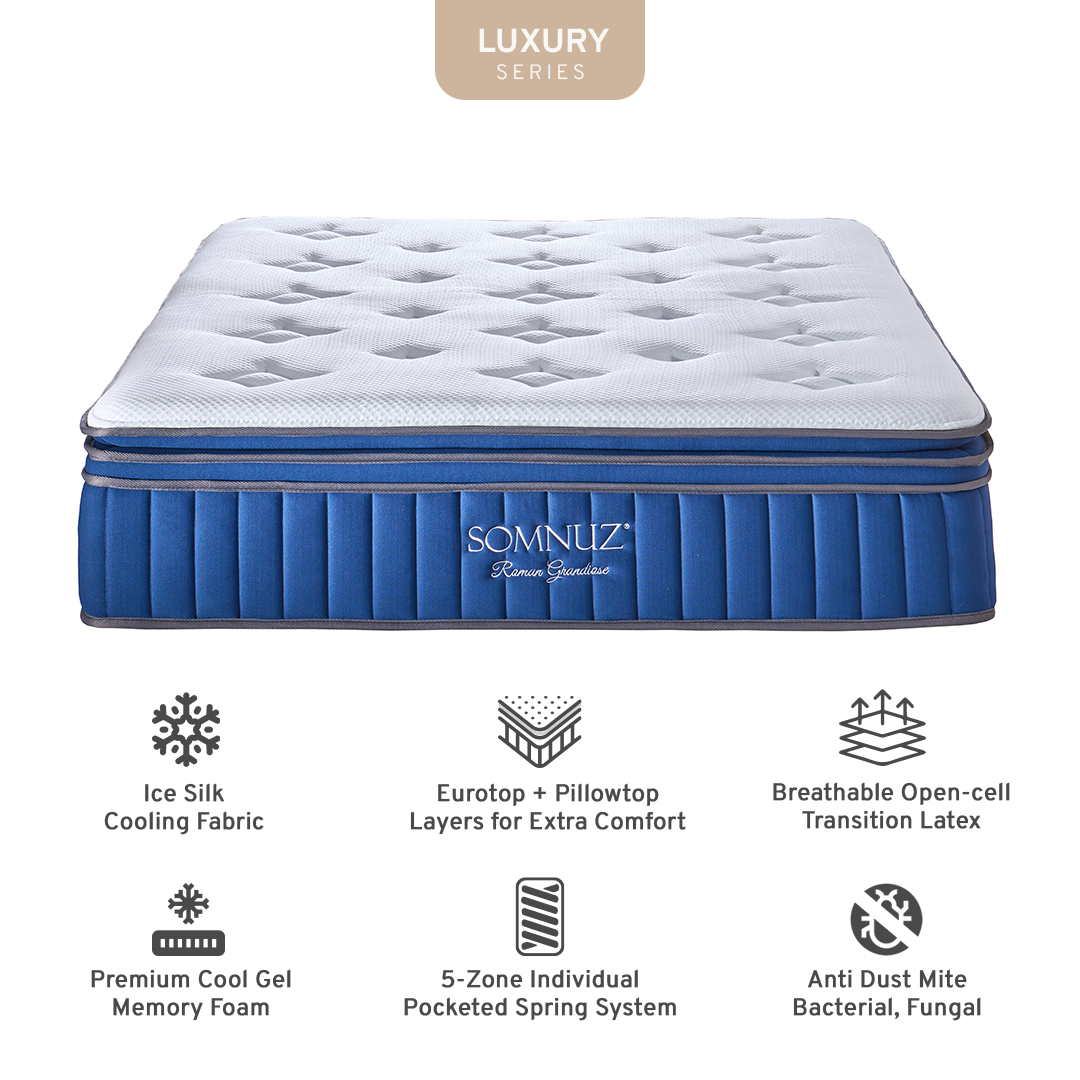
Exploring the Somnuz mattress collection is a practical starting point if you are thinking about what a better home sleep setup might look like. Options suited to Singapore's warm and humid conditions, with good breathability and support across different sleeping positions, are worth comparing before making a decision.
For broader guidance on building a better sleep environment at home, the Sleep Well resource page covers the factors that contribute to consistently good rest.
If you would prefer to try mattresses in person before deciding, you are welcome to visit our mattress showroom in Singapore and take your time with the range. There is no pressure, just practical guidance to help you find what suits you.
Frequently Asked Questions
What type of camping mattress is most comfortable? Self-inflating mattresses and quality air mattresses generally offer the most comfort for car camping and organised campsites. For backpacking, lightweight inflatable pads provide a good balance of comfort and packability. The most comfortable choice depends on the type of trip and how much weight and space you can manage.
How thick should a camping mattress be? A thickness of at least 5 centimetres provides reasonable cushioning on most ground surfaces. On harder surfaces, more thickness is noticeably more comfortable. For backpacking, a thinner inflatable pad is a workable trade-off for the reduction in weight.
Can I use a regular mattress for camping? A standard home mattress is not designed for outdoor use and would be impractical to transport, expose to moisture, or pack away. Dedicated camping mattresses are built for portability, durability in outdoor conditions, and easy storage.
How do I care for a camping mattress in humid conditions? After use, dry the mattress thoroughly before packing it away. For self-inflating mattresses, open the valve and allow the foam to fully dry before rolling and storing. For air mattresses, wipe down the surface and ensure the interior is dry. Storing a damp mattress encourages mould and shortens its life significantly.
Is a camping mat or sleeping bag more important for comfort? Both contribute to overall sleep comfort outdoors, but most experienced campers find that the sleeping surface beneath them has a greater effect on how well they rest than the sleeping bag above. A good camping mattress and a basic bag often outperforms a premium bag on an inadequate mat.
How long does a camping mattress last? With proper care, a good quality self-inflating or air mattress can last many years. Avoiding sharp objects, storing it dry, and not over-inflating air mattresses are the most effective ways to extend their life.
Sleep Well, Whether You Are Away or at Home
A camping mattress handles the nights outdoors. What you sleep on every night at home matters just as much, if not more.
Explore the Somnuz mattress collection to find a home mattress suited to how you sleep and Singapore's climate. Or if you would like to try the range in person before deciding, visit our showroom for honest, helpful guidance with no pressure to decide on the day.