

Noticing a dent in the mattress where I sleep can be frustrating, especially when your bed used to feel even and supportive. At first, the dip may seem small. Over time, you may feel your body rolling into the same spot every night.
A mattress dent does not always mean your mattress has failed. Light body impressions can happen after regular use. But when the dip becomes deeper, feels uneven, or affects how settled you feel in bed, it may be time to reassess your mattress.
For Singapore homes, this matters because mattresses work hard in warm, humid conditions. Shared beds, compact HDB or condo bedrooms, and everyday use can all affect how a mattress feels over time. The goal is not to rush your decision, but to understand what the dent means and when a replacement may offer steadier comfort.
Why A Dent Forms Where You Sleep
A mattress dent usually forms because the same area carries pressure night after night. Your body weight, sleep position, mattress age, and materials all play a part.
Most mattresses have comfort layers on top and a support core underneath. The comfort layers create the soft, cushioned, or responsive feel. The support core helps the mattress stay steady. Over time, the top layers may compress, or the support underneath may weaken, creating a visible dip.
There is also a difference between a light body impression and true sagging. A light impression may not affect comfort much. A deeper dent can make the mattress feel uneven, especially if one side feels lower or less stable than the rest.
In Singapore’s humid climate, care also matters. A breathable bedroom setup, regular airing, and a suitable bed base can help your mattress stay fresher and more stable for longer.
When A Mattress Dent Becomes A Support Issue
A mattress dent becomes more important when it changes how the bed feels, not just how it looks.
You may notice that you keep rolling into the same sunken area. If you share your bed, you may feel a “valley” forming between two sleepers. This can be more noticeable for couples with different body weights or sleeping habits.
The edge of the mattress may also feel weaker. If you often sit on the side of the bed, this can affect everyday comfort, especially in smaller HDB or condo bedrooms where the bed edge is used often.
A dent may also be a concern if rotating the mattress no longer helps. If the dip remains obvious or quickly returns, the support structure may have worn down.
A small impression is not always a problem. But if the mattress feels uneven, less supportive, or less comfortable night after night, it may be a practical sign that your current mattress is no longer giving you the support you need.
Can You Fix A Dent In Your Mattress?
Some small dents can be managed, especially if the mattress still feels stable. But deeper sagging is harder to fix because it usually means the internal materials have compressed or weakened.
Rotate The Mattress If Suitable
If your mattress is designed to be rotated, turn it from head to foot every few months. This helps spread pressure more evenly across the surface. Do not flip the mattress unless the manufacturer says it is suitable, as many modern mattresses are built with comfort layers on top.
Check The Bed Frame Or Base
Sometimes the problem comes from the base, not only the mattress. Weak slats, uneven support, or large gaps can make a mattress dip faster. A good mattress still needs a stable base to perform well.
Use A Topper With Care
A topper can add softness or change the surface feel, but it cannot properly fix a sagging mattress. If the support core underneath has weakened, a topper may only hide the problem for a short time.
Replace The Mattress If Comfort Has Changed
If the dip is deep, uneven, or affecting your nightly comfort, replacing the mattress may be the more sensible option. A new mattress can help restore a flatter, steadier surface and give you the chance to choose a feel that better suits your current needs.
What To Look For In A Replacement Mattress
If you are replacing a mattress because of a dent, focus first on support. A replacement should feel steady across the surface, not just comfortable for the first few minutes.
Think about your preferred firmness. Some sleepers like a firmer, more stable feel. Others prefer more cushioning. There is no single right answer for everyone. The better choice is the mattress that helps you feel comfortably supported in your usual sleeping position.
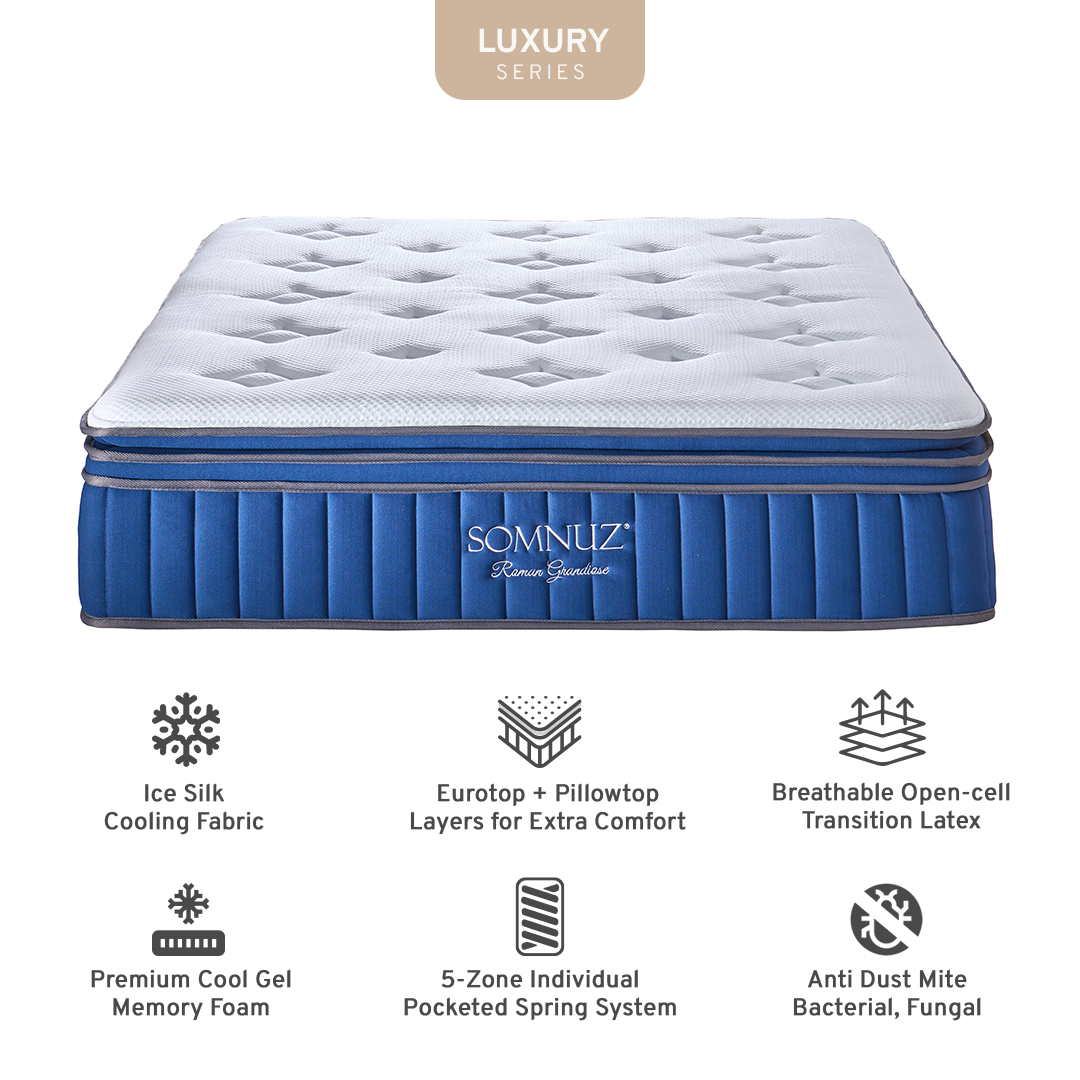
The support system also matters. Individually pocketed springs move more independently across the mattress. This can help the surface respond more evenly and reduce movement from one side of the bed to the other. For shared beds, this can make rest feel more settled. You can view support-focused options through the pocketed spring mattress collection.
Comfort layers are important too. Memory foam can offer a more contouring feel. Latex can feel more responsive and breathable. Hybrid designs combine materials to balance cushioning, airflow, and support. If you are comparing options, the Somnuz mattress collection gives you a clear place to start.
For Singapore homes, breathability is also worth considering. Warm nights can feel less comfortable if a mattress traps too much heat. Breathable covers, cooling fabrics, and airflow-friendly materials can support a fresher sleep environment.
How Couples And Families Should Compare Mattresses
A dent can appear faster when the same side carries more pressure every night. For couples, this may happen when one sleeper is heavier, moves more, or sleeps closer to one edge.
That is why shared beds should be chosen based on shared comfort. A mattress that suits one person may feel too firm, too soft, or too responsive for another. The aim is to find a balanced feel that works well enough for both sleepers.
Motion control is also useful for couples. It helps reduce movement from one side of the mattress to the other, which can feel more comfortable when one person turns or gets out of bed.
Families may need different mattresses for different rooms. A master bedroom, guest room, child’s room, or parent’s room may each need a different size and comfort feel. To compare firmness, thickness, cooling effect, and support features more clearly, use Somnuz’s Compare Our Mattresses page.
Why Trying A Mattress In Person Helps
Online research is helpful, but comfort is personal. When replacing a mattress because of a dent, trying a few options in person can make the decision feel clearer.
In a showroom, you can lie down in your usual sleeping position and notice how each mattress responds. You can check whether it feels too soft under your hips, too firm at your shoulders, or steady enough at the edge.
You can also ask practical questions about firmness, materials, cooling, delivery, and after-sales support. Somnuz’s Sleep Well guidance is designed to make the buying journey feel simpler, calmer, and better supported.
Dent In Mattress Where I Sleep: What To Do Next
If you notice a dent in mattress where i sleep, start with a simple check. Rotate the mattress if suitable. Inspect the bed base. Notice whether the dip is only visible or whether it changes how the mattress feels.
A small body impression may be normal. But a deeper dent that makes the surface uneven, pulls you into one spot, or affects shared sleep is worth taking seriously.
When choosing a replacement, focus on support, comfort, breathability, and how the mattress fits your home. For Singapore households, this often means considering humid nights, shared sleeping spaces, room size, and dependable local support.
Find A Mattress That Feels Steady Again
If your current mattress has a dent that affects comfort, it may be time to look for steadier support. Browse online, compare firmness and materials carefully, and choose based on what feels right for your body, room, and sleep routine.
For extra confidence, visit a mattress showroom Singapore to try the range in person. The Somnuz team can guide you through comfort, support, cooling features, and after-sales care so you can choose with greater peace of mind.
Frequently Asked Question
Is a dent in mattress where i sleep normal?
A small body impression can be normal after regular use. It becomes more concerning when the dent feels deep, uneven, or affects how supported you feel.
When should I replace a mattress with a dent?
Consider replacing it when the dip does not improve after rotation, the surface feels uneven, or you keep rolling into the same area.
Can a mattress topper fix a sagging mattress?
A topper can improve surface comfort, but it cannot properly fix a mattress with a weak or sagging support core.
How do I stop my mattress from dipping again?
Use a suitable bed base, rotate the mattress if recommended, and choose a mattress with support that suits your body and sleep style.
Should I visit a showroom before replacing a dented mattress?
Yes, if you want more confidence before buying. A showroom visit lets you compare firmness, test edge support, and ask practical questions before deciding.