

Choosing between the different types of mattresses can feel confusing when every option promises comfort in a different way. Some feel springy. Some hug the body. Some stay firmer and steadier. Others combine several materials in one build.
For Singapore homes, the choice also needs to suit humid nights, shared sleep, and practical bedroom layouts. For a HDB master bedroom, the right mattress may need a different balance from one used in a larger condo or landed home. Couples may also care more about motion control, while warm sleepers may focus on airflow and cooling comfort.
This guide explains the main mattress types in simple terms, so you can compare feel, support, cooling, and comfort with more confidence. You can also browse the Somnuz mattress collection as you compare each option.
Why Mattress Type Matters For Everyday Comfort
Mattress type affects how your bed feels from the first night and how it supports you over time. The material and construction shape firmness, bounce, airflow, motion control, and how easy it feels to move in bed.
Some sleepers prefer a cushioned surface that gently hugs the body. Others prefer a firmer, more responsive feel that makes changing positions easier. Couples may want less movement across the bed. Families may care about durability, protection, and easier upkeep.
Singapore’s climate adds another point to consider. Warm, humid nights can make heat build-up more noticeable, especially for sleepers who already feel warm under the sheets. Breathable materials and open structures can help the mattress feel less stuffy.
Before choosing by material name alone, think through:
- Check your main sleep position.
- Know your preferred comfort feel.
- Note how warm you feel at night.
- Decide the level of support you prefer.
- Check your bedroom size and mattress height.
Better choices start with how you sleep, not just what the mattress is called.
Pocketed Spring Mattresses: Steady Support With Better Airflow
Pocketed spring mattresses use individual springs wrapped in fabric pockets. Each spring moves more independently instead of pulling the whole surface with it. This gives the mattress a steadier feel and helps reduce movement from one side of the bed to the other.
This type is often a practical choice for couples because it can reduce partner disturbance. It can also feel more breathable than many foam-only options.
You may prefer a pocketed spring mattress if you want:
- You want a more lifted and supportive feel.
- You change position often during sleep.
- You want better airflow for humid nights.
- You share the bed and want less movement across the surface.
Pocketed spring mattresses can vary in firmness. Some feel medium and balanced, while others feel firmer and steadier. Try not to assume every spring mattress feels the same. Comfort layers above the springs also make a big difference.
Memory Foam Mattresses: Close Cushioning And Motion Control
Memory foam responds to body weight and warmth. It slowly moulds around the body, which can create a more cushioned and contouring feel. Many sleepers like it because it softens pressure around areas such as the shoulders and hips.
Memory foam is also known for motion control. It absorbs movement well, so it may suit couples who are easily disturbed when one person shifts during the night.
You may prefer a memory foam mattress if you want:
- You like a closer, more cushioned feel.
- You prefer less bounce on the surface.
- You need strong motion control.
- You enjoy comfort that gently contours around the body.
The main concern is heat. Traditional memory foam can feel warmer because it responds to body heat. In Singapore, warm sleepers should look for designs that include cooling covers, gel-infused foam, breathable layers, or hybrid construction to help reduce heat build-up.
Memory foam is not the right feel for everyone. Some sleepers enjoy its close comfort. Others may feel it makes turning harder. The best way to decide is to compare how it feels beside more responsive options.
Latex Mattresses: Responsive Comfort For Warm Sleepers
Latex feels more responsive than memory foam. It cushions the body, but it springs back faster when you move. This can make it a good fit for sleepers who change positions through the night.
Natural latex is also known for airflow. Its structure allows air to move through more easily than dense foam, which can feel helpful in Singapore’s humid weather. Latex also has a gently buoyant feel, so it can feel supportive without feeling too still or heavy.
You may prefer a latex mattress if you want:
- You want a more responsive surface.
- You prefer breathable comfort for warm nights.
- You like gentle cushioning without a stuck feeling.
- You want easier turning during sleep.
Latex can feel firmer or softer depending on its thickness, density, and the layers used around it. Some mattresses use latex alone, while others use latex above pocketed springs for a balance of bounce, airflow, and support.
Hybrid Mattresses: Balanced Comfort From Different Materials
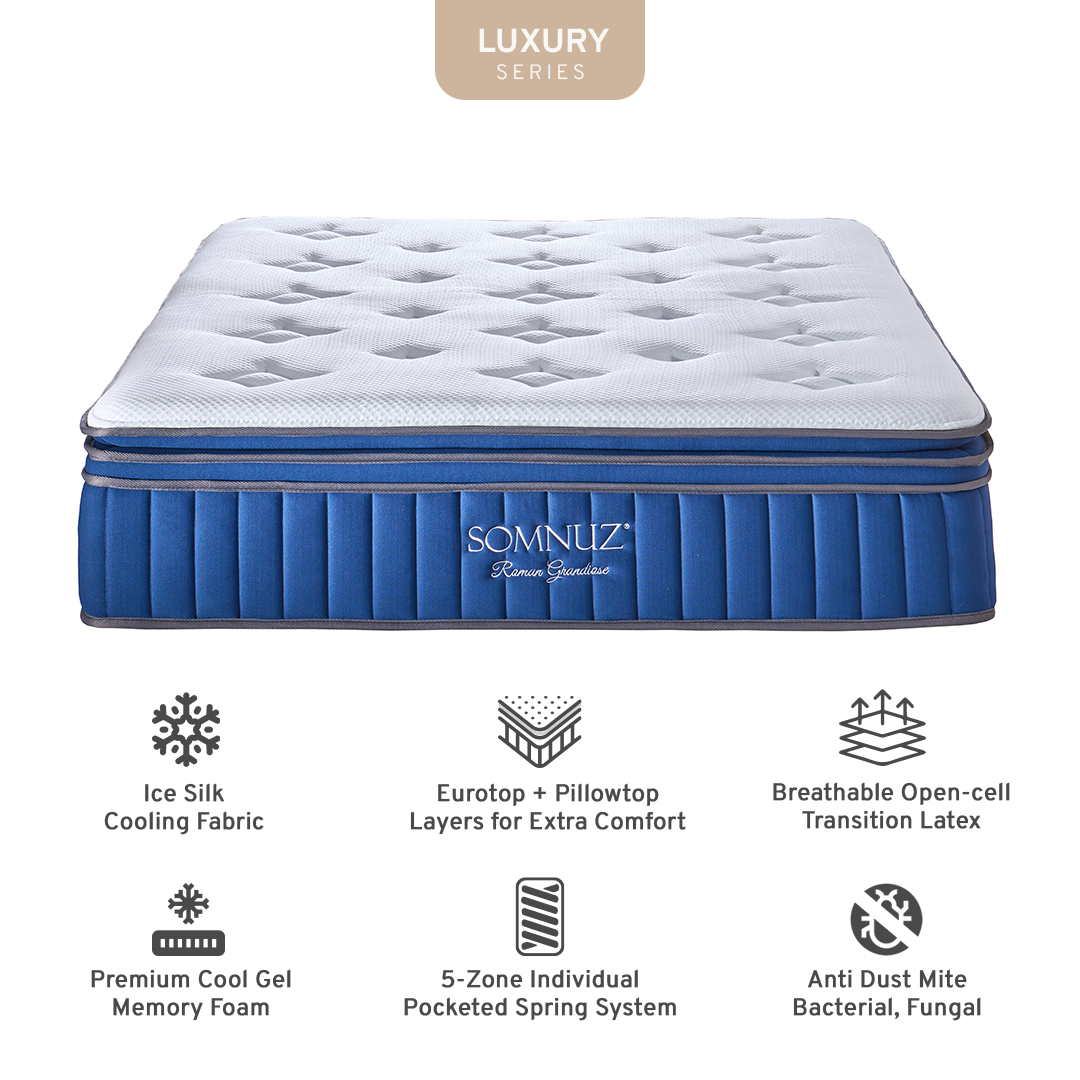
Hybrid mattresses combine different materials in one mattress. Many use pocketed springs for support, then add foam, latex, cooling fabric, or other comfort layers on top. This structure aims to bring several benefits together instead of relying on one material alone.
Hybrid options may suit you if you want a balanced feel. You may get the steady support and airflow of springs, plus the cushioning comfort of foam or latex. This can be useful for couples who need comfort, support, and motion control in one mattress.
Hybrid mattresses can feel very different from one another. Hybrids with latex may feel more responsive. Hybrids with memory foam may feel more contouring. Thicker hybrids with added comfort layers may feel more plush, while simpler hybrids may feel firmer and more direct.
For Singapore homes, hybrids can make sense when you want support with added surface comfort, cooling features for humid nights, and a more complete feel for daily use.
How To Compare Mattress Types Before You Choose
Comparing mattress types becomes easier when you look at feel, not just material. Two mattresses with the same material can still feel different because of firmness, height, layer design, and cover fabric.
|
Mattress Type |
General Feel |
Often Helpful For |
Singapore Consideration |
|
Pocketed spring |
Lifted, steady, responsive |
Couples, airflow, balanced support |
Good breathability from spring structure |
|
Memory foam |
Close, cushioned, slower response |
Motion control and contouring comfort |
Choose cooling features if you sleep warm |
|
Latex |
Responsive, buoyant, breathable |
Warm sleepers and position changers |
Helpful for humid nights |
|
Hybrid |
Balanced, layered, supportive |
Couples and mixed preferences |
Check cooling, firmness, and comfort layers |
Comfort should also match your sleep position. Side sleepers often prefer more cushioning around the shoulders and hips. Back sleepers may prefer balanced support. Stomach sleepers often prefer a steadier surface that does not sink too much.
Couples should compare motion control and edge support. Families may want a mattress that feels durable and practical for daily use. Warm sleepers should pay close attention to airflow, cooling fabrics, and breathable comfort layers.
Online guides help narrow the choice, but your body will give clearer feedback when you try the mattress. You can compare Somnuz mattresses by comfort feel, firmness, support, and cooling features before deciding what to try in person.
Choosing The Right Type Of Mattress In Singapore
The right mattress type is the one that fits your comfort preference, support needs, room setup, and sleep routine. No single material suits every sleeper, so it helps to start with your needs first.
Pocketed spring mattresses are often a strong choice for airflow and shared sleep. Memory foam can suit sleepers who like close cushioning and strong motion control. Latex can feel more breathable and responsive. Hybrid mattresses can offer a balanced feel by combining support and comfort layers.
For Singapore homeowners, comfort should also feel practical. Think about humid nights, shared bedrooms, HDB or condo layouts, delivery access, and long-term support after purchase. Your mattress is not just a product you buy once. It becomes part of your nightly routine.
If you are still unsure, try the range in person. Showroom comparison can help you feel the difference between materials, firmness levels, and support styles before you decide.
Find Your Fit With Clearer Guidance
Better rest starts with a mattress that suits the way you sleep. Somnuz makes the process easier with supportive comfort, breathable options for Singapore nights, and guidance you can trust before and after purchase.
Start by browsing the collection online, then narrow your choices by material, firmness, cooling feel, and motion control. For added confidence, you can visit our showroom and try the range in person with guidance from the Somnuz sleep team.
Frequently Asked Questions
What are the main different types of mattresses?
The main different types of mattresses include pocketed spring, memory foam, latex, and hybrid mattresses. Each one feels different. Pocketed spring feels more lifted, memory foam feels more cushioned, latex feels more responsive, and hybrid mattresses combine different materials.
Which mattress type is better for Singapore weather?
Latex, pocketed spring, and well-designed hybrid mattresses can feel more breathable for humid Singapore nights. Memory foam can still work well, but warm sleepers may prefer versions with cooling covers, gel-infused foam, or added airflow features.
Which mattress type is good for couples?
Pocketed spring, memory foam, and hybrid mattresses can all work for couples. Pocketed springs help reduce movement through individually wrapped coils. Memory foam absorbs movement well. Hybrids can combine motion control with added support and comfort layers.
Is a firm mattress always better?
Firmness depends on your body, sleep position, and comfort preference. Some sleepers like a firmer, steadier feel. Others need more cushioning. The better choice is the one that supports you comfortably without feeling too hard or too soft.
How can I choose the right mattress type?
Start with your sleep position, preferred firmness, heat sensitivity, and shared-sleep needs. Then compare mattress materials and try the options in person when possible. Showroom guidance can help you choose with more confidence.