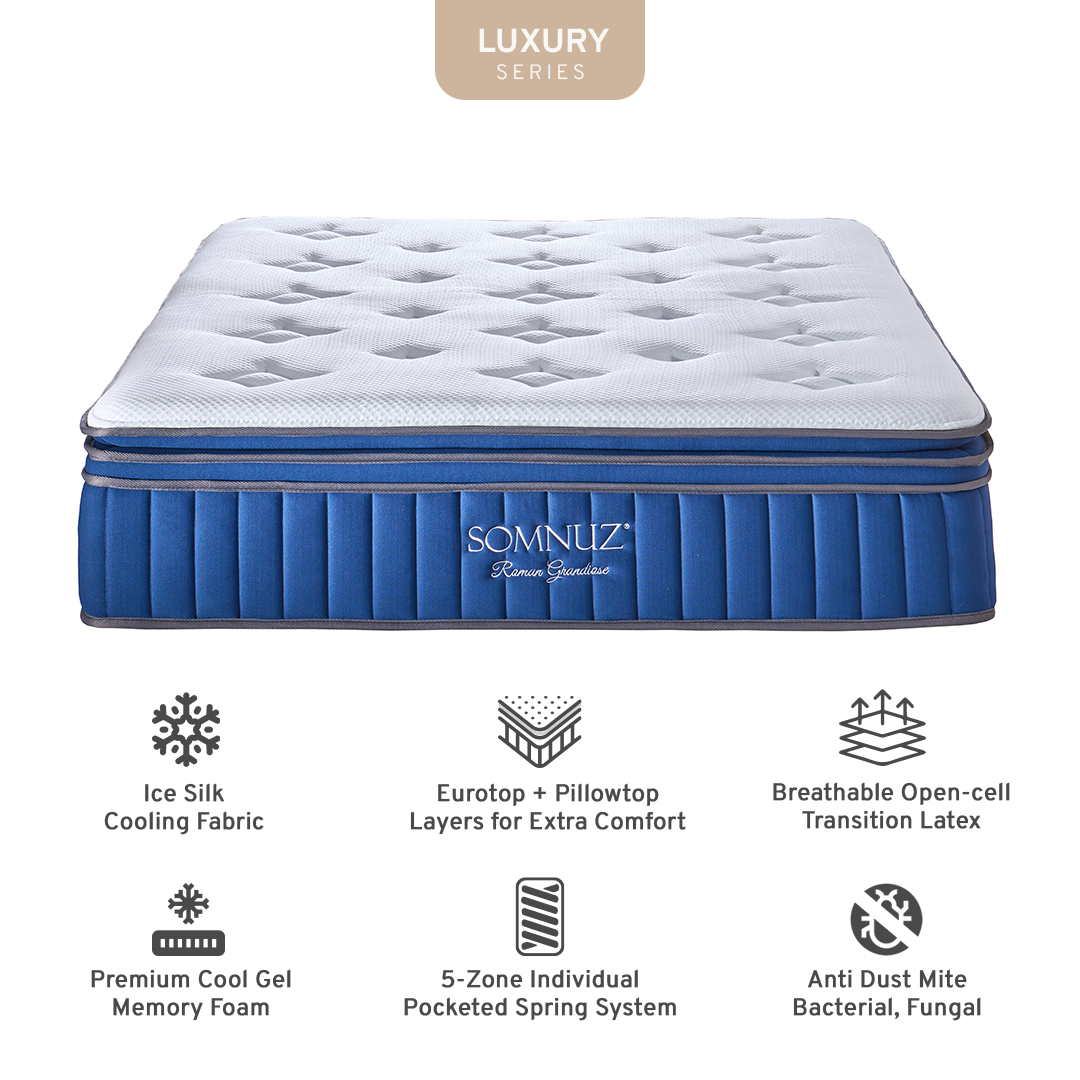


Looking for a firm mattress topper for back pain usually means your current bed no longer feels supportive enough. It may feel too soft, uneven, warm, or difficult to get comfortable on.
A firm topper can help in the right situation. It can change the surface feel of your bed and make it feel steadier. Still, it cannot rebuild a mattress that has lost its support.
This guide explains when a firm mattress topper makes sense, when a new mattress may be the better choice, and what Singapore sleepers should check before buying.
Can A Firm Mattress Topper Help With Back Pain Concerns?
A firm topper can change how your bed feels, but it works best when the mattress underneath is still in good condition.
Many shoppers choose a firm topper because they want less sinking and a more stable surface. This can be useful if your mattress feels slightly too soft but still feels level and supportive.
The important point is simple. A topper sits above the mattress. It does not replace the support system inside it.
If your mattress has deep sagging, weak edges, or a dip in the middle, a topper may only follow the uneven shape below. This can make the bed feel firmer on top, but not more supportive overall.
Back discomfort can also come from many causes, including sleep position, pillow height, daily routine, and personal health factors. A topper may help comfort, but it should not be treated as a guaranteed solution.
For a wider look at topper options, this mattress topper guide can help you compare materials and buying points.
When A Firm Mattress Topper Makes Sense
A topper is most useful when your mattress still gives enough support but the top layer no longer feels quite right.
Think of a topper as a comfort adjustment. It can make the surface firmer, smoother, or more cushioned. It works best when the mattress below still holds its shape.
Your Mattress Still Feels Stable
Your mattress should feel level when you lie down. It should not dip deeply under your hips, slope to one side, or feel weak in the centre.
If the mattress still feels stable, a firm topper may give you a steadier surface. This can help sleepers who dislike sinking too far into the bed.
You Want A Firmer Surface Feel
Some sleepers prefer a firmer surface because it feels easier to turn or shift positions. This may suit back sleepers and some combination sleepers.
Side sleepers should be more careful. A surface that feels too hard may create pressure around the shoulders and hips. The goal is steady support, not a harsh feel.
You Sleep Warm In Singapore
Humid Singapore nights can make some toppers feel warmer than expected. Dense foam may hold more heat, especially in rooms with limited airflow.
Breathable materials and covers can help reduce heat build-up. Somnuz’s cooling mattress guide explains what to consider when warmth is part of the problem.
A firm topper may make sense if:
- Your mattress feels slightly too soft.
- Your mattress is still level and stable.
- You want a firmer comfort layer.
- You need a short-term comfort adjustment.
- You want a simple upgrade for an HDB, condo, or guest bedroom.
When You May Need A Better Mattress Instead
A topper can only do so much. If the mattress underneath has lost its structure, a topper may not give you the support you need.
Deep sagging is the clearest warning sign. If your mattress dips where you usually sleep, your body may not rest on an even surface. A firm topper can add surface firmness, but it cannot remove the dip.
Older mattresses can also feel flat, warm, or unstable over time. Springs may lose steadiness. Foam may soften. The sleeping surface may stop supporting your body evenly.
Couples may notice this even more. One side may sink more than the other. Movement may travel across the bed. The centre may feel less supportive during shared sleep.
If long-term support is the concern, it may help to review a more support-focused mattress instead of adding another layer. Somnuz’s support guide for firmer mattresses explains firmer comfort in a clear and practical way.
What To Look For In A Firm Mattress Topper
The right topper should feel supportive, breathable, and steady without making the bed feel too hard.
Firmness matters, but it is not the only factor. Material, thickness, airflow, and your current mattress condition all affect the final feel.
Firmness
Firm should not mean stiff. A good firm topper should give a steadier surface while still allowing enough comfort around the shoulders, hips, and lower back area.
If it feels too hard, your body may not settle naturally. If it feels too soft, you may still sink more than you want.
Material
Latex usually feels responsive. It can give a light bounce and allow air to move more easily, which may suit warm sleepers.
Memory foam often feels closer and more cushioned. It can feel comfortable for pressure points, but some sleepers may find it warmer or harder to move on.
Foam blends and fibre toppers vary widely. Some feel light and affordable, while others may flatten faster. Check the material quality before choosing.
Thickness
Thicker does not always mean better. A very thick topper can make the bed feel softer or less stable, especially if your mattress already sinks too much.
For a firmer feel, a moderate thickness with good density may work better than a thick, plush layer.
Breathability
Warm sleepers should check airflow and cover material. A firm topper that traps heat may still feel uncomfortable during humid nights.
Before buying, check:
- Does it reduce excess sinking?
- Does it still allow easy turning?
- Does it feel breathable?
- Does it suit your sleep position?
- Does your mattress underneath still feel stable?
Firm Topper Or Firm Mattress: How To Choose With Confidence
The better choice depends on your current mattress, sleep position, comfort goal, and long-term support needs.
A topper may be enough if your mattress is still in good shape. A new mattress may be wiser if the support layer has already weakened.
Choose A Topper If
A topper may work well if:
- Your mattress is fairly new.
- The surface feels only slightly too soft.
- There is no deep sagging.
- You want a smaller comfort adjustment.
- You are not planning a full mattress upgrade yet.
This can suit practical buyers who want a simple change before making a larger purchase.
Choose A Mattress If
A new mattress may be the better choice if:
- Your mattress dips or feels unstable.
- You wake up feeling poorly supported.
- Partner movement disturbs your sleep.
- The bed feels warm, flat, or worn.
- You want stronger long-term comfort.
- Somnuz makes it easier to review support, cooling, and comfort through the Somnuz mattress collection. You can also compare the mattress range before deciding which feel may suit you best.
Choosing Support For Couples And Shared Sleep
Shared sleep needs more than firmness. Movement control, edge support, and breathable comfort also matter.
A firm topper may improve the top feel of the bed, but it may not reduce partner movement if the mattress core still transfers motion. This matters when one partner turns often, wakes earlier, or sleeps at a different rhythm.
Pocket spring designs can help because the springs move more independently. This can reduce movement from one side of the mattress to the other, which may feel more comfortable for couples.
Edge support also matters in HDB and condo bedrooms, where couples often use most of the mattress width. A weak edge can make the bed feel smaller or less stable.
If partner disturbance is a concern, Somnuz’s pocket spring mattress guide explains how this support system works in simple terms.
Best Firm Mattress Topper For Back Pain Concerns In Singapore
The best choice gives you steady comfort without creating pressure, heat build-up, or false expectations.
A firm mattress topper for back pain concerns may help if your mattress is still supportive and you only need a firmer surface. It can be a useful comfort layer when the bed feels slightly too soft but still feels level.
A mattress replacement may be better if the bed is sagging, weak, too warm, or no longer comfortable for shared sleep. In that case, a topper may only delay the issue.
Singapore shoppers should also think about humidity, bedroom size, sleeping style, and partner movement. Comfort is personal, so it helps to compare firmness levels before choosing.
For added confidence, you can visit the Somnuz mattress showroom Singapore to try the range in person and get guidance from the sleep team.
Find Support That Feels Right For You
A firm topper can help when your mattress still has good structure. If your bed feels worn, uneven, or too warm for Singapore nights, comparing better long-term options may give you more peace of mind.
Shop the Collection
View supportive and breathable mattresses for different comfort preferences.
Compare Our Mattresses
Check firmness, cooling, and support differences before choosing.
Visit the Showroom
Try the range in person and get calm guidance from the Somnuz sleep team.
Frequently Asked Questions
Is a firm mattress topper good for back pain?
A firm mattress topper may help some sleepers feel more supported if their mattress is still in good condition. It should not be treated as a guaranteed solution for back pain.
Can a topper fix a sagging mattress?
No. A topper can improve surface comfort, but it cannot rebuild the support inside a sagging mattress. If your mattress has deep dips, replacement may be more practical.
Is a firm topper better than a soft topper?
It depends on how you sleep. Firm toppers suit people who want a steadier surface. Softer toppers may suit sleepers who need more cushioning.
What type of topper feels cooler in Singapore?
Breathable and responsive materials tend to feel less stuffy on humid nights. Latex-style toppers often feel more airy than dense foam, but cover material also matters.
Should couples choose a topper or a new mattress?
A topper may help if the surface feels slightly too soft. A new mattress may be better if partner movement, sagging, or weak support is the main issue.
When should I replace my mattress instead of buying a topper?
Replacement may be wiser if your mattress has deep sagging, weak edges, uneven support, or ongoing discomfort despite small comfort changes.