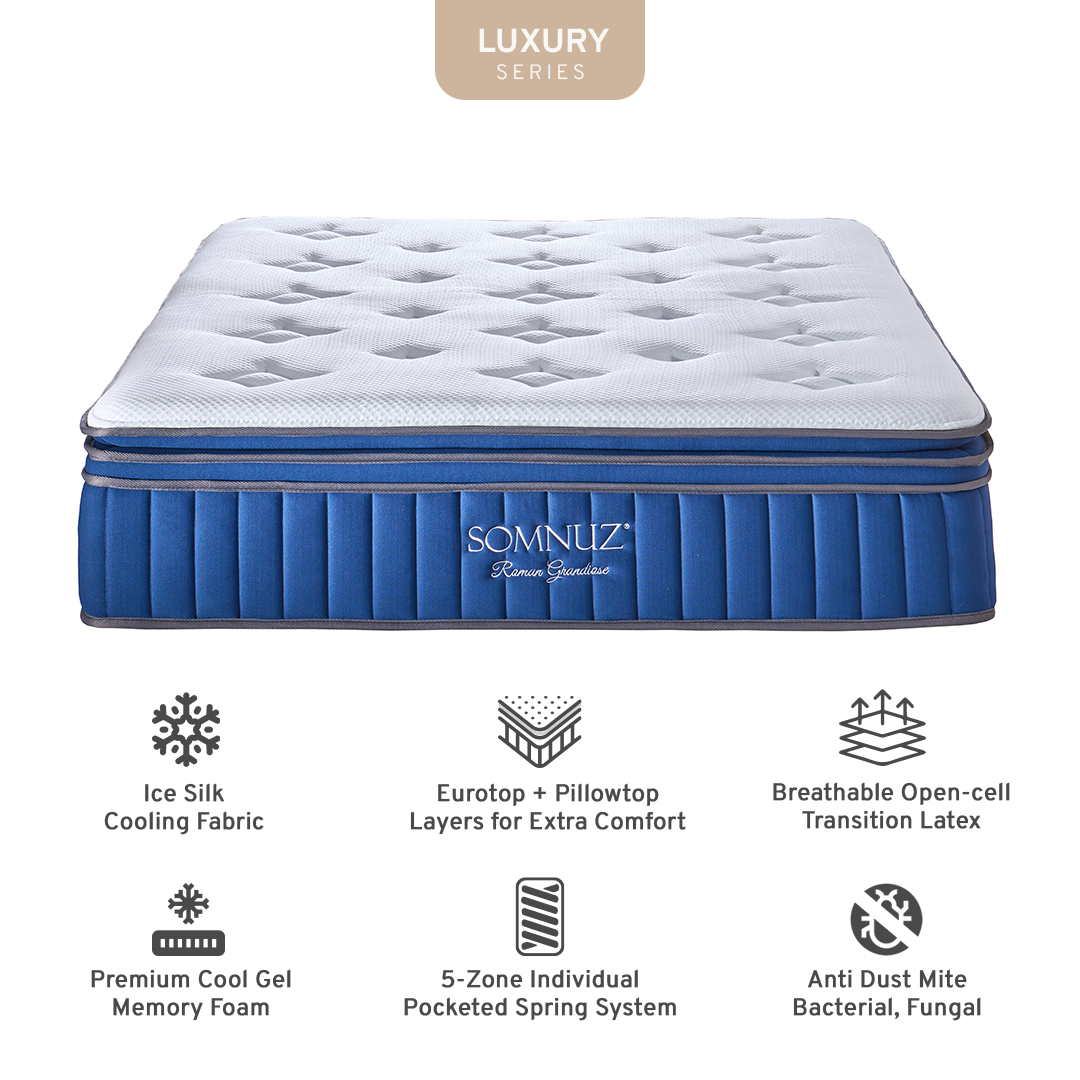


Foam mattresses are popular for a reason.
They can feel cushioned, quiet, and comfortable. Many sleepers like the way foam contours gently around the body and creates a more settled sleep surface. For couples, foam can also help reduce movement across the bed, which may make shared sleep feel calmer.
Still, foam is not right for everyone.
Some sleepers find foam too warm. Others dislike the slower response or deeper sinking feel. Some prefer the bounce, airflow, and lifted support of pocketed spring or latex hybrid mattresses.
These are not reasons to avoid foam completely. They are simply points to understand before buying.
A foam mattress can still be a good choice if you enjoy close cushioning, quiet comfort, and motion absorption. The key is to compare the disadvantages honestly, then decide whether the benefits still fit your sleep style, room, and Singapore’s humid climate.
Foam Mattress Disadvantages: The Main Things To Consider
Foam mattresses vary widely by quality, density, firmness, thickness, and construction.
A well-built foam mattress can feel supportive and comfortable. A poorly matched one may feel too warm, too soft, too slow-moving, or less stable than expected.
The main disadvantages to consider are:
- Foam may feel warmer for some sleepers
- It can feel slower to respond when turning
- It may create a deeper sinking feel
- Edge support can vary
- Some sleepers prefer more bounce
- Dense foam may feel less airy
- Quality and foam density matter
- Room ventilation and bedding can affect comfort
But each disadvantage has another side.
The same close contour that can feel warm for some sleepers may feel comforting to others. The same slower response that makes turning less easy may help reduce partner disturbance. The same low-bounce feel that some people dislike may feel stable and calming to sleepers who prefer a quieter bed.
Somnuz’s memory foam mattress Singapore guide explains foam comfort in more detail.
Foam May Feel Warmer, But It Can Still Offer Cushioned Comfort
Heat is one of the most common concerns with foam mattresses.
Foam often contours closely around the body. This can make the mattress feel comfortable and cushioned, but it may also reduce airflow around the sleeper compared with more open spring-based designs.
In Singapore, humidity can make this more noticeable. Bedrooms with limited ventilation, heavy bedding, or warm room conditions may make a dense foam mattress feel stuffier.
Still, this does not mean foam is a poor choice.
If you enjoy a more cushioned and settled surface, foam can still be worth considering. You simply need to compare cooling features, mattress construction, bedding choices, and room ventilation before buying.
Look for breathable covers, suitable sheets, and a sleep setup that does not trap too much heat. If cooling is a key concern, Somnuz’s cooling mattress Singapore page can help you understand what to compare for humid nights.
Foam May Feel Slower To Move On, But It Helps Reduce Disturbance
Foam responds differently from pocketed springs or latex.
Why Foam Feels Contouring
Foam compresses under body weight and often gives a closer contour.
This can feel calm and cushioned. It can also help the mattress feel less bouncy, which some sleepers prefer.
When Deep Sink Can Feel Restrictive
For some sleepers, especially those who turn often, foam may feel slower to move on.
If the foam is too soft or too deep, combination sleepers may feel that turning from side to back takes more effort. Sleepers who prefer a lifted surface may also find foam less responsive than spring or latex options.
Why Slower Response Can Still Be A Reason To Buy
The slower response of foam can also be one of its strengths.
Because foam absorbs movement well, it may help reduce partner disturbance. If one person turns, the other may feel less movement across the bed.
This can be useful for couples, light sleepers, or anyone who prefers a quieter, more settled mattress.
If you dislike bounce and want a calm surface, foam may still be a good option to compare.
Foam May Have Less Bounce, But That Can Feel More Stable
Foam mattresses usually have less bounce than spring mattresses.
For sleepers who want a lifted, responsive surface, this may feel like a disadvantage. Pocketed spring or latex hybrid mattresses may feel easier to move on and more breathable.
However, less bounce can also be a benefit.
Some sleepers find springy mattresses too lively. They prefer a surface that feels still, stable, and softly cushioned. Foam can offer that kind of comfort.
If your priority is quiet rest, motion absorption, and a less springy sleep surface, foam may be worth considering.
The best choice depends on whether you prefer a mattress that responds quickly or one that feels more settled.
Foam Edge Support Can Vary, So Check The Full Build
Edge support can vary between foam mattresses.
Some foam mattresses feel stable across the surface. Others may compress more at the sides, especially when sitting on the edge of the bed.
This matters if you:
- Share a smaller mattress
- Sit on the edge often
- Use most of the mattress width
- Need easier access in and out of bed
- Prefer a more structured mattress feel
Still, this does not mean all foam mattresses have poor support.
Foam quality, mattress height, base layers, firmness, and overall construction all affect how stable the mattress feels. This is why it helps to compare the full build instead of judging foam by material name alone.
Before deciding, use Somnuz’s compare our mattresses page to review different mattress types, support levels, cooling features, and comfort directions.
Foam Mattress Disadvantages Vs Spring And Latex Options
Foam should be compared with other mattress types before buying.
Spring Mattresses
Spring mattresses, especially pocketed spring designs, often feel more responsive.
They may also allow more airflow through the mattress core. If you dislike deep contouring or want easier movement, spring support may feel more natural.
Somnuz’s pocketed spring mattress range can help you compare spring-based comfort.
Latex Mattresses
Latex usually feels more buoyant than memory foam.
It can cushion the body while responding more quickly when you move. It may suit sleepers who want comfort without a slow-sinking feel.
Somnuz’s latex mattress Singapore guide explains latex comfort in a Singapore context.
Hybrid Mattresses
Hybrid mattresses combine materials such as latex, foam, and pocketed springs.
They can offer cushioning at the surface and support underneath. For many shoppers, hybrid designs provide a useful balance between comfort, airflow, and response.
Foam Mattresses With Cooling Features
Some foam mattresses are designed to feel cooler than older or denser foam designs.
If you like foam but worry about heat, compare cooling covers, foam structure, mattress height, room airflow, and bedding choices before deciding.
When A Foam Mattress Can Still Be A Good Fit
Foam mattresses can still be a good choice for many sleepers.
Foam may suit you if:
- You like close cushioning
- You want reduced partner disturbance
- You prefer a quiet mattress
- You enjoy a more settled surface feel
- You sleep alone or share with a light sleeper
- You want simple cushioned comfort
- You prefer less bounce
- You want a mattress that feels calm rather than springy
The Somnuz Memory Foam Mattress may be a suitable option to compare if you like foam comfort. If you are unsure, compare it with Somnuz spring and latex hybrid options before deciding.
The key is not to buy foam simply because it sounds comfortable. It is to choose foam because the feel, support, cooling, and firmness match how you actually sleep.
Should You Consider Buying A Foam Mattress?
Yes, you should still consider buying a foam mattress if its strengths match your needs.
A foam mattress may be worth considering if you want a bed that feels cushioned, quiet, and less bouncy. It may also suit couples who want motion absorption, or sleepers who prefer a more settled surface.
However, you may want to compare other options first if you sleep very warm, move often, need stronger edge support, or prefer a lifted mattress feel.
A good buying decision should come from comparison, not guesswork.
Look at:
- Mattress firmness
- Foam density and support layers
- Cooling features
- Mattress height
- Edge stability
- Bed base compatibility
- Room ventilation
- Whether you prefer contouring or response
If possible, try foam, spring, and hybrid mattresses in person. This helps you understand the difference between a mattress that sounds right and one that actually feels right.
Foam Mattress Disadvantages: Compare Before You Decide
Foam mattress disadvantages are not reasons to avoid foam completely.
They are simply points to consider before buying. Foam can feel warmer, slower-moving, or less bouncy for some sleepers. Edge support and firmness can also vary by model.
At the same time, foam can offer close cushioning, motion absorption, quiet comfort, and a stable, settled feel.
The best choice depends on how you sleep, whether you share the bed, how warm your room feels, and whether you prefer contouring or response.
Compare foam with spring, latex, and hybrid designs. Try the mattress if possible. Choose the mattress that feels right for your body and Singapore home.
Frequently Asked Questions
What are the main foam mattress disadvantages?
Foam may feel warmer, slower to respond, less bouncy, or more sinking than spring or latex mattresses. Edge support can also vary by construction.
Does a foam mattress sleep hot?
Some foam mattresses may feel warm, especially dense or deeply contouring designs. Cooling covers, breathable bedding, and room ventilation can help.
Is a foam mattress bad for Singapore weather?
Not necessarily. Foam can work in Singapore, but hot sleepers should compare cooling features, airflow, bedding, and room ventilation carefully.
Does foam make it harder to move?
Some foam mattresses can feel slower to respond, especially softer designs. If you move often, compare foam with latex or pocketed spring options.
Is a spring mattress better than foam?
Not always. Spring may suit sleepers who want airflow and response, while foam may suit those who want cushioning, stillness, and motion absorption.
Should I still consider buying a foam mattress?
Yes, if you like close cushioning, a quieter surface, reduced partner disturbance, and a more settled feel. Just compare cooling, firmness, edge support, and mattress feel before buying.
Should I try foam and spring mattresses in person?
Yes. Testing both helps you feel the difference in contouring, bounce, support, and cooling before choosing.