

If you have come across the term "self inflating mattress" and wondered what is actually happening inside one, you are not alone. The name sounds a little like magic, but the mechanism is straightforward once it is explained. Understanding how it works also helps clarify where this type of mattress makes sense and where a different solution would serve you better.
This guide covers the technology behind self inflating mattresses, their practical strengths and limitations, and how to think about whether one fits your situation.
The Basic Mechanism: What Actually Happens
A self inflating mattress works through a combination of open-cell foam and a sealed, airtight outer shell fitted with a valve.
The foam inside is the key. Unlike the dense closed-cell foam used in camping roll mats, the foam in a self inflating mattress has an open-cell structure. This means the foam is full of tiny interconnected pockets or cells that can hold air.
When the mattress is rolled up and stored, the foam is compressed and the valve is closed. The air is pushed out and the foam stays in a compressed state because the valve prevents air from re-entering.
When you open the valve, the compressed foam tries to return to its natural expanded shape. As it does, it creates a slight negative pressure inside the mattress, which draws air in through the valve. The foam literally pulls air into itself as it expands. This is what gives the mattress its self inflating quality.
Once fully expanded, you can add a few extra breaths of air through the valve to firm it up to your preference, then close the valve to seal the surface.
When it is time to pack up, you open the valve, roll or fold the mattress from the far end towards the valve, and the compression pushes the air out. Close the valve once it is fully rolled and the foam stays compressed until you need it again.
What Determines How Firm or Soft It Feels?
Two factors influence the firmness of a self inflating mattress: the density of the foam inside and the amount of air added before sealing.
Denser foam creates a firmer base feel. The foam structure itself provides resistance regardless of the air pressure inside. Thicker mattresses with higher density foam tend to feel more substantial and offer better support than thin, lightweight versions.
The air pressure you add on top of the foam's natural resistance gives you some ability to adjust the feel. Adding more air firms things up. Less air creates a slightly softer surface. This adjustability is one of the practical advantages of the self inflating design compared to a simple foam roll mat, which has no such flexibility.
That said, the range of adjustment is limited. A self inflating mattress will not transform from very soft to very firm simply by changing the air pressure. The foam density largely sets the character of the surface.
Where Self Inflating Mattresses Are Actually Useful
Self inflating mattresses are genuinely well suited to specific situations, and it is worth being clear about what those are.
Camping and outdoor use. This is the environment they were designed for. A self inflating sleeping mat packs down small, weighs relatively little, and provides insulation from the cold ground as well as cushioning. For hikers, campers, and anyone spending nights outdoors, the portability and self inflating convenience is a practical advantage.
Temporary guest sleeping arrangements. For an occasional overnight guest when a dedicated guest room is not available, a self inflating mattress can provide a more comfortable surface than a thin foam mat or nothing at all. It is easy to store and quick to set up when needed.
Travel and short stays. For people who travel frequently or stay in different locations, a compact self inflating mattress can serve as a consistent sleeping surface when the accommodation provided is uncertain.
Emergency or backup use. For households that want a stored backup sleeping option for unexpected situations, a self inflating mattress is a practical item to have on hand.
What self inflating mattresses are not suited to is regular, nightly use as a primary sleep surface. The foam and air combination, while functional for occasional use, does not provide the consistent support and comfort that a properly constructed home mattress offers. For nightly sleep over months and years, the material will compress, the support will become uneven, and the sleep quality will reflect that.
Self Inflating Versus Air Mattresses: What Is the Difference?
These two terms are sometimes used interchangeably, but they refer to different products.
An air mattress, also called an airbed, has no foam inside. It is essentially an airtight chamber that you fill entirely with air using a pump. The feel depends completely on the air pressure inside. Many air mattresses aimed at home guest use are reasonably large and comfortable for short-term sleep.
A self inflating mattress has open-cell foam inside, which both provides the self inflating mechanism and contributes to the support and insulation of the surface. Most self inflating mattresses are thinner and more compact than a full air mattress, and they tend to be used more in outdoor than indoor contexts.
For indoor guest use, a full air mattress typically offers a more bed-like surface. For outdoor and portable use, a self inflating mat is lighter, packs smaller, and insulates better from the ground.
What a Self Inflating Mattress Cannot Replace
For anyone considering a self inflating mattress as a solution for regular sleep at home, it is worth being honest about the limitations.
A self inflating mattress compresses with use. Over time, the open-cell foam loses some of its ability to spring back fully, which reduces the self inflating effectiveness and changes the feel of the surface. For occasional use this is manageable. For nightly use it happens much faster and results in a sleep surface that gradually becomes less supportive.
The support profile of a self inflating mattress is also fundamentally different from a home mattress. A quality home mattress is engineered to distribute body weight evenly, manage motion transfer, allow airflow, and maintain its support properties over years of regular use. These are not design priorities in a self inflating product, which is optimised for portability and convenience rather than long-term sleep quality.
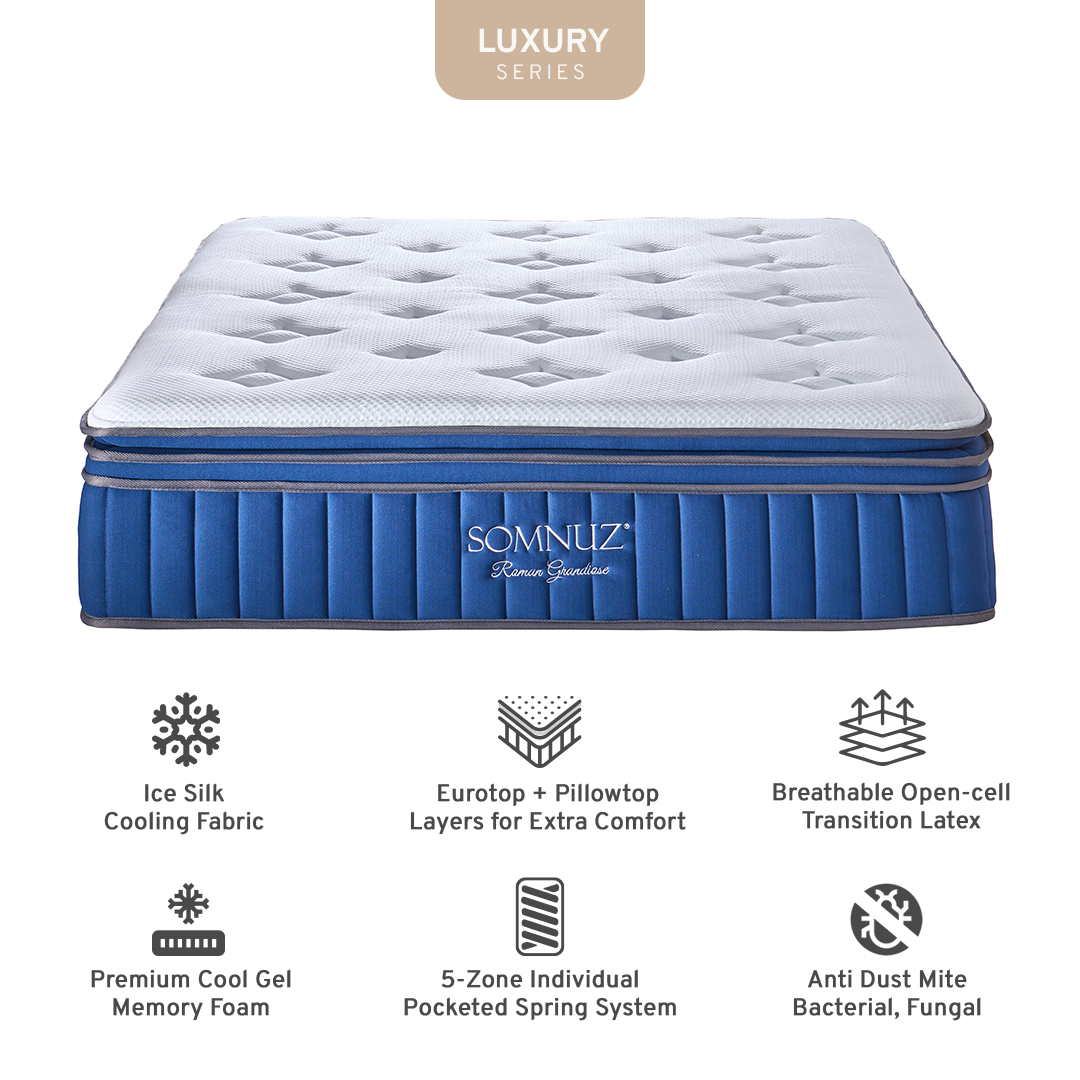
In Singapore's humid climate, the breathability of your sleep surface matters throughout the year. A home mattress designed with airflow in mind, whether through a pocketed spring construction or a breathable latex surface, will manage heat and moisture far more effectively on a warm night than a self inflating camping mat.Pocketed Spring Mattresses Singapore | Somnuz
For anyone reassessing their home sleep setup, exploring options built for permanent use is a better long-term direction. The Somnuz mattress collection covers a range of constructions and sleep preferences, from supportive spring bases to pressure-relieving memory foam and responsive latex options.
Caring for a Self Inflating Mattress
If you do use a self inflating mattress for camping or guest purposes, a few care habits will extend its useful life.
Allow it to fully expand before use each time. Rolling it out and opening the valve well before you plan to sleep gives the foam time to draw in air fully. Rushing the process and closing the valve too early leaves the foam partially compressed.
Store it unrolled when possible, or at least loosely rolled. Keeping it tightly compressed in its bag for extended periods between uses can affect the foam's ability to spring back effectively. If storage space allows, laying it flat or loosely rolled in a dry place preserves the foam's natural expansion capacity.
Keep it dry. Moisture inside the foam can lead to mould, which is difficult to remove and affects both hygiene and the integrity of the material. If it gets wet, allow it to dry thoroughly with the valve open before rolling it for storage. This is especially worth noting in Singapore's humidity, where moisture management is a year-round consideration.
Clean the surface with a damp cloth and mild soap. Avoid submerging or soaking the mattress, as this forces water into the foam and creates the same moisture problem as above.
Frequently Asked Questions
Do self inflating mattresses actually inflate on their own?
Largely, yes. The open-cell foam draws air in naturally when the valve is opened, which inflates the mattress without a pump. Most people add a few manual breaths of air at the end to reach their preferred firmness level before sealing the valve.
How long does it take for a self inflating mattress to fully inflate?
It varies by size and foam density, but most self inflating mattresses reach close to full inflation within five to thirty minutes. Thicker, denser versions take longer than thin camping pads.
Can a self inflating mattress be used every night at home?
It can, but it is not designed for this purpose. Regular nightly use will compress the foam more quickly, reduce its self inflating effectiveness, and result in a less supportive surface over time. For permanent home use, a properly constructed mattress is a better choice.
How do I deflate and pack a self inflating mattress?
Open the valve, start rolling from the far end towards the valve, and the compression will push the air out. Once fully rolled, close the valve to keep the foam compressed in its packed state.
What is the difference between a self inflating mattress and a regular air mattress?
A self inflating mattress contains open-cell foam that draws air in through a valve when unrolled. A regular air mattress has no foam and is filled entirely with air using a pump. Self inflating mattresses are generally more compact and better insulated, while air mattresses tend to offer a more bed-like surface for indoor guest use.
Can I repair a self inflating mattress if it gets a puncture?
Yes, in most cases. Small punctures in the outer shell can be repaired with a patch kit, similar to repairing a bicycle tyre. Identifying the puncture by listening for escaping air or submerging the inflated mattress in water are the standard methods.
When You Are Ready for a Proper Night's Sleep
A self inflating mattress has its place, but it is a tool for specific situations rather than a foundation for good sleep at home. If you are thinking about what your home sleep setup actually needs, the answer is almost always a mattress built for the job.
Explore the Somnuz mattress range to find options suited to how you sleep, or visit our mattress showroom in Singapore to try different surfaces in person and get clear guidance from our team. Good sleep starts with the right foundation, and we are here to help you find it.