

Most people buy a mattress and do not think about it again for years. That is entirely reasonable. A good mattress should not demand your attention. But at some point, usually when sleep has quietly become less restful, the question surfaces: how long can a mattress actually last, and is mine still doing its job?
The answer involves more than a single number. Mattress lifespan depends on what the mattress is made from, how it is used, how it is maintained, and the conditions it lives in. Understanding these factors gives you a much clearer picture of where your mattress stands and what to expect from a new one.
A Realistic Starting Point: What to Expect
A well-made mattress used under normal conditions by one or two adults typically lasts between eight and twelve years. This is the range most mattress manufacturers and sleep specialists point to as a reasonable benchmark.
That range accounts for the variability between different types of mattresses and different household situations. At one end, a foam mattress used nightly by two adults in a humid climate may start to show its age closer to eight years. At the other end, a quality latex mattress in a guest room that sees lighter use might remain comfortable and supportive well beyond twelve years.
What matters most is not the number but the performance. A mattress that is still providing even, consistent support and allowing you to sleep well is doing its job, regardless of its age. A mattress that has begun to sag, feel uneven, or leave you waking with stiffness may need attention even if it is only six or seven years old.
How Long Each Mattress Type Tends to Last
The materials inside a mattress are the single biggest factor in how long it can last. Different constructions age at genuinely different rates.
Pocketed Spring Mattresses
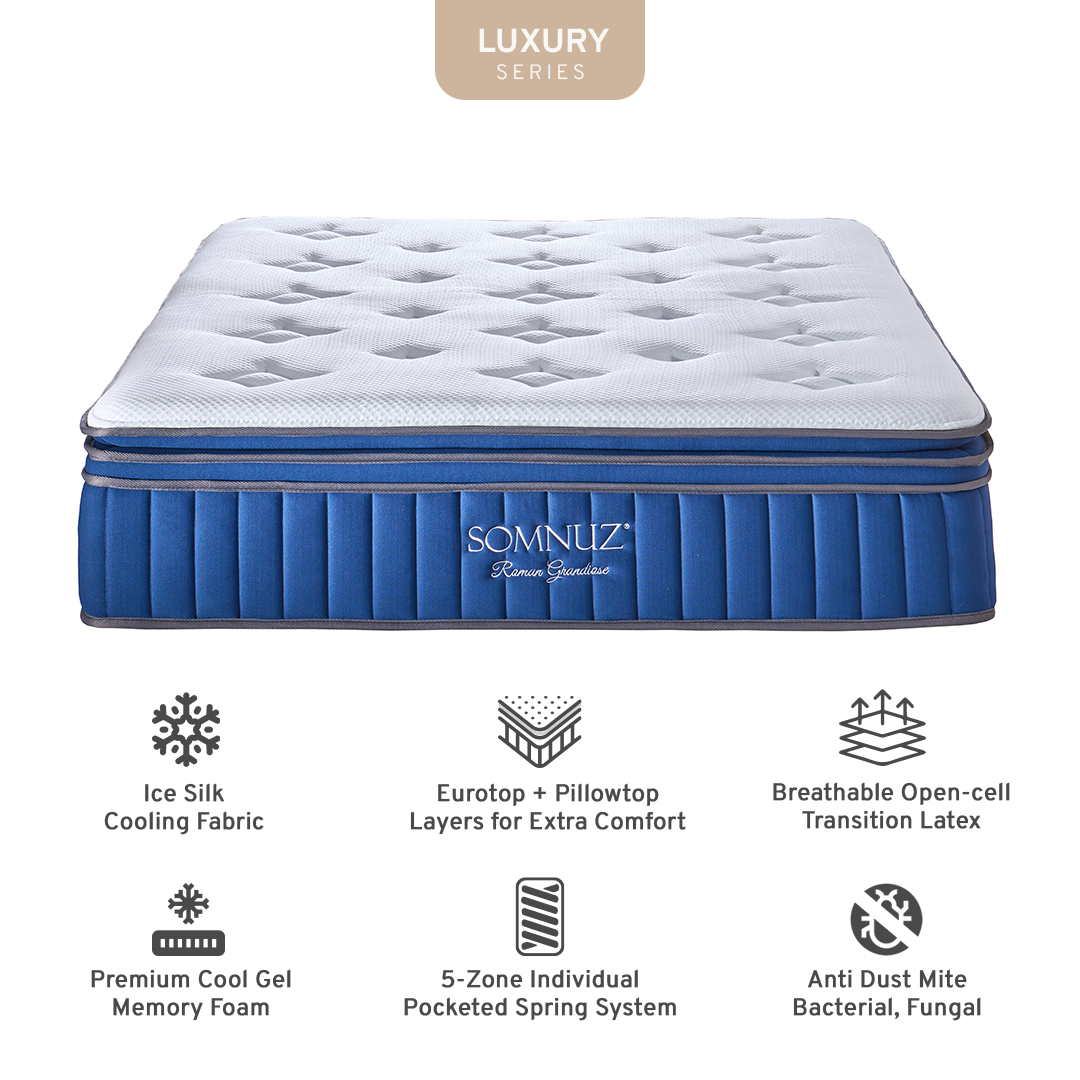
A quality pocketed spring mattress is among the more durable options for regular home use. The individually wrapped coil system is resilient and maintains its structural integrity well under sustained use. You can typically expect eight to twelve years of reliable performance, with the comfort layers on top sometimes softening before the spring system itself shows significant wear.
Rotating a pocketed spring mattress head to foot every few months helps distribute wear more evenly and extends the life of the comfort layers.
Memory Foam Mattresses
A memory foam mattress generally offers a lifespan of eight to ten years, though foam density plays a significant role. High-density foam is more resilient and holds its shape longer. Lower-density foam compresses more readily and may develop noticeable body impressions sooner.
In Singapore's heat and humidity, foam can be affected over time by sustained warmth and moisture exposure. A breathable mattress protector and good airflow around the mattress help preserve the foam's structure and extend its useful life.
Latex Mattresses
Latex is one of the most durable mattress materials available. A quality latex mattress can last twelve to fifteen years, and some natural latex mattresses remain comfortable and supportive for even longer with proper care.
The density of latex is what gives it both its resilience and its longevity. It resists compression far better than foam over time, which means the support profile changes more slowly. For households thinking about the long-term value of a mattress purchase, latex tends to compare very favourably when the total lifespan is considered.
Hybrid Mattresses
Hybrid mattresses combine a spring support system with foam or latex comfort layers. Their lifespan typically falls between eight and twelve years, depending on the quality of both the coil system and the comfort layers used. A hybrid with high-quality components in both the spring and foam sections will generally last longer than one where only one layer is of premium construction.
What Makes Some Mattresses Last Longer Than Others
Within any mattress type, there are meaningful differences in how long individual mattresses last. Several factors consistently influence this.
Material quality. Higher-density foam, natural latex, and well-tempered steel springs hold their properties longer under regular use. The initial quality of the materials is the foundation of everything else.
Usage frequency and weight. A mattress used nightly by two adults experiences far more compression over its life than one used occasionally in a guest room. This is not a reason to avoid a shared bed, but it is worth factoring into your expectations. For couples, a mattress constructed with durability in mind is worth prioritising.
Bed base condition. A mattress is only as supported as the base beneath it. A bed frame with uneven, widely spaced, or damaged slats will cause a mattress to sag and degrade unevenly, often well ahead of its expected lifespan. Checking the condition of your base periodically is a simple and often overlooked way to protect your mattress.
Moisture management. Humidity affects foam and fibre materials over time. In Singapore, where nights are warm and humid year-round, a mattress that is not properly protected can absorb moisture that gradually compromises its materials. A breathable, waterproof mattress protector is one of the most effective tools for extending mattress life in this climate.
Rotation habits. For mattresses that can be rotated, doing so regularly distributes wear across a larger surface area and prevents concentrated compression in any one spot.
Signs That Your Mattress May Have Reached Its Limit
The calendar gives you a rough guide, but the actual condition of the mattress matters more than its age. These are the signs worth paying attention to.
Visible sagging or body impressions. A noticeable dip of more than a centimetre or two in the sleeping area is a clear indicator that the support structure has lost meaningful integrity. This kind of compression is difficult to reverse and affects how your body is supported through the night.
Waking with stiffness or discomfort. If mornings regularly involve aches that ease after an hour of movement, the mattress may no longer be providing the support your body needs through the night. This is different from the ordinary experience of a night of poor sleep and tends to be consistent rather than occasional.
Noticeably better sleep elsewhere. If you sleep more soundly and wake more refreshed in hotels or on other mattresses, that contrast is worth taking seriously. It is a useful data point that your own sleep surface may be the variable.
The mattress is past ten years of regular use. Even without dramatic symptoms, a mattress beyond ten years of nightly use has likely provided most of its useful support life. It is worth assessing it honestly rather than assuming performance has remained constant.
Increased sensitivity to your partner's movement. A mattress that once absorbed motion well but has become more reactive may have degraded in its comfort layers, allowing more movement to transfer across the surface.
Practical Ways to Help Your Mattress Last
Getting the most from any mattress involves a few consistent habits that are easy to maintain once they are part of your routine.
Use a mattress protector from day one. A breathable, washable protector keeps moisture, perspiration, and debris from reaching the mattress materials. In Singapore's humidity, this is particularly valuable. It is also far easier to wash a protector regularly than to manage what builds up inside an unprotected mattress over years.
Check your bed base annually. Look at the slats, the centre support beam if there is one, and the overall structure of the frame. Replace or repair anything that has weakened. A mattress resting on a compromised base will not perform at its best regardless of its own quality.
Rotate regularly. For mattresses designed to be rotated, head-to-foot rotation every three to six months makes a real difference to how evenly the comfort layers wear. Check the manufacturer's guidance, as some mattresses with a defined top layer should not be flipped.
Give it air. When changing your bedding, leave the mattress uncovered for a short while before putting fresh sheets on. This allows any accumulated moisture to dissipate, which is helpful in a warm, humid environment.
Keep it clean. Occasional gentle vacuuming of the surface removes dust and keeps the sleep environment fresher. Address any spills promptly before they reach the mattress layers beneath the protector.
When Extending Is Not Enough
There is no meaningful way to restore a mattress that has genuinely lost its structural support. A mattress topper can adjust the surface feel and add some comfort, but it cannot correct sagging in the core or reverse compression in the foundation layers. If the underlying support has deteriorated, a topper is a temporary measure rather than a solution.
If your mattress is showing clear signs of wear and is approaching or beyond ten years of regular use, replacing it is the more honest and practical decision. Sleep is not a small part of life, and the surface you sleep on for eight hours a night has a real influence on how you feel the other sixteen.
If you are unsure whether your mattress still has useful life left or whether it is time to replace it, seeing different options in person can help clarify things. At our mattress showroom in Singapore, you can compare how different surfaces feel and get straightforward guidance from our team without any pressure to decide on the day.
Frequently Asked Questions
How long can a mattress last with proper care?
With good maintenance, a quality mattress typically lasts eight to twelve years. Latex mattresses, known for their durability, can last twelve to fifteen years or more. The key factors are material quality, usage, and how well the mattress is protected and maintained.
Does a mattress last longer in a guest room?
Yes, considerably. A mattress used only occasionally experiences far less compression than one used every night. A well-made mattress in a guest room that sees light use might remain in excellent condition for fifteen years or more.
Can Singapore's humidity shorten a mattress's lifespan? Sustained humidity can affect foam materials and create conditions that are not ideal for the mattress over time. Using a breathable waterproof protector and ensuring good airflow around the mattress helps manage this effectively.
Is it worth buying a more expensive mattress for durability?
Generally, yes. Higher-quality materials, particularly high-density foam and natural latex, tend to hold their properties longer under regular use. The cost per year of use often compares favourably to replacing a cheaper mattress more frequently.
Can I extend my mattress's life with a topper?
A topper can improve surface comfort if the mattress has softened slightly on top, but it cannot address structural sagging or compression in the core. For a mattress that is otherwise sound, a topper can be useful. For one that has genuinely deteriorated, replacement is the more practical answer.
How do I know if my mattress base is shortening my mattress's life?
Check the slats for damage, warping, or excessive spacing. A centre support that has weakened, or slats spaced more than about 7 cm apart, can allow a mattress to sag unevenly. Addressing the base before it causes visible mattress damage is the most effective approach.
Thinking About What Comes Next
Understanding how long a mattress can last is useful context, but what matters most is whether yours is still performing well for you. If it is, a few good maintenance habits will help it continue to do so. If the signs are pointing toward a replacement, the right next step is finding a mattress that suits how you sleep now.
Browse the Somnuz mattress collection to explore options across different materials and constructions, or visit our showroom to try the range in person and get clear, honest advice from our team. We are here to help you find something that serves you well for the years ahead.