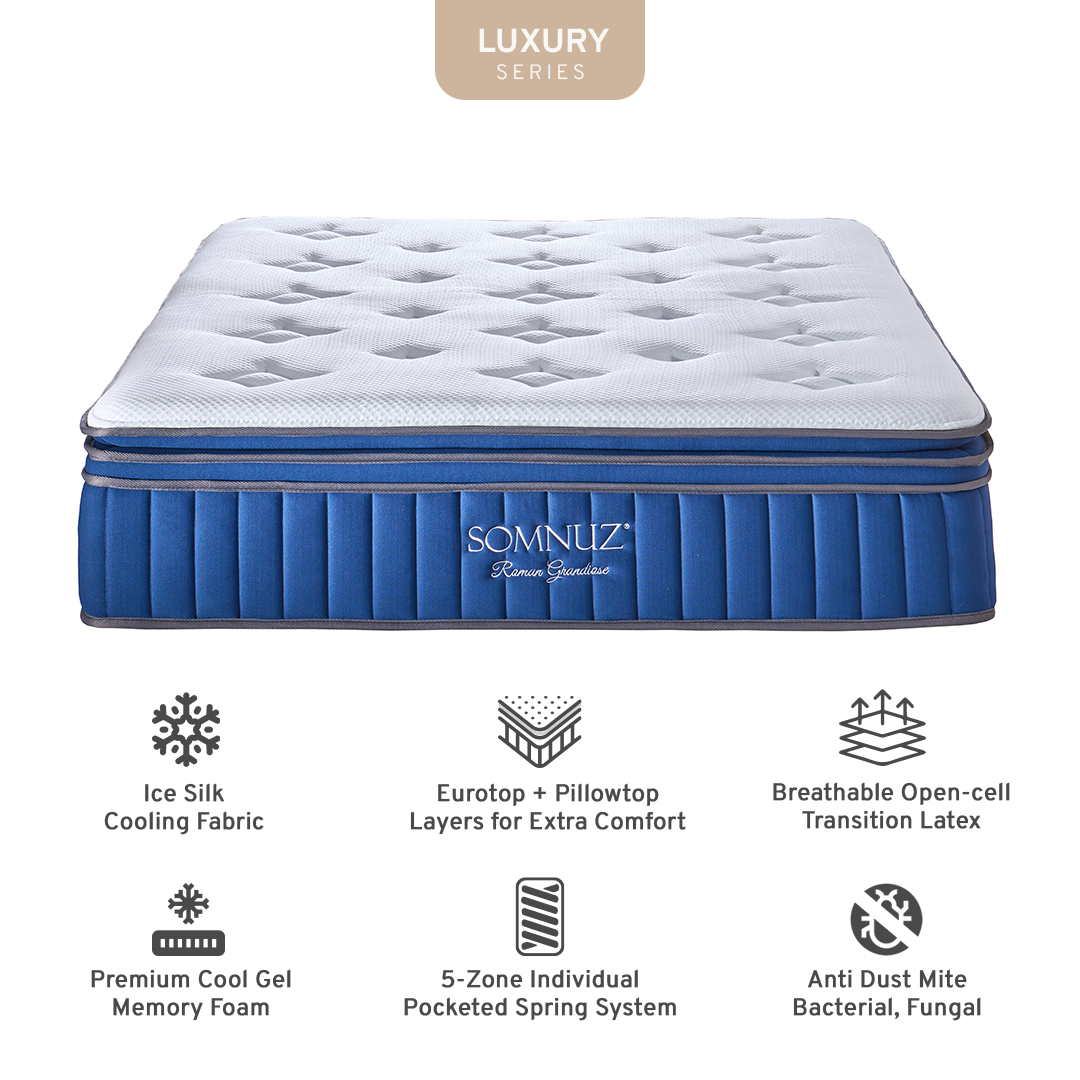


Memory foam mattresses have earned a well-deserved following for the way they conform to the body, absorb movement, and create a quietly settled sleep surface. But like any mattress, they do not last indefinitely. If you own one, or are considering buying one, understanding what lifespan to expect and what shapes it will help you make a well-informed decision.
The good news is that a quality memory foam mattress, properly cared for, has a good number of comfortable years in it. The less straightforward news is that not all memory foam is made to the same standard, and the difference between a mattress that holds up well and one that deteriorates earlier often comes down to factors that are not always obvious from the outside.
The Honest Lifespan: What Memory Foam Delivers
A well-made memory foam mattress typically lasts between eight and ten years of regular nightly use. Some higher-quality models, particularly those using high-density foam throughout, may remain comfortable and supportive for up to twelve years with proper care.
This puts memory foam roughly in line with other quality mattress types, though it sits slightly below the exceptional durability of natural latex, which can last twelve to fifteen years or more.
The eight-to-ten-year figure is a realistic working expectation, not a ceiling or a guarantee. Some memory foam mattresses begin to show their age at six or seven years. Others, particularly those with a well-constructed high-density support core, remain in strong condition beyond the decade mark. What matters most is not the age alone but the current performance of the mattress.
Why Foam Density Is the Most Important Variable
If there is one factor that has the greatest bearing on how long a memory foam mattress lasts, it is foam density. This is the detail that separates mattresses that hold up well over time from those that compress quickly and lose their support profile.
Foam density refers to how much material is packed into a given volume, measured in kilograms per cubic metre. Higher-density foam contains more material per unit of volume. It compresses more slowly under sustained weight, resists the formation of permanent body impressions, and maintains its support characteristics over a longer period.
Lower-density foam feels softer and lighter but gives way more readily. It tends to develop visible body impressions sooner, and once those impressions deepen beyond a centimetre or so, the support the mattress provides begins to change in ways that affect sleep quality.
When assessing a memory foam mattress, the density of the support core layer at the base is the most important number. Comfort layers on top are softer by design and will change gradually over time regardless of density. The support core is what keeps your spine in alignment through the night, and a high-density core maintains that function far longer than a lower-density alternative.
This is why two memory foam mattresses at similar price points can age very differently. One may have invested in a robust support core. Another may prioritise a soft, appealing surface feel while using a less resilient base beneath it.
How Singapore's Climate Affects Memory Foam Longevity
This is a practical consideration that applies specifically to anyone living in Singapore and is worth understanding before purchasing.
Memory foam is temperature-sensitive by design. The material softens slightly in warmth and firms up in cooler conditions. In Singapore's consistently warm and humid climate, memory foam tends to feel softer than it might in a cooler environment, which is generally not a problem but is worth being aware of when assessing firmness options.
More significant from a longevity perspective is humidity. Moisture that penetrates the foam over months and years, primarily from perspiration, can gradually affect the material's integrity and create conditions inside the mattress that are not ideal for hygiene. Foam that has absorbed moisture repeatedly over a long period may feel different and behave differently than foam kept dry.
A breathable, waterproof mattress protector is the most effective single measure against this. It creates a barrier between the sleeper and the foam while allowing enough airflow to prevent the sleep surface from becoming uncomfortably warm. For a memory foam mattress in Singapore, using a protector is not optional maintenance. It is the difference between a mattress that lasts eight to ten years in good condition and one that deteriorates noticeably sooner.
Choosing a memory foam mattress with ventilation features, such as open-cell foam structures or ventilation channels, also helps manage heat retention, which is one of the most common concerns about foam in a warm climate.
What Shortens a Memory Foam Mattress's Life
Understanding what accelerates wear helps you avoid the most common mistakes.
Using it without a mattress protector. As discussed above, moisture is the primary enemy of foam longevity in Singapore's climate. An unprotected mattress absorbs perspiration night after night. Over years, this accumulates in ways that affect both the foam's properties and the hygiene of the sleep environment.
A poor bed base. Memory foam needs a solid, even surface beneath it. Widely spaced or damaged slats allow the mattress to dip unevenly, placing irregular stress on the foam and accelerating the formation of uneven body impressions. A slatted base with slats no more than 7 cm apart, or a solid platform, is appropriate for memory foam. Checking the condition of your base periodically is a straightforward step that is easy to overlook.
Combined sleeper weight and usage intensity. A foam mattress used nightly by two adults, particularly with a higher combined weight, will compress more quickly than the same mattress used by a lighter single sleeper. This does not mean foam is unsuitable for couples. It means that for a shared bed, choosing a higher-density foam with a more resilient support core is worth doing from the start.
Not rotating the mattress. Memory foam mattresses cannot typically be flipped, as they have a defined top layer. However, rotating the mattress head to foot every three to six months distributes compression across a larger area and slows the rate at which any one zone develops permanent impressions.
Signs Your Memory Foam Mattress May Be Nearing the End
Foam deteriorates gradually rather than suddenly, which means the signs can creep up without being obvious. These are the indicators worth paying attention to.
Body impressions deeper than a centimetre or two. Some softening of the surface in the sleeping area is normal and expected. Impressions that are visibly deep, however, suggest the foam has compressed beyond its elastic recovery point and is no longer providing the support it once did.
The foam takes longer to recover its shape. Memory foam is designed to slowly return to its original shape after weight is removed. If yours does so very sluggishly, or if pressed areas do not return to their original height, the foam's elastic properties may have degraded.
Waking with stiffness that eases through the morning. Consistent morning aches that gradually improve as you move around are a common sign that the mattress is no longer providing adequate support through the night. This is easy to attribute to other causes, but if it is persistent and the mattress is ageing, the connection is worth examining.
Consistently better sleep elsewhere. If overnight stays in hotels or spare rooms regularly feel more restful than nights in your own bed, that contrast is informative. A mattress that has declined gradually is easy to adapt to without noticing until you experience something different.
The mattress is past eight to ten years of nightly use. Even without dramatic symptoms, a memory foam mattress beyond this age deserves honest reassessment. Support declines gradually, often in ways that are subtle until they are not.
Practical Care That Extends Memory Foam Life
The habits that protect a memory foam mattress are simple and consistent.
Use a quality mattress protector from the first night. Wash it regularly and replace it when it shows wear. This single step has the greatest cumulative effect on the foam's condition over the mattress's life.
Rotate the mattress every three to six months. Head-to-foot rotation prevents concentrated compression in the primary sleeping zones and evens out wear across the surface.
Check and maintain the bed base. Inspect the slats or platform annually. Any damage, sagging, or inadequate spacing should be addressed before it begins to affect the mattress above.
Allow the mattress to breathe when changing bedding. Leaving it uncovered for a short time each time you change sheets allows accumulated moisture to dissipate. In Singapore's humidity, this is a genuinely useful habit.
Keep the mattress clean. Gentle vacuuming of the surface and prompt attention to any spills help maintain the sleep environment and prevent debris from working into the foam over time.
If you are weighing up whether memory foam is the right construction for your situation, or comparing it against other options, exploring the full Somnuz mattress collection gives you a clear view of what is available across different materials. If you would find it useful to compare how a latex or spring construction feels alongside memory foam, visiting our showroom is the most practical way to do that.
When a Replacement Makes More Sense Than Persisting
There is no way to genuinely restore a memory foam mattress that has lost its structural support. A mattress topper can improve the surface feel if the foam has softened slightly at the top while the core remains sound. But a topper cannot correct deep body impressions or restore foam that has permanently compressed in the support layer. At that point, replacement is the more honest and practical decision.
A mattress that no longer supports you well affects roughly eight hours of every day. That is worth taking seriously.
FAQs
How long should a memory foam mattress last with two people sleeping on it?
With two adults using it nightly, a realistic expectation is eight to ten years, with longevity influenced significantly by foam density. A high-density support core will hold up better under the combined weight and sustained compression of two sleepers.
Does memory foam wear out faster in Singapore's heat?
Sustained warmth and humidity can affect foam over time, particularly without adequate moisture protection. Using a breathable waterproof mattress protector significantly reduces this risk and helps the foam maintain its properties longer.
Can I flip my memory foam mattress to extend its life?
Most memory foam mattresses have a defined top layer and should not be flipped. However, rotating the mattress head to foot every three to six months distributes compression more evenly and extends the life of the surface layers. Check the manufacturer's guidance for your specific mattress.
Is a more expensive memory foam mattress worth it for longevity?
The most meaningful predictor of longevity is foam density, particularly in the support core. Higher-quality mattresses generally use denser, more resilient foam in the base layer. Over the full lifespan of the mattress, the cost per year of use often compares favourably to replacing a cheaper model sooner.
How do I know if my memory foam mattress has worn out?
Key signs include visible body impressions deeper than a centimetre or two, foam that recovers its shape very slowly after pressure is removed, consistent morning stiffness, and noticeably better sleep on other mattresses. Any of these, particularly in a mattress past eight years of regular use, is worth taking seriously.
Is a latex mattress more durable than memory foam?
Yes, generally. A quality latex mattress typically lasts twelve to fifteen years, compared to eight to ten years for memory foam. For households prioritising long-term durability, a latex mattress may offer better value over the full ownership period.
Finding the Right Mattress for the Long Term
How long a memory foam mattress lasts depends on the quality of the foam inside, how it is used, and how consistently it is maintained. A well-chosen mattress with a high-density support core, used with a good protector and a sound bed base, should serve you well for a decade of comfortable sleep.
Browse the Somnuz mattress range to compare memory foam options alongside other constructions, or visit our showroom to try different surfaces in person and get honest, practical guidance from our team. We are here to help you find something that works well from the first night and continues to do so for years to come.