

Sagging can make a mattress feel uneven, less steady, and harder to enjoy night after night. It may start as a small dip where you usually sleep, then slowly become more noticeable as the comfort layers and support base wear down.
Learning how to fix a sagging mattress helps you act early. Some sagging can be improved with simple care steps. Deeper sagging, however, may mean the mattress has lost the support it once gave.
This guide explains what causes sagging, how to check the issue, what you can try at home, and when it may be time to compare a better support option for your sleep needs.
Why Mattresses Start Sagging
Mattress sagging usually builds over time. It often comes from daily pressure, weak base support, or natural wear in the comfort layers.
Natural Wear From Daily Use
Most mattresses soften with age. The areas under your shoulders, hips, and lower body tend to take the most pressure each night. Over time, these areas may stop bouncing back as evenly.
This does not always mean the mattress is poor quality. It can be part of normal use, especially when the mattress has been used for many years. The concern starts when the dip affects comfort, support, or how steady the bed feels.
Weak Bed Base Support
Sometimes the mattress is not the only problem. A weak frame, loose slats, or large gaps between slats can make sagging worse. Without stable support underneath, the mattress may bend more than it should.
Check for:
- Broken or missing slats
- Slats with wide gaps
- A frame that moves or creaks
- Weak centre support
- Uneven floor contact
- Loose screws or joints
Heat, Humidity, and Everyday Use in Singapore
Singapore homes deal with warm, humid conditions throughout the year. Moisture, poor airflow, and regular use can affect how fresh and stable a mattress feels over time.
This matters in HDB flats, condos, and landed homes where bedrooms may have different ventilation levels. Good airflow around the bed can help the mattress stay fresher, especially in rooms that feel warm at night.
How to Check If Your Mattress Is Really Sagging
Some dips are easy to see. Others only become clear when you lie down and feel the support change.
Look for Visible Dips
Strip the bed and look across the mattress surface. Check the areas where you and your partner usually sleep. A clear dip, uneven surface, or deep body impression can signal sagging.
You can also place a straight object, such as a broom handle or ruler, across the mattress surface. If there is a visible gap under it, the mattress may have a sagging area.
Test How Your Body Feels
Lie in your usual sleeping position for a few minutes. Notice if your body rolls towards the centre, sinks into one side, or feels less evenly supported.
For couples, check both sides of the bed. One side may feel softer than the other, especially if there is a difference in body weight or sleep position.
Common signs include:
- You roll towards the middle
- One side feels lower than the other
- The surface feels uneven
- The edges feel weaker
- Movement from your partner feels more noticeable
- The mattress no longer feels steady
Check the Bed Frame and Slats
Lift the mattress and inspect the support base. A sagging feel can happen when the frame has weakened, even if the mattress still has some life left.
Make sure the bed base is flat, firm, and suitable for your mattress type. A good mattress needs a stable foundation to perform properly.
How to Fix a Sagging Mattress at Home
Mild sagging can sometimes be improved with simple steps. These fixes may help the mattress feel more even, but they cannot fully restore a worn support core.
Rotate the Mattress
Rotate the mattress 180 degrees if the design allows it. This moves your usual sleeping area to a less-used part of the mattress.
Rotation can help spread pressure more evenly over time. It is especially useful when the dip is still mild.
Do not flip the mattress unless it is clearly designed to be used on both sides. Many modern mattresses have a specific top comfort layer and a lower support layer.
Improve the Bed Base
A stronger base can make a mattress feel steadier. Tighten loose screws, replace weak slats, and check that the frame sits evenly on the floor.
If the slats are too far apart, the mattress may not get enough support. Adding stronger slats or a centre support beam may help reduce bending.
Add a Support Board Temporarily
A flat support board can help create a firmer surface under the mattress. This may improve the feel for a short time if the issue comes from a weak base.
Still, this is not a long-term fix for deep sagging. If the mattress layers have already broken down, the board will not restore the original comfort or support.
Use a Mattress Topper for Surface Comfort
A topper can make the surface feel more cushioned. It may help if the mattress feels slightly uneven or too firm in certain areas.
However, a topper sits above the problem. It can improve surface comfort, but it cannot repair the support system underneath.
Try these steps first:
- Rotate the mattress
- Tighten the bed frame
- Replace weak slats
- Add centre support
- Improve bedroom airflow
- Use a topper for surface comfort only
If the mattress still feels uneven after these steps, it may be time to review Somnuz’s mattress collection and consider a more supportive replacement.
When a Sagging Mattress Cannot Be Fixed Properly
Some sagging points to deeper wear. At that stage, care steps may only make the mattress feel better for a short while.
The Dip Comes Back Quickly
If the sagging returns soon after rotation or base support changes, the inner structure may have weakened. This is common in older mattresses where the comfort or support layers no longer respond evenly.
The Mattress Feels Uneven Every Night
A mattress should feel stable and supportive across the areas where you sleep. If you keep adjusting your position to feel comfortable, the mattress may no longer suit your needs.
This is especially important for couples. Shared sleep can feel less settled when one side dips or movement travels across the mattress more easily.
The Topper No Longer Helps
A topper can add softness, but it cannot fix a mattress that has lost its base support. If the bed still feels uneven even with a topper, replacement may be the clearer option.
Signs that repair may not be enough include:
- The dip returns after rotation
- One side sinks more than the other
- The centre pulls you inward
- The edges feel weak
- Movement feels stronger across the bed
- Surface comfort no longer feels steady
When this happens, it helps to compare our mattresses by firmness, thickness, cooling comfort, and support style before deciding.
What to Look For If You Replace a Sagging Mattress
Replacing a mattress should feel clear, not rushed. The right choice depends on your comfort preference, sleep style, and home setup.
Support That Feels Steady
Support is not the same as hardness. A mattress can feel cushioned while still giving your body a steady surface.
Firmer does not always mean better for every sleeper. Some people prefer a firmer feel, while others need more cushioning around the shoulders and hips. The goal is to find support that feels stable without feeling too hard.
Breathable Comfort for Humid Nights
Singapore nights can feel warm and humid. Breathable materials help reduce heat build-up across the surface, which can make sleep feel more comfortable.
If you often wake up feeling warm, it may help to review cooling mattress options that are designed with airflow and comfort in mind.
Reduced Partner Disturbance for Couples
For couples, movement control can make a real difference. A mattress with better motion control helps reduce movement from one side of the bed to the other.
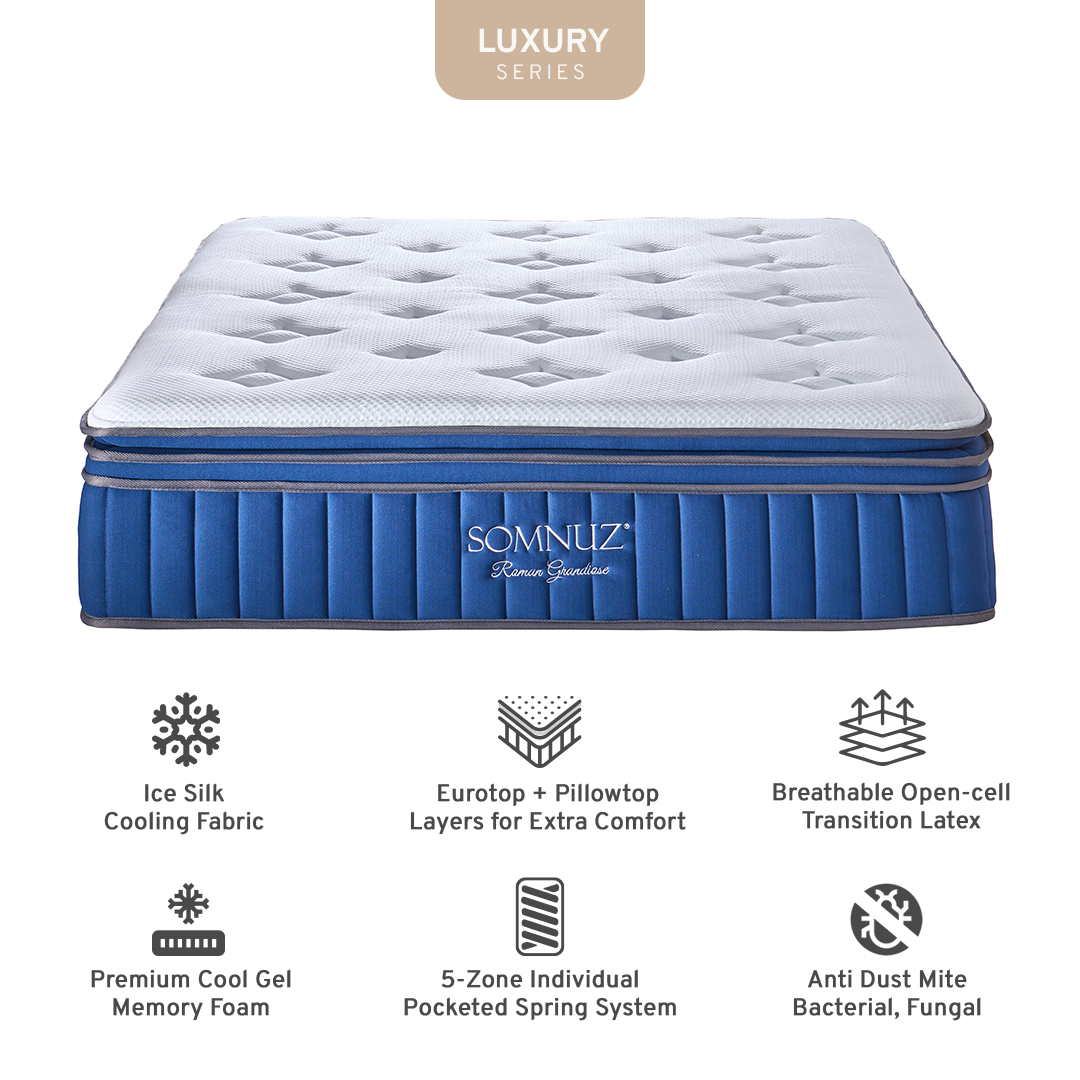
This can be helpful if one person changes position often or wakes earlier than the other. Somnuz’s pocketed spring mattresses are worth considering because the springs move more independently across the mattress.
|
Need |
What To Look For |
Why It Helps |
|
Steadier support |
Balanced firmness and strong base support |
Helps the mattress feel more even |
|
Shared sleep |
Motion-control design |
Reduces movement across the bed |
|
Warm nights |
Breathable materials |
Helps reduce heat build-up |
|
Surface comfort |
Comfort layers that suit your preference |
Adds cushioning where needed |
|
Peace of mind |
Clear guidance and support |
Helps you choose with confidence |
How to Fix a Sagging Mattress and Choose Better Support
Knowing how to fix a sagging mattress starts with checking the real cause. Mild sagging may improve with rotation, better base support, or a topper. Deeper sagging usually means the mattress has lost support that simple fixes cannot restore.
If your mattress still feels uneven after basic care, take time to compare your options. Look for steady support, breathable comfort, motion control for shared sleep, and guidance that helps you choose based on how you actually rest.
For more confidence, it can help to visit our showroom and try different comfort levels in person. This gives you a clearer feel for support, firmness, and cooling comfort before bringing a new mattress into your home.
Find Support That Feels Right for Your Sleep
Shop the Collection online to review supportive comfort options for your home. Compare Our Mattresses to understand firmness, cooling features, and motion control in a clearer way. Visit the Showroom for calm guidance from the Somnuz sleep team before you decide.
Frequently Asked Questions
Can you really fix a sagging mattress?
Yes, mild sagging can sometimes be improved with rotation, better bed base support, or a mattress topper. Deep sagging usually cannot be fully fixed because the inner support layers may already be worn.
Does putting plywood under a sagging mattress help?
Plywood may help for a short time if the bed base is weak or uneven. It does not repair worn comfort layers or a support core that has already lost shape.
Should I flip or rotate a sagging mattress?
Rotate the mattress if the design allows it. Flip it only if the mattress is clearly made to be used on both sides, since many modern mattresses have a fixed top comfort layer.
When should I replace a sagging mattress?
Replace it when dips return quickly, the surface feels uneven every night, or your body no longer feels steadily supported. It is also worth replacing if the bed base is stable but the mattress still sinks.
What mattress type is better for avoiding sagging?
No single mattress type suits everyone. Look for quality materials, steady support, proper base compatibility, and a comfort feel that matches your sleep style.
Can a mattress topper fix a sagging mattress?
A topper can improve surface comfort, but it cannot restore the support inside a worn mattress. If the mattress has deep sagging, a topper is only a temporary comfort layer.