

Testing a mattress properly before purchasing is one of the most valuable things you can do. A few minutes of lying on a mattress in a showroom setting gives you more useful information than hours of online research. The challenge is that most people do not know what to actually pay attention to when they are there.
This guide explains exactly how to test a mattress in a showroom so that the experience is genuinely informative rather than a quick sit on the edge before moving on.
Why Testing in Person Matters
A mattress affects your sleep every night for eight to ten years. The feel, the firmness, the response to your body weight, and how it accommodates your sleeping position are all things that a product description can hint at but cannot fully convey.
Photographs show the cover fabric. Specifications tell you materials and dimensions. Reviews give you other people's experiences. But none of these tell you how the mattress will actually feel beneath your specific body, in your actual sleeping position, with your specific weight distribution.
A showroom visit bridges that gap. Even ten to fifteen minutes lying properly on a mattress provides a significantly better basis for a decision than purchasing entirely on specification.
What to Do When You Arrive
Come prepared. Wear or bring clothing that allows you to lie comfortably on the mattress. If you share a bed with a partner, bring them. A mattress that suits you individually may not suit you both together, and decisions made without the other person present often result in one partner being less comfortable than expected.
Tell the showroom team how you sleep. Side sleeper, back sleeper, front sleeper, combination sleeper, or someone who moves frequently during the night. A good showroom team uses this information to guide you towards options that are more likely to suit your needs. If the team does not ask and simply gestures at the range, that is worth noting.
How to Actually Lie on a Mattress Properly
The most common mistake in a showroom is sitting on the edge of the mattress for a minute and making a judgement. This is not an adequate test.
Lie down in your actual sleeping position, meaning the position you wake up in most mornings. If you sleep on your side, lie on your side. If you sleep on your back, lie on your back. The mattress should be assessed in the context of how you actually use it.
Spend at least ten minutes in position. Mattresses often feel quite different after a few minutes than they do in the first thirty seconds. The initial impression of firm or soft can shift once your body weight has settled and the foam or springs have responded to your presence.
During those ten minutes, notice several things.
Is there pressure building at the shoulder or hip? For side sleepers, pressure at these contact points is a sign the mattress may be too firm. The shoulder should sink slightly without the entire upper body collapsing into the surface.
Does the spine feel reasonably aligned? For back sleepers, the lower back should feel supported without being pushed upward by an excessively firm surface. For side sleepers, the spine should feel roughly straight from shoulder to hip rather than curved in either direction.
Is the surface comfortable to lie still on, or are you adjusting your position frequently trying to find comfort? Frequent position adjustment during a test suggests the surface is not accommodating your body well.
Testing for Motion Transfer if You Share the Bed
If you share a bed, both partners should lie on the mattress simultaneously, as you would at home. One partner should shift position, roll over, or simulate getting up while the other lies still and notices how much movement is felt.
A mattress with good motion isolation allows one person to move without the other feeling it significantly. Pocketed spring and memory foam mattresses typically perform better here than older innerspring or basic foam alternatives.
This test is more informative if both people are actually on the mattress together rather than testing separately.
Testing Edge Support
Sit on the edge of the mattress and notice whether it holds its shape or compresses and rolls. A mattress with poor edge support feels unstable at the sides, which can make the usable sleeping area effectively smaller than the mattress dimensions suggest.
For couples who tend to sleep towards the edges of a queen or king mattress, edge support is a practical consideration rather than a minor detail.
What to Do With What You Find
After testing several options, you should have a clearer sense of which feels most natural and comfortable in your sleeping position. If two or three options feel similarly good, that is useful information too: it suggests you have more flexibility in your decision and other factors like price, construction quality, or trial terms can guide the final choice.
If nothing feels right, it may be that the firmness range you have tested does not match your needs. Ask the team to suggest something in a different firmness range and test that too.
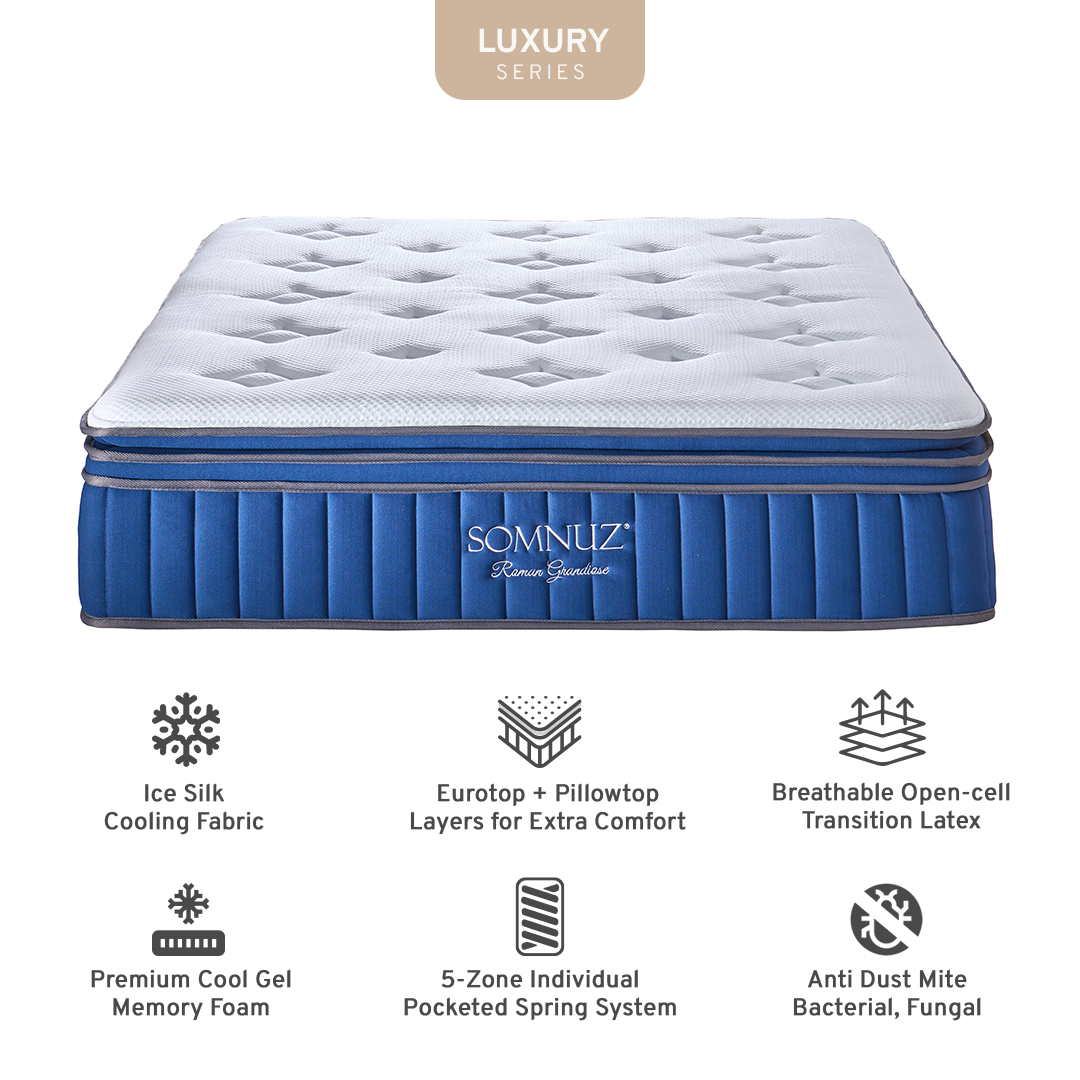
The Somnuz mattress collection spans different constructions and firmness levels, and visiting our mattress showroom in Singapore gives you the chance to test the range properly, with guidance from a team whose job is to help you find what works, not to move you quickly towards a decision.
For broader guidance on what makes a good sleep environment, the Sleep Well resource page covers considerations that go beyond the mattress itself.
Frequently Asked Questions
How long should I spend testing a mattress in a showroom?
At least ten to fifteen minutes per mattress in your actual sleeping position. Brief sit-down assessments do not give your body enough time to settle and respond, which means first impressions can be misleading.
Should I bring my partner when testing a mattress?
Yes, if you share the bed. A mattress that suits you individually may not suit both of you together, and motion transfer can only be properly tested with both people present simultaneously.
What should I wear when testing a mattress?
Comfortable clothing that you would wear in bed. The goal is to replicate sleeping conditions as closely as practically possible in a showroom setting.
How do I test for motion isolation?
Lie on the mattress while your partner moves or simulates getting up. Notice how much of that movement you feel on your side. A mattress with good motion isolation feels relatively undisturbed when a partner moves.
What if I cannot decide between two mattresses?
Ask about the trial period. A meaningful trial of at least 30 nights at home is the most definitive test. If the two options feel very similar, factors such as construction quality, breathability for Singapore's climate, and warranty terms can help differentiate them.
Can I trust a showroom mattress test if the mattress is new?
Yes. New mattresses in a showroom that have been used for demonstration may have settled slightly from brand new, which can actually give you a slightly more accurate sense of how the mattress will feel after the initial break-in period.
Try the Range in Person
Testing a mattress properly is the most reliable step you can take towards a confident purchase.
Browse the Somnuz mattress collection to narrow down your options. Then visit our showroom in Singapore to try the range in person with honest, helpful guidance.