

The term insulation mattress is used in a few different contexts, and understanding what it actually refers to helps you make sense of it in relation to your sleep needs in Singapore.
What Mattress Insulation Refers To
In camping and outdoor sleeping contexts, mattress insulation refers to the material's ability to prevent body heat from being conducted into the ground. This is typically measured as R-value. A higher R-value means the mattress insulates better against cold ground, keeping the sleeper warmer.
For camping in cold environments, high-insulation sleeping pads are essential for warmth. For camping in warm tropical and subtropical environments like Singapore and the surrounding region, ground insulation is less of a concern. The ground is warm, and retaining body heat away from it is generally not needed.
In home mattress contexts, insulation is less commonly used as a primary descriptor. When it does appear, it refers to the ability of the mattress materials to regulate temperature, either by insulating against cold in colder climates or by dissipating heat in warm ones.
What Actually Matters for Temperature in Singapore
In Singapore's year-round warmth and humidity, the relevant question is not how well a mattress insulates against cold but how well it manages heat and moisture during sleep.
A mattress that retains body heat creates a warm, uncomfortable sleeping surface. A mattress with good airflow and breathable materials manages warmth more effectively.
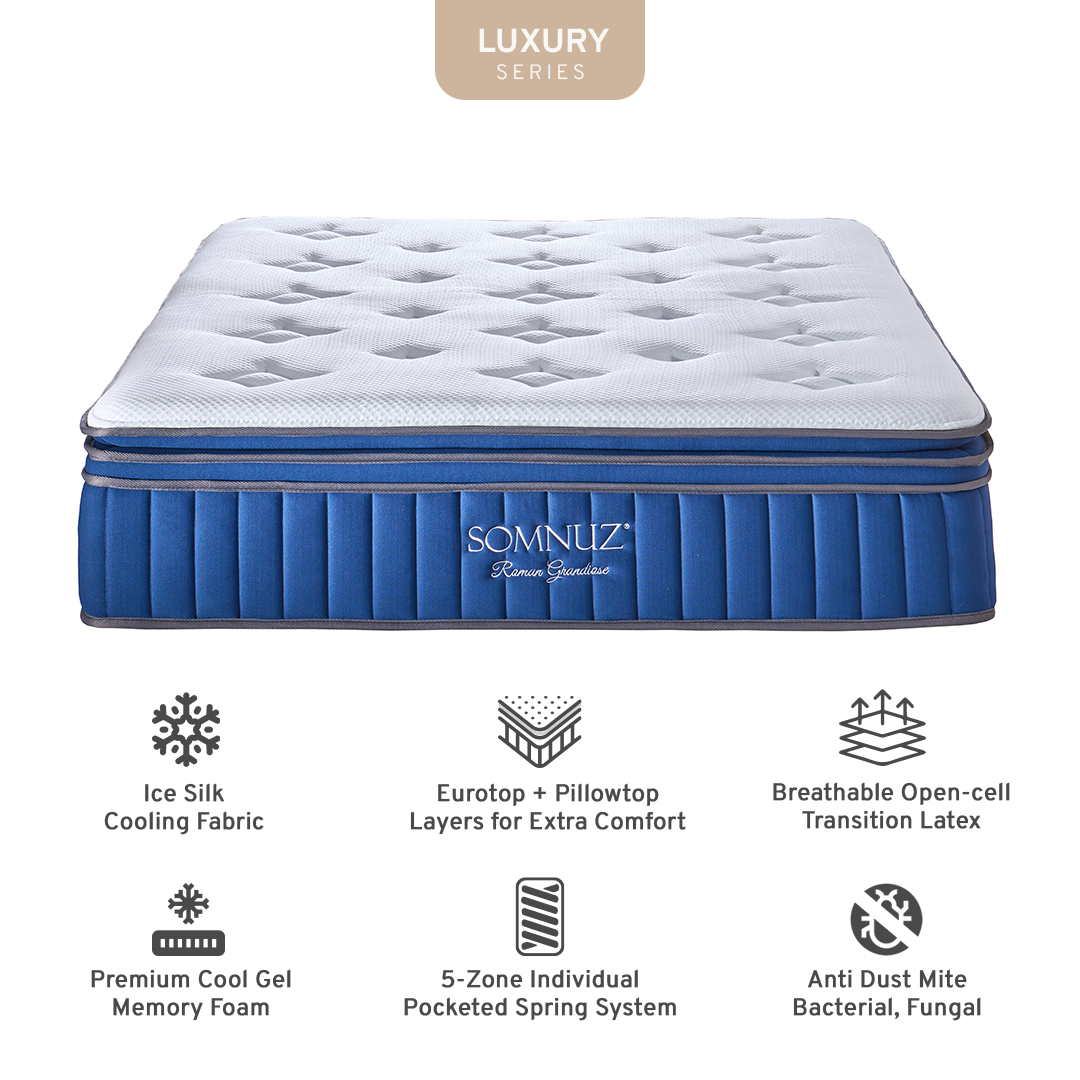
The construction type is the most significant factor. A pocketed spring or hybrid mattress allows air to circulate through the spring core, which naturally dissipates heat and moisture. A pocketed spring mattress or well-constructed hybrid tends to sleep cooler in Singapore's conditions than a dense, sealed foam alternative.
Natural latex is inherently breathable. Its open-cell structure allows airflow through the material, which manages warmth effectively without trapping heat. A latex mattress suits warm sleepers in Singapore well for this reason.
For foam mattresses, open-cell foam construction is more breathable than closed-cell alternatives. A memory foam mattress with open-cell foam and a breathable natural fabric cover manages Singapore's conditions better than a dense, sealed foam option.
Insulation Underlay for Floors
A separate context where insulation is sometimes relevant is placing a mattress on a cold or hard floor. While this is less common in Singapore's warm climate, some households with air-conditioned rooms or cool tile floors may find that a thin insulating underlay beneath the mattress, or simply a suitable bed base that raises the mattress off the floor, improves sleeping comfort slightly.
In Singapore, the more common concern is ensuring adequate airflow beneath the mattress to prevent moisture accumulation, which is addressed by a raised base rather than insulation underlay.
The Somnuz mattress collection includes options designed to manage Singapore's warm conditions effectively. For guidance on which construction suits your sleep needs, visit our mattress showroom in Singapore. The Sleep Well resource page covers broader guidance on sleep environments.
Frequently Asked Questions
What does insulation mean in relation to a mattress?
In camping contexts, it refers to the mattress's ability to prevent body heat from escaping into cold ground, measured as R-value. In home mattress contexts, it relates to how well the mattress manages sleeping temperature.
Does mattress insulation matter in Singapore?
Not in the cold-weather sense. Singapore's climate requires the opposite: a mattress that dissipates heat and manages moisture rather than one that retains warmth. Breathability and airflow are the relevant properties.
What is R-value and does it matter for camping in Singapore?
R-value measures thermal insulation capacity. For camping in Singapore's warm regional environment, a low R-value of 1 to 3 is typically sufficient as the ground is warm and cold insulation is not a priority.
What mattress construction manages Singapore's warmth best?
Pocketed spring and hybrid constructions with natural ventilation through the spring core, natural latex with inherent breathability, and open-cell foam with breathable covers all manage Singapore's warmth better than dense, sealed foam alternatives.
Should I place an insulating mat under my mattress in Singapore?
Generally not needed for warmth in Singapore's climate. The more practical concern is ensuring adequate airflow beneath the mattress by using a raised base, which prevents moisture accumulation in the humid climate.
What is the difference between an insulating mattress pad and a mattress topper?
An insulating mattress pad specifically focuses on thermal properties. A mattress topper is a thicker comfort layer that adjusts the feel of the sleeping surface. In Singapore's climate, a breathable mattress protector rather than an insulating pad is the more relevant protective layer.
Find a Mattress That Suits Singapore's Climate
Managing warmth and breathability is the relevant consideration in Singapore, not insulation against cold.
Browse the Somnuz mattress collection for options designed for Singapore's conditions. Or visit our showroom for practical guidance on what suits your sleep.