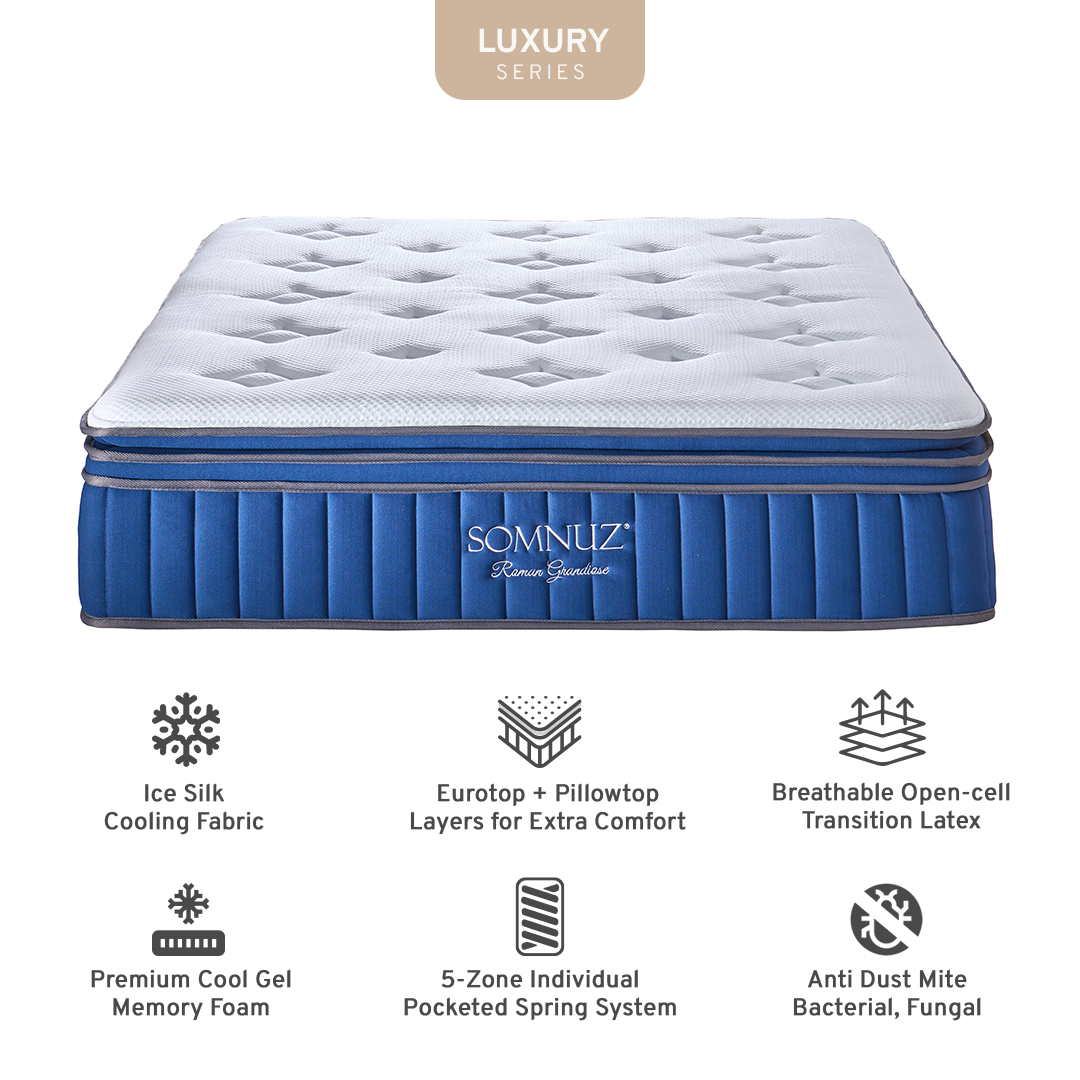


Memory foam is one of the most widely purchased mattress materials globally and has genuine strengths for many sleepers. In Singapore's specific climate, however, it also has limitations that are worth understanding before you decide. This guide gives you an honest, balanced assessment.
What Memory Foam Does Well
Pressure Relief and Body Contouring
Memory foam's defining property is its response to body heat and pressure. It softens under the warmth and weight of a sleeping body, conforming to the body's shape and distributing weight across a larger surface area. This reduces the localised pressure at contact points like the shoulder, hip, and sacrum that can build up on a firmer, non-contouring surface.
For side sleepers in particular, this pressure relief is one of the most practically significant benefits of memory foam. The shoulder and hip sink slightly into the surface, reducing the concentrated load at these points and often resulting in a more comfortable night's sleep.
Motion Isolation
Memory foam absorbs movement rather than transmitting it. When one person on a shared mattress shifts position or gets up during the night, the dense foam contains that movement locally rather than allowing it to travel across the surface.
For couples where one partner is a light sleeper or where different schedules mean one person gets up earlier than the other, this motion isolation is a genuine daily benefit.
Quiet Sleeping Surface
Memory foam produces no sounds when compressed or released. For those who have slept on squeaky or noisy spring mattresses, the complete silence of a foam sleeping surface is a notable comfort.
The Main Limitation in Singapore: Heat Retention
Dense memory foam can retain body heat. This is the same mechanism that allows it to contour to the body, but it has a downside in a warm climate. As body heat builds up in the mattress during the night, the sleeping surface can feel progressively warmer.
In Singapore's year-round warmth and humidity, a memory foam mattress that retains heat can be uncomfortable, particularly for those who sleep warm or in bedrooms that are not heavily air-conditioned.
This is not an inevitable problem with all memory foam mattresses. Open-cell foam construction creates channels within the foam structure that allow airflow and heat dissipation. Breathable cover fabrics in natural materials further help manage temperature. A well-specified memory foam mattress with these features manages Singapore's climate considerably better than a dense, sealed alternative.
The practical guidance is: if memory foam appeals to you, prioritise open-cell construction and breathable covers when choosing in Singapore.
Foam Density and Longevity
Not all memory foam performs equally over time. Lower-density foam compresses and softens faster than high-density alternatives. A mattress that feels comfortable when new may develop body impressions and lose its original support within two to three years if the foam density is inadequate.
Higher-density foam maintains its properties for longer and provides more consistent support throughout the mattress's life. Looking for clear foam density specifications, rather than relying on vague quality descriptions, is the most reliable way to assess longevity.
An Honest Verdict
A quality memory foam mattress with open-cell construction, a breathable cover, and adequately specified foam density is a good choice for many Singapore sleepers. It provides genuine pressure relief, effective motion isolation, and a quiet sleeping surface.
A poorly specified memory foam mattress with dense, closed-cell foam and no breathability features is less suited to Singapore's conditions and may show premature wear.
The Somnuz memory foam collection includes options with construction details that allow proper evaluation. For guidance on what suits your sleep needs, visit our showroom in Singapore. The Somnuz mattress collection covers foam, spring, and latex options for comparison.
Frequently Asked Questions
Is memory foam good for Singapore's climate?
It can be, with the right construction. Open-cell foam with a breathable cover manages Singapore's warmth considerably better than dense, sealed foam. Prioritising breathability when choosing a memory foam mattress in Singapore is important.
Who benefits most from a memory foam mattress?
Side sleepers who benefit from pressure relief at the shoulder and hip, light sleepers who value motion isolation, and those who prefer a quiet, contouring sleeping surface.
How long does a memory foam mattress last?
A well-specified mattress with high-density foam typically lasts eight to ten years. Lower-density foam softens and compresses more quickly. Foam density is the strongest predictor of longevity.
Does memory foam cause back pain?
A quality memory foam mattress at an appropriate firmness for the sleeper's position and body weight should not cause back pain. A mattress that is too soft for the sleeper's weight or position can allow excessive sinking that misaligns the spine, which can contribute to discomfort.
Is memory foam or latex better for Singapore?
Latex has a natural breathability advantage in Singapore's warm climate. Memory foam with open-cell construction narrows this gap significantly. Both can work well; the choice ultimately depends on whether you prefer the contouring feel of memory foam or the buoyant responsiveness of latex.
What foam density should I look for?
Look for density specifications of 50 kg/m³ or above in the comfort layers as a practical minimum for regular use. Higher-density foam provides better durability and more consistent support over time.
Find the Right Memory Foam Mattress for Singapore
With the right construction, a memory foam mattress provides genuine pressure relief and comfort suited to Singapore's conditions.
Browse the Somnuz memory foam collection. Or visit our showroom in Singapore to try the range in person and find what works for you.