

The Japanese approach to sleeping surfaces is distinctly different from the Western convention of a thick mattress on a raised bed frame. Understanding what a Japanese-style sleeping arrangement involves, how it is traditionally used, and whether it translates well to Singapore's conditions helps you decide whether it is a practical option for your home.
The Traditional Japanese Sleeping Surface: The Futon
In Japan, the traditional sleeping arrangement uses a futon, which in its original form is a padded cotton sleeping mat placed directly on a tatami mat floor. The futon is relatively thin compared to a Western mattress, typically 5 to 10 centimetres deep, and is designed to be rolled up and stored in a cupboard during the day to free up the living space.
This is different from the Western use of the word futon, which typically refers to a sofa bed with a thin foam mattress. The traditional Japanese futon is firmer and thinner than most Western mattresses and is intended for floor sleeping on a hard tatami surface.
Modern Japanese Mattress Options
The traditional futon has evolved, and modern Japanese-inspired sleeping surfaces include a range of options.
Shikibuton refers to a Japanese floor mattress, typically thicker than traditional futon mats, designed for floor sleeping with more comfort than a basic futon. These are available in various thicknesses and materials, including cotton, wool, and foam combinations.
Japanese roll-up or tri-fold mattresses are foam mattresses designed to fold compactly for storage, inspired by the traditional futon's packaway approach. These have become popular in markets like Singapore for guest use or space-efficient sleeping.
Western-style mattresses on low-profile Japanese platform frames combine Western mattress comfort with the aesthetic of Japanese bedroom design. These setups use standard Western mattresses on low, usually wooden platform frames close to the floor.
How Japanese-Style Sleeping Translates to Singapore
The traditional floor-level sleeping approach of Japanese culture has both appeal and practical considerations for Singapore homes.
The lower sleeping height has an aesthetic that many find appealing in contemporary minimalist bedroom design, which is popular in Singapore condominiums and HDB flats.
For the traditional firmer, thinner floor mattress approach, Singapore's warm and humid climate presents a challenge. A thin mat on a hard floor close to the ground limits airflow beneath the sleeping surface, and in Singapore's humidity, moisture can accumulate between the mat and the floor. Traditional Japanese futons are aired and exposed to sunlight regularly in Japan's drier climate to manage moisture. In Singapore's humidity, this moisture management is both more important and more challenging.
If a floor-level Japanese-style sleeping arrangement appeals, using a breathable, washable mat on a slatted platform that allows some airflow, rather than placing it directly on the floor, addresses the moisture concern more effectively.
For Those Who Want the Aesthetic Without the Compromise
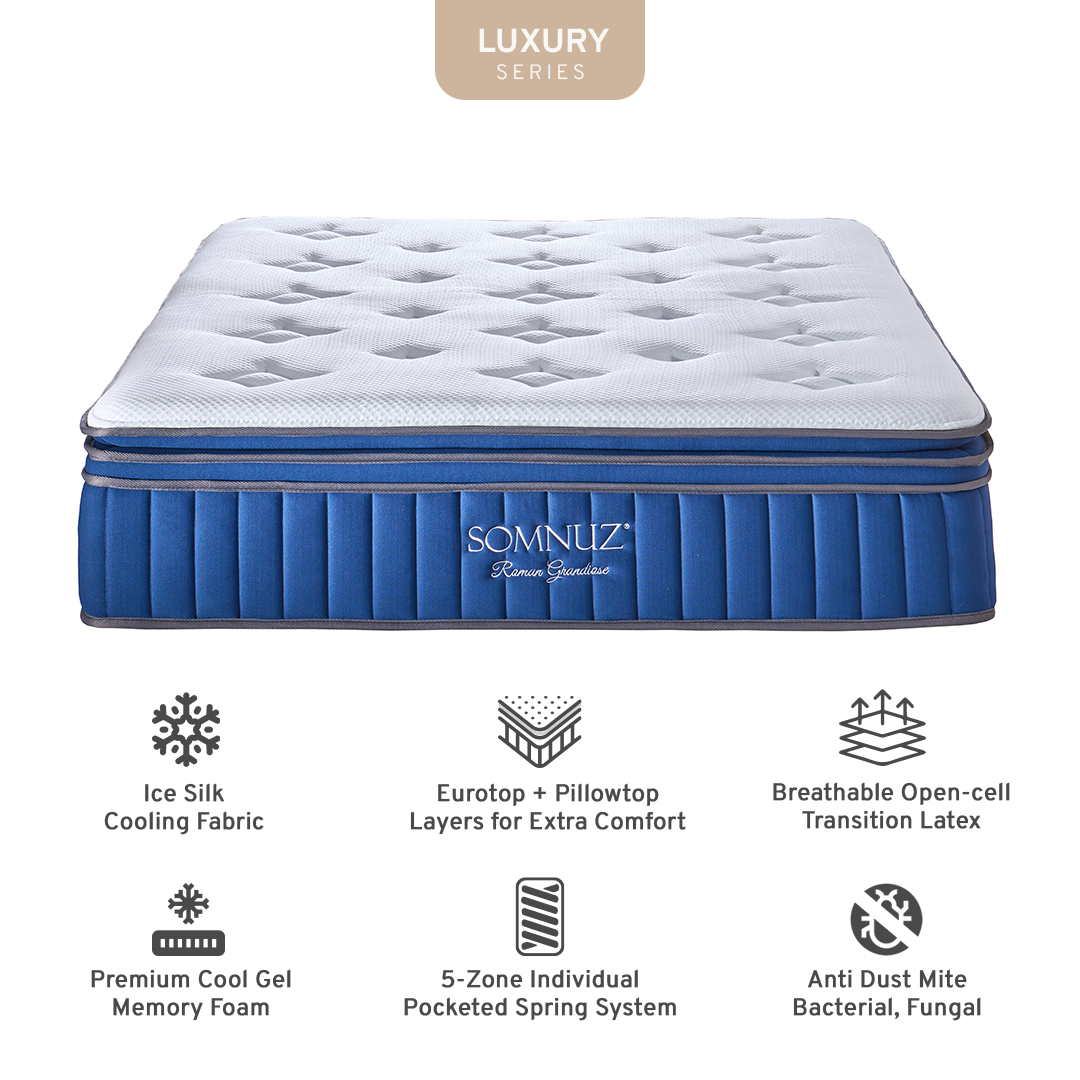
Many Singapore homes incorporate Japanese aesthetic sensibility through low platform bed frames while using a quality Western mattress that manages Singapore's conditions properly. This combination provides the visual language of Japanese bedroom design with the practical comfort and breathability needed for the climate.
A pocketed spring mattress or latex mattress on a low wooden platform frame provides this balance effectively. The Somnuz mattress collection includes options suited to Singapore's conditions across different sizes. For guidance on what suits a Japanese-inspired bedroom setup, visit our showroom in Singapore. The Sleep Well resource page covers broader bedroom environment guidance.
Frequently Asked Questions
What is a Japanese bed mattress?
Traditionally, it refers to a futon, a padded cotton mat used for floor sleeping in Japan, rolled up for storage during the day. In modern usage, it may refer to Japanese-inspired floor mattresses, roll-up or foldable foam mattresses, or Western mattresses on low Japanese platform frames.
Is a Japanese floor mattress comfortable?
Traditional Japanese futons are firmer than Western mattresses and suit those who prefer or are accustomed to firmer sleeping surfaces. They are not suitable for everyone, particularly side sleepers who need more cushioning at the shoulder and hip.
Is floor sleeping in a Japanese style practical in Singapore?
It can be, with some modifications. Singapore's humidity means moisture management is more important than in Japan's drier climate. Using a breathable mat on a slatted surface rather than directly on the floor, and airing it regularly, helps manage moisture.
How does a Japanese-style setup compare to a standard Singapore bed?
A traditional Japanese setup is lower, firmer, and more compact when folded. A standard Singapore setup with a Western mattress on a divan or frame provides more cushioning, easier moisture management, and more comfortable access for most adults.
Can I get Japanese-style mattresses in Singapore?
Foldable foam mattresses, roll mats, and tatami-style mats are available from various Singapore retailers. Traditional Japanese futon mats may require specialist sourcing.
What mattress suits a low Japanese platform frame in Singapore?
A pocketed spring or latex mattress at an appropriate thickness suits a low platform frame while managing Singapore's climate well. The mattress depth should keep the total sleeping height comfortable for getting in and out.
Find the Right Mattress for Your Bedroom Style
Whether traditional or contemporary, the right mattress for your bedroom should suit how you sleep and Singapore's conditions.
Browse the Somnuz mattress collection to find options suited to different bedroom styles. Or visit our showroom in Singapore for guidance on what works for your setup.