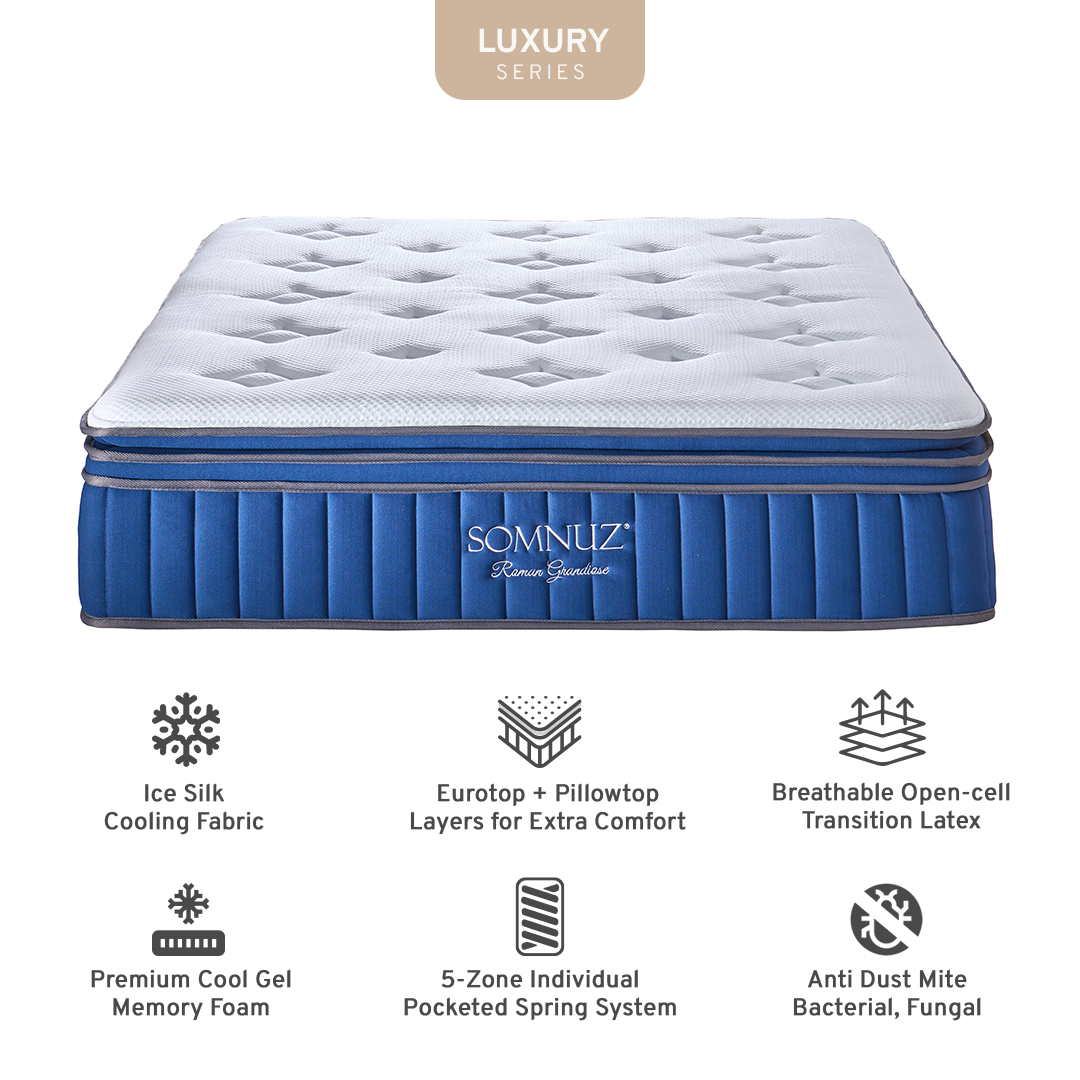


When most people shop for a mattress, they focus on the foam density, the spring count, or the firmness rating. The fabric cover rarely gets much attention. But the knitted fabric on the outside of your mattress is not just decorative. It is the surface your body is closest to every night, and it plays a meaningful role in how comfortable, breathable, and durable your mattress is over time.
Understanding what knitted mattress fabric does and what to look for helps you make a more informed choice, whether you are buying a new mattress or simply trying to understand what you already have.
What Is Knitted Mattress Fabric?
Most quality mattresses use a knitted fabric for their outer cover rather than a woven one. Knitted fabric is made by interlocking loops of yarn, which gives it natural stretch and flexibility. This is different from woven fabric, where threads are crossed over and under each other in a fixed grid.
The stretch of knitted fabric is important for a mattress cover. It allows the cover to move with the comfort layers beneath it, particularly with foam and latex, so the surface responds to your body without resistance. A rigid woven cover would reduce the contouring effect of any material below it.
Knitted mattress fabrics are typically made from one or a combination of the following materials:
-
Polyester. The most common base material. Durable and affordable, though less breathable on its own.
-
Viscose or rayon. Adds softness and a smooth feel. Often blended with polyester.
-
Bamboo-derived fibre. Naturally moisture-wicking and breathable. Increasingly common in better-quality mattresses.
-
Tencel or lyocell. Made from sustainably sourced wood pulp. Very soft, breathable, and effective at temperature regulation.
-
Wool. Sometimes used in a blend for natural temperature regulation and a degree of fire resistance.
The blend of fibres in the knit determines how the cover performs in terms of breathability, softness, and how it holds up over time.
Why Knitted Fabric Matters in Singapore's Climate
In Singapore, where humidity stays high and temperatures remain warm throughout the year, the breathability of your mattress cover is not a minor detail. It affects how comfortable the sleeping surface feels and how much heat and moisture accumulate beneath your body during the night.
A tightly knitted polyester cover with limited airflow will feel noticeably warmer than a more open-knit cover incorporating bamboo or Tencel fibres. If you sleep warm or tend to wake up feeling sticky or uncomfortable, the cover material could be a contributing factor.
When evaluating a mattress, it is worth asking or checking what the cover fabric is made from. Bamboo or Tencel knit covers are generally the more breathable options and tend to feel cooler and softer against the skin.
How Knitted Fabric Affects Durability
Beyond comfort, the fabric cover also affects how well the mattress holds up over time.
A well-knitted cover resists pilling and maintains its surface quality through years of use. Lower-quality covers may start to bobble, thin out, or develop small tears at stress points relatively quickly. This affects not just how the mattress looks but how hygienic it is, as a damaged cover is harder to clean and offers less protection to the layers beneath.
If a mattress cover is removable and washable, the durability of the knit is particularly important. Covers that are washed regularly need to hold their shape and structure through repeated machine washing without shrinking or distorting.
Look for mattresses where the cover is described as durable, double-knit, or reinforced at the edges and sides. These details suggest that the manufacturer has put thought into the longevity of the cover as well as the interior construction.
Knitted Fabric and the Feel of Your Mattress
The knit of the fabric also affects the tactile experience of sleeping on the mattress. A smooth, fine-knit cover feels softer against the skin. A coarser knit may feel slightly firmer or more textured.
For mattresses designed to contour to the body, such as memory foam or latex options, a stretchy knit that follows the sleeper's shape is important. A knit with less stretch will limit how well the foam can respond to pressure, effectively making the mattress feel firmer than it is.
This is why high-quality mattresses tend to use finer, more flexible knits for their covers. The fabric is engineered to work with the interior materials rather than against them.
What to Look For When Comparing Mattress Covers
When you are comparing mattresses and paying attention to the cover, here is what to consider:
Fibre content. Bamboo, Tencel, or a blend of these with polyester tends to perform well in terms of breathability and softness. Pure polyester is more affordable but less breathable.
Knit density. A finer, denser knit tends to be more durable and feels smoother. A very loose knit may pill or wear faster.
Removability. Whether the cover can be removed and washed affects long-term hygiene. This is especially relevant in Singapore's humid conditions.
Edge construction. Well-finished edges and side panels indicate a cover that has been built to last, not just to look good in a showroom.
Thickness. For foam and latex mattresses, a cover that is too thick or padded can reduce the contouring effect of the layers beneath. A thinner, more flexible cover preserves the mattress's feel.
The Cover Is Part of the Mattress
It is easy to think of the mattress cover as something separate, an accessory that sits outside the real product. In reality, it is an integral part of the mattress system. A thoughtfully designed knitted cover enhances the performance of everything beneath it.
When you are evaluating mattresses, pay attention to what the cover is made from and how it is constructed. It is a meaningful indicator of the care that has gone into the product overall.
You can explore how our mattresses are constructed across our full mattress collection, including memory foam, latex, and pocketed spring options. If you would like to feel the difference in person, our team at the Somnuz showroom in Singapore is happy to walk you through the options.
FAQs
What is the best fabric for a mattress cover in Singapore's climate?
Bamboo-derived and Tencel knit covers tend to perform best in humid conditions. They are breathable, moisture-wicking, and feel cooler against the skin than polyester-heavy blends.
Can the knitted fabric on a mattress be washed?
Many quality mattresses have removable, washable covers. The ease of washing and how well the cover holds up through washing depends on the knit quality and fibre content. Check the care label and wash at the recommended temperature to preserve the fabric.
Does the mattress cover affect how firm the mattress feels?
Yes, to a degree. A less stretchy cover can slightly dampen the contouring effect of foam or latex beneath it, making the mattress feel a little firmer. A flexible, well-knitted cover allows the mattress to respond more freely to body pressure.
How long should a knitted mattress cover last?
A well-made cover should last the life of the mattress if cared for properly. Regular washing, following care instructions, and using a mattress protector on top all help extend the fabric's life.
Is a thicker mattress cover always better?
Not necessarily. For spring mattresses, a thicker cover can add softness. For memory foam or latex, a thicker cover can reduce the feel of the material beneath. The best cover thickness depends on the mattress type and what sleeping experience you are after.
Explore Mattresses Built With Care
A thoughtfully constructed mattress, including its knitted cover, makes a genuine difference to your sleep. Browse our mattress collection to explore options across different materials and constructions, or visit our showroom to feel the difference for yourself.