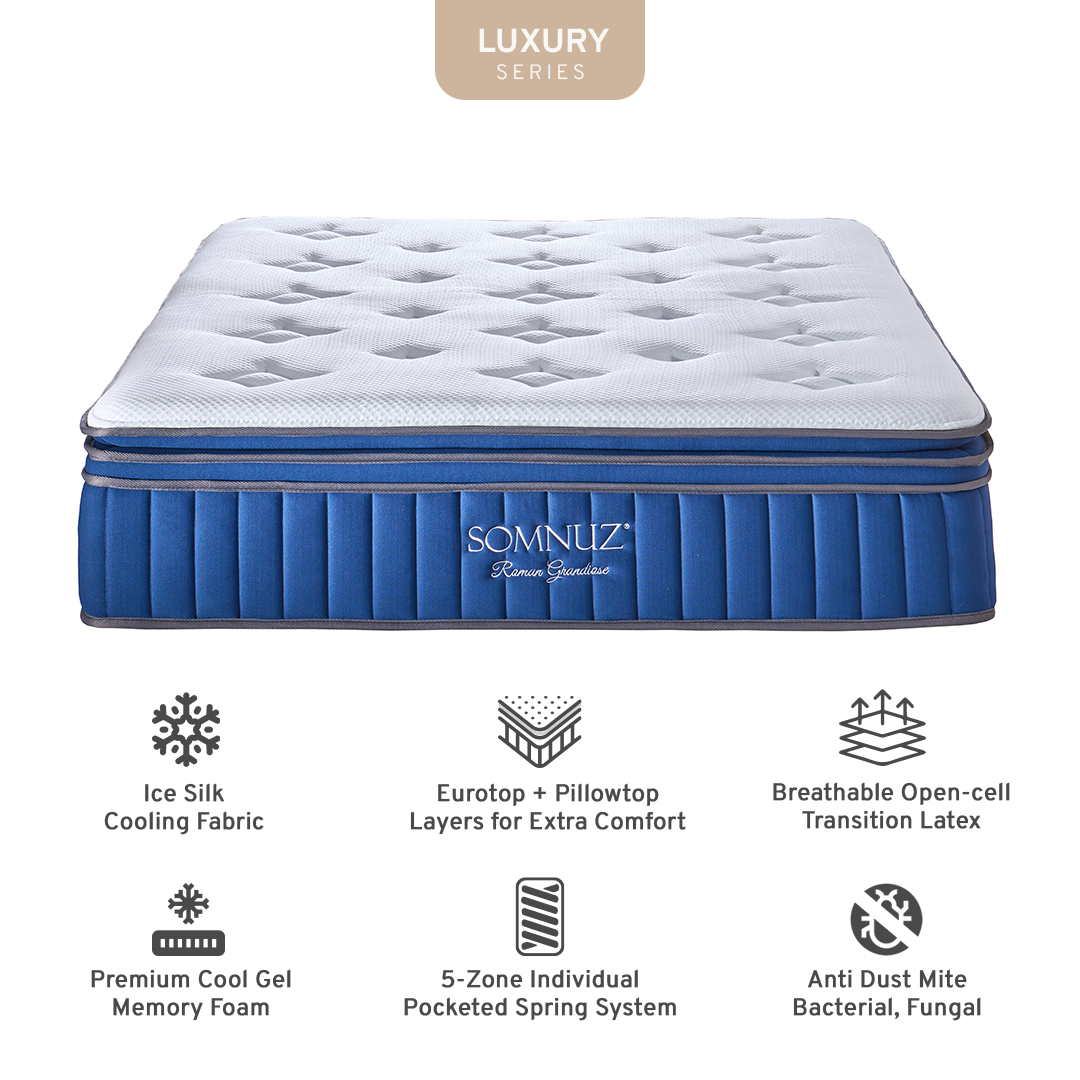


Side sleeping is one of the most common sleep positions, and one of the most demanding when it comes to what a mattress needs to do. The shoulder and hip bear the brunt of the body's weight, and if the mattress does not accommodate both properly, discomfort builds over hours of sleep.
Latex mattresses come up frequently in conversations about side sleeping because they offer a combination of qualities that suit this position well. But whether a latex mattress is the right choice for you depends on more than just sleep position. This guide walks through what latex offers, what to look for, and how to make a confident decision.
What Makes Side Sleeping Different
When you sleep on your side, two key things happen that your mattress needs to respond to.
The shoulder and hip push downward into the mattress. If the surface is too firm, these pressure points do not sink in enough and the joints bear excess load through the night. Over time, this causes discomfort, numbness, and disrupted sleep.
At the same time, the waist needs support. Side sleeping creates a gap between the waist and the mattress, and if the mattress does not fill this gap adequately, the spine bows outward and the lower back takes strain.
A good mattress for side sleeping allows the shoulder and hip to sink to an appropriate depth while maintaining enough support across the waist and lower body to keep the spine aligned. This is a balance, and getting it right is what separates a genuinely comfortable side-sleeping mattress from one that causes problems over time.
How Latex Responds to the Body
Natural latex is made from the sap of rubber trees and has a distinctive feel that differs from memory foam, spring, and polyfoam.
The key characteristic of latex that is relevant for side sleepers is its combination of pressure relief and responsiveness.
Pressure relief. Latex softens under localised pressure, allowing the shoulder and hip to sink in. This reduces the point load on these areas and distributes weight more evenly across the surface.
Responsive bounce. Unlike memory foam, which slowly contours and holds the body's shape, latex responds more quickly. When you shift position, it adjusts almost immediately rather than holding the impression of your previous position. This responsive quality makes movement easier and reduces the stuck feeling that some sleepers experience with denser memory foam.
Consistent support. Latex maintains its support profile consistently across the mattress. It does not develop the soft spots that can appear in lower-quality foam over time, and it holds its shape well with regular use.
Natural breathability. Open-cell natural latex allows airflow through the mattress, helping it sleep cooler than closed-cell foam. In Singapore's humid climate, this is a meaningful advantage.
What Firmness Level Do Side Sleepers Need?
Firmness is one of the most important variables for side sleepers. The right level depends on body weight and build.
Lighter sleepers (below 60 kg) tend to need a softer latex option. Because less weight pushes into the mattress, a medium or medium-soft surface allows enough sink at the shoulder and hip to relieve pressure without going too deep.
Average weight sleepers (60 to 90 kg) generally do well on a medium latex. This provides enough give for pressure relief while maintaining the waist support needed for spinal alignment.
Heavier sleepers (above 90 kg) often need a medium-firm latex. Without enough resistance, a softer latex can allow excessive sink at the hip, which drops the pelvis too far and curves the spine.
If you are a couple with different body weights, a medium firmness is often the starting compromise. Some couples also opt for a split firmness configuration.
Natural vs Synthetic Latex: Does It Matter?
When shopping for a latex mattress, you will encounter natural latex, synthetic latex, and blended options.
Natural latex is made entirely from rubber tree sap. It is more durable, more breathable, and generally more consistent in its feel. It also has natural antimicrobial properties, which is useful in Singapore's humidity.
Synthetic latex is made from petroleum-derived materials and mimics the feel of natural latex. It is less expensive but tends to be less durable and may not breathe as well.
Blended latex combines natural and synthetic. Quality varies widely depending on the ratio and the manufacturer.
For a primary sleeping mattress, natural or high-quality blended latex is generally worth the investment over pure synthetic. The longer lifespan and better performance over time make it a more cost-effective choice in the long run.
How Latex Compares to Memory Foam for Side Sleepers
Memory foam is another common recommendation for side sleepers, and it is worth understanding how the two materials compare.
Pressure relief. Both latex and memory foam provide pressure relief. Memory foam tends to offer deeper contouring, while latex provides more responsive, surface-level cushioning.
Temperature. Latex generally sleeps cooler than memory foam, which absorbs and retains body heat as part of how it works. In Singapore, this is a significant practical difference.
Movement. Latex is easier to move on. Its responsive nature means you can shift position without effort. Memory foam can feel restrictive, particularly with denser options.
Durability. High-quality natural latex typically outlasts memory foam. A good latex mattress can remain comfortable for 10 to 15 years. Memory foam mattresses often begin to show softening or compression after seven to ten years.
For side sleepers in Singapore, latex tends to be the stronger choice due to its breathability and responsive support.
Exploring Latex Options
Our latex mattress collection includes options across a range of firmness levels designed for different sleeper profiles. If you are a side sleeper unsure which firmness is right for your body weight and build, our team can help you work through it.
The most reliable way to assess a latex mattress for side sleeping is to spend time lying on it in your natural sleep position. You can do this at our showroom in Singapore, where we are happy to guide you through the options without pressure.
FAQs
Is latex too firm for side sleepers?
It depends on the firmness level. Soft to medium latex options are specifically suited to side sleepers. Firm latex may be too resistant for adequate pressure relief at the shoulder and hip. Always check the firmness specification and consider your body weight when choosing.
How long does a latex mattress last for a side sleeper?
High-quality natural latex maintains its support and feel well. Most quality latex mattresses last between 10 and 15 years, making them a durable long-term investment for a primary sleeping surface.
Is a latex mattress good for shoulder pain from side sleeping?
A latex mattress that allows the shoulder to sink in sufficiently can help reduce pressure at the joint. However, if you have an existing shoulder condition, it is worth consulting a healthcare professional for guidance alongside choosing an appropriate mattress.
Does latex sleep cool enough for Singapore?
Natural latex is more breathable than memory foam and tends to sleep cooler. Paired with a breathable mattress cover and good room ventilation, a latex mattress works well in Singapore's climate.
Can two side sleepers share a latex mattress?
Yes. Latex provides good motion isolation and adapts to each sleeper's position independently. The main thing to check is that the firmness level suits both partners' body weights.
Find Your Right Fit
A latex mattress is a strong contender for side sleepers who want responsive pressure relief and a cooler sleeping surface. Browse our latex mattress range to explore the options, or visit our showroom to find the firmness that suits you best.