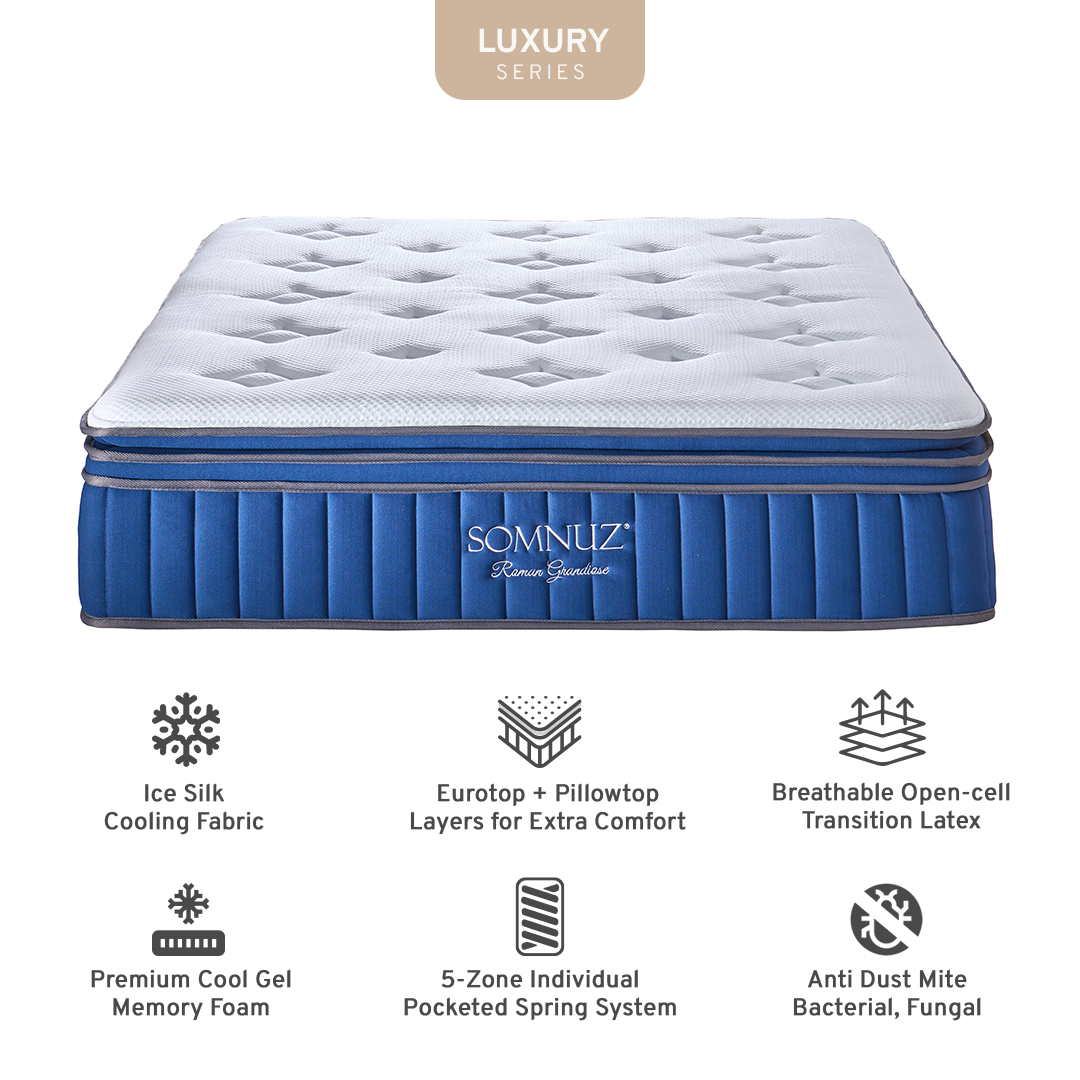


Latex mattress material is often chosen by sleepers who want a surface that feels breathable, responsive, and supportive. It has a different character from memory foam, springs, and basic foam, which is why many shoppers want to understand it before buying.
For Singapore homes, this matters. Our bedrooms are often shaped by warm weather, humid nights, compact layouts, and shared sleeping arrangements. A mattress material should not only feel comfortable in the first few minutes. It should also suit the way you sleep every night.
Latex can be a good material for many sleepers, especially those who prefer a lifted feel rather than a deep, slow sink. But like every mattress material, it has strengths and trade-offs. It is helpful to know what latex feels like, how it is used in mattresses, and how it compares with other options.
This guide explains latex mattress material in simple terms so you can choose with more confidence.
What Is Latex Mattress Material?
Latex mattress material is a flexible, rubber-like material used in mattresses for comfort, support, or both. Depending on the mattress, latex may be used as the main material or as a comfort layer above another support structure.
Latex can be natural, synthetic, or blended. Natural latex is made from rubber tree sap. Synthetic latex is made using man-made materials. Blended latex combines both. The exact feel and quality depend on the mattress design, latex type, firmness, density, and layering.
In everyday sleep terms, latex is known for being responsive. When you press into it, it pushes back quickly. This gives it a buoyant feel that many people describe as supportive and easy to move on.
If you are exploring latex options, the Somnuz latex mattress collection can help you compare how latex is used in different mattress designs.
How Does Latex Mattress Material Feel?
Latex has a feel that is easier to understand once you compare it with foam and springs.
It Feels Responsive
Latex reacts quickly when your body moves. If you turn from your side to your back, the surface adjusts without the slow sinking sensation associated with some foam materials.
This can be helpful for combination sleepers who move often during the night.
It Feels Gently Buoyant
Latex often has a lifted feel. It cushions the body, but it does not usually create a deep hug. This can make the mattress feel supportive without feeling stiff.
People who dislike feeling stuck in bed may enjoy this buoyancy.
It Can Feel Breathable
Latex is often chosen by warm sleepers because it can feel more breathable than dense foam. Many latex materials also include small ventilation holes that support airflow.
For Singapore bedrooms, this can be useful. Humid nights can make heat-trapping materials feel less comfortable, so breathability is an important part of the decision.
Types of Latex Mattress Material
When shopping for a latex mattress, you may see different types of latex mentioned. It helps to understand the basics without getting overwhelmed by technical details.
Natural Latex
Natural latex comes from rubber tree sap. It is often valued for its resilient and responsive feel. Many shoppers consider it when they want a mattress material that feels breathable and supportive.
Natural latex can vary in firmness, so it is still important to test how the mattress feels.
Synthetic Latex
Synthetic latex is made with man-made materials. It is designed to mimic some of the feel of natural latex, though it may feel different depending on construction.
Some sleepers may not notice the difference immediately, but quality and durability can vary between mattresses.
Blended Latex
Blended latex combines natural and synthetic latex. It may be used to balance feel, cost, and consistency.
Rather than focusing only on the label, it is better to ask how the full mattress is built and whether it suits your comfort needs.
Latex Mattress Material vs Memory Foam
Latex and memory foam are both comfort materials, but they feel very different.
Latex Is More Responsive
Latex pushes back quickly and makes movement feel easier. This can suit sleepers who change positions often or dislike a slow, sinking surface.
Memory Foam Feels More Contouring
Memory foam gently moulds around the body and tends to respond more slowly. Some sleepers enjoy this close, cushioned feel. It can also absorb movement well, which may suit couples who wake easily when their partner moves.
If you are comparing these two materials, Somnuz’s memory foam mattress collection can help you understand the softer, more contouring side of mattress comfort.
Warm Sleepers Should Compare Carefully
Latex may feel more breathable than dense memory foam, but the full mattress design matters. Cover fabric, support layers, bedding, and room airflow all affect how warm the mattress feels.
In Singapore, it is worth thinking about the whole sleep setup rather than judging by material alone.
Latex Mattress Material vs Pocketed Springs
Latex and pocketed springs do different jobs in a mattress.
Latex is often used for comfort, cushioning, and responsiveness. Pocketed springs are used as a support system, with individual springs responding to body weight.
Pocketed Springs Can Add Structure
A pocketed spring mattress can offer steady support and airflow through the mattress core. This may suit sleepers who like a more structured feel.
Latex Can Add Comfort on Top
When latex is used above a spring system, it can provide a responsive comfort layer while the springs support the body beneath. This combination can feel balanced, especially for people who want comfort, lift, and airflow together.
The Best Choice Depends on Feel
Some people prefer a full latex feel. Others prefer latex combined with springs. The right choice depends on whether you want uniform buoyancy, stronger spring support, or a mix of both.
Why Latex Mattress Material Works Well in Singapore Homes
Singapore’s climate and room layouts make mattress material especially important.
It Can Help With Humid Nights
Latex can feel fresher than materials that trap heat closely around the body. This is useful in rooms that rely on fans, mixed ventilation, or air-conditioning only during part of the night.
A breathable mattress material can help the bed feel more comfortable, especially when paired with light bedding.
It Suits Compact Rooms
In smaller HDB or condo bedrooms, ease of movement can matter. A mattress that feels too soft or slow may make getting in and out of bed feel less comfortable.
Latex’s responsive feel can make the mattress easier to move on, which is practical in compact spaces.
It Can Support Shared Sleep
For couples, mattress material affects both comfort and movement. Latex may suit couples who like a responsive, supportive surface. If one person is very sensitive to movement, it is worth comparing latex with memory foam and pocketed spring designs before deciding.
You can compare our mattresses to understand how different materials and support systems feel across the Somnuz range.
What Should You Check Before Buying Latex?
Latex mattress material can be a good choice, but you should still look at the full mattress design.
Firmness Level
Latex can be soft, medium, or firm depending on the design. A mattress that feels supportive to one person may feel too firm to another.
Side sleepers may prefer more surface cushioning. Back sleepers may prefer a steadier feel. Combination sleepers may appreciate a medium feel that supports movement.
Mattress Thickness
Thickness affects comfort and support. A thicker mattress is not automatically better, but it may provide more room for comfort and support layers.
Make sure the mattress thickness also suits your bed frame, bedsheets, and room setup.
Cover Fabric
The mattress cover can affect how breathable and comfortable the bed feels. A latex mattress with a heavy cover may feel warmer than expected, while a breathable cover can help the material perform more comfortably.
Support Structure
Latex may be used throughout the mattress or combined with other layers. Ask whether the mattress is full latex, latex hybrid, latex with pocketed springs, or latex with foam support.
Each design can feel different, even if they all include latex.
Who May Like Latex Mattress Material?
Latex mattress material may suit several types of sleepers.
Warm Sleepers
Latex is often a good option to compare if you sleep warm. Its breathable, responsive feel can be more comfortable in humid weather.
Combination Sleepers
If you turn often, latex may help you move more easily. It responds quickly instead of holding your body in place.
Sleepers Who Prefer Gentle Lift
Latex may suit people who want cushioning without a deep sink. It can feel supportive, buoyant, and steady.
Families Choosing for Long-Term Use
Families may appreciate latex because it can feel resilient and practical for regular use. Whether choosing for a master bedroom, guest room, or growing child’s room, latex can be a useful material to consider.
Who May Prefer Another Material?
Latex is not for everyone. Some sleepers may prefer a different feel.
People Who Like a Deep Hug
If you love the close contour of memory foam, latex may feel too springy or lifted.
People Who Want Strong Motion Absorption
Latex can feel calm, but memory foam may absorb movement more strongly. Couples who are very sensitive to disturbance should compare both.
People Who Prefer a Traditional Spring Feel
Some sleepers like the structured support of springs. A mattress with pocketed springs may feel more familiar, especially if you do not want a fully buoyant latex feel.
The best material is the one that suits your real sleeping habits, not just the one with the most benefits on paper.
How to Care for a Latex Mattress
Good care helps any mattress feel better for longer. Always follow the brand’s care instructions, but a few simple habits can help.
Use breathable bedding that suits Singapore’s climate. Allow the room to air when possible. Keep the mattress dry and avoid trapping moisture under heavy layers. Use a suitable mattress protector that does not make the bed feel too warm.
For a fuller sleep setup, Somnuz’s Sleep Well guide can help you think through bedroom habits, bedding, and comfort routines.
How Somnuz Helps You Compare Latex Mattress Material
Somnuz focuses on clear, practical guidance for real Singapore homes. Instead of choosing a mattress based only on material names, it helps to compare how each option feels for your body and room.
The full Somnuz mattress collection lets you explore different comfort and support options, including mattresses that may feature latex, memory foam, pocketed springs, or combined designs.
This makes it easier to choose based on comfort, breathability, support, and everyday use rather than guesswork.
Choosing Latex Mattress Material With Confidence
Latex mattress material can be a strong choice if you want a breathable, responsive, and supportive feel. It may suit warm sleepers, combination sleepers, and those who prefer a mattress that feels lifted rather than deeply sinking.
However, it is still important to compare firmness, construction, cover fabric, and support system. Latex can feel different from one mattress to another.
The most reassuring way to choose is to try the mattress in person. You can visit our showroom for calm guidance and compare latex with memory foam, pocketed spring, and other Somnuz options before deciding what feels right.
Frequently Asked Question
What is latex mattress material?
Latex mattress material is a flexible, responsive material used in mattresses for comfort, support, or both. It may be natural, synthetic, or blended depending on the mattress design.
Is latex mattress material good for Singapore weather?
Latex can be suitable for Singapore weather because it often feels breathable and responsive. Room airflow, bedding, and mattress cover design still affect overall comfort.
Is latex mattress material soft or firm?
Latex can feel soft, medium, or firm depending on the mattress design. It usually feels more lifted and responsive than memory foam, but firmness varies by product.
Is latex better than memory foam?
Latex is better for sleepers who prefer responsiveness and breathability. Memory foam may be better for those who prefer deep contouring and strong motion absorption. The right choice depends on your comfort preference.
Can latex be combined with pocketed springs?
Yes. Some mattresses use latex as a comfort layer with pocketed springs underneath. This can create a balanced feel with responsive comfort, steady support, and airflow.