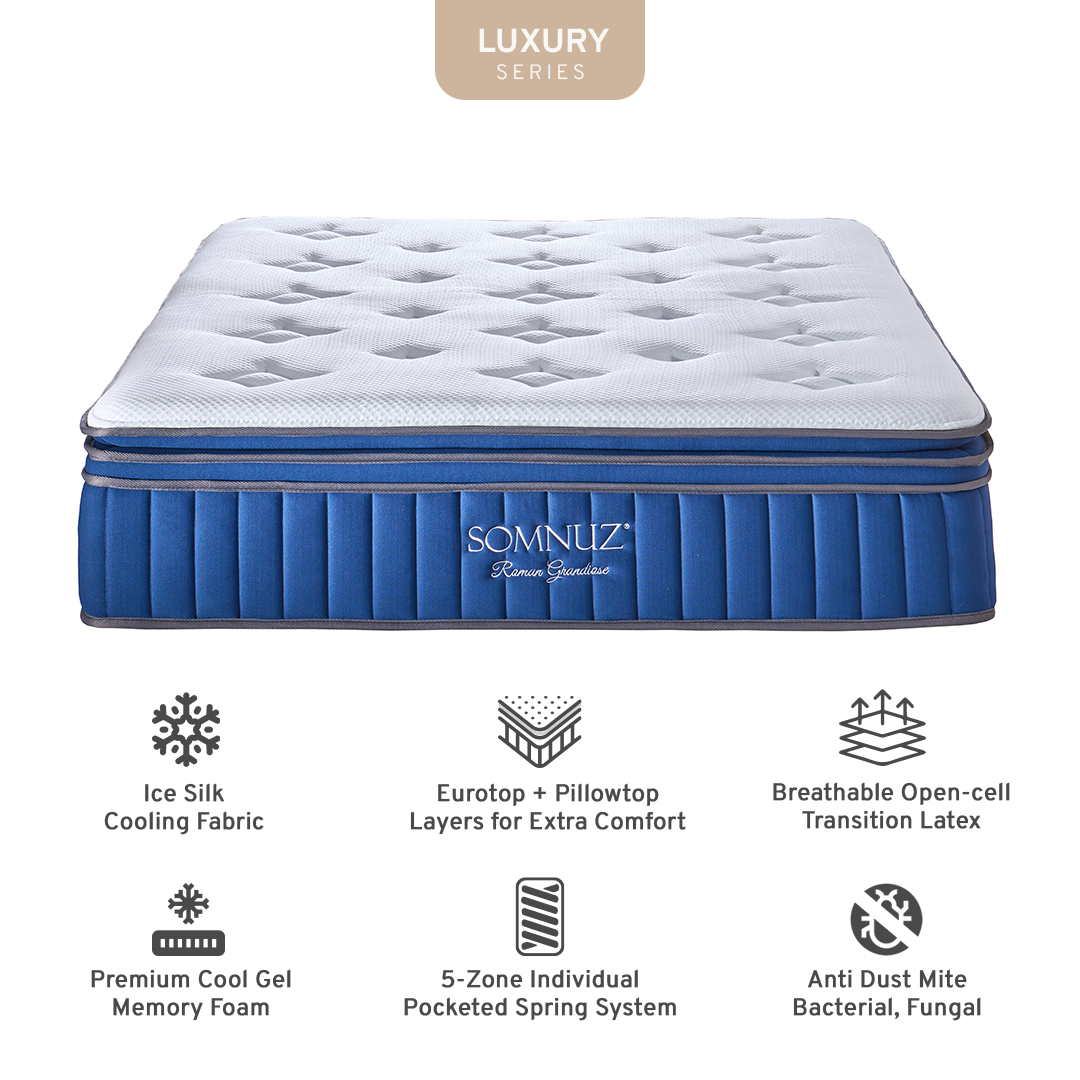


A latex mattress topper is a worthwhile addition to many sleep setups. It can soften a too-firm mattress, add pressure relief for a side sleeper, or extend the comfortable life of a mattress that is beginning to lose its surface feel. But the cover that goes over the topper is not an afterthought. It affects breathability, hygiene, feel, and how well the latex beneath it actually performs.
This guide covers what to look for in a latex mattress topper cover, which materials work best, and how to maintain it for the long term, particularly in Singapore's warm, humid conditions.
Why the Cover Makes a Difference
When you lie on a latex topper, you are not actually in contact with the latex itself. You are in contact with the cover. The cover determines the initial feel of the surface, how much heat and moisture it manages, and how well the latex beneath can breathe and respond to your body.
A cover that is too thick or made from non-breathable material reduces the pressure-relieving effect of the latex beneath it. One that traps heat makes the sleeping surface uncomfortable in Singapore's climate. And a cover that cannot be easily removed and washed creates hygiene problems over time.
Getting the cover right maximises the value of the topper itself.
What Materials Work Best
Bamboo-derived fabric. Bamboo fabric covers are among the most popular choices for latex toppers in warm climates. The material is naturally moisture-wicking, breathable, and feels smooth and cool against the skin. It also has natural antimicrobial properties, which is useful given that a topper collects sweat and body oils over time.
Tencel or lyocell. Made from sustainably sourced wood pulp, Tencel covers are very soft, highly breathable, and effective at temperature regulation. They feel cool to the touch and manage moisture well. For Singapore's climate, Tencel is one of the better cover materials available.
Organic cotton. A plain organic cotton cover is breathable and durable. It does not have the moisture-wicking efficiency of bamboo or Tencel but is a dependable, natural option. Look for tightly woven cotton rather than a very loose weave, which provides better protection for the latex beneath.
Polyester blends. Common in more affordable covers. Functional but less breathable than the options above. In Singapore's warmth, a polyester-heavy cover can feel noticeably warmer, which may offset some of the comfort benefit of the latex topper.
For a latex topper used in a warm, humid environment, bamboo or Tencel covers are the strongest choice. They keep the sleeping surface cooler and manage moisture more effectively, which preserves both comfort and the hygiene of the topper.
Cover Construction: What to Check
Beyond the material, a few construction details affect how well a topper cover performs.
Stretch and flexibility. The cover needs to be flexible enough not to restrict the latex's ability to contour and respond to body pressure. A tightly knitted, stretchy cover allows the latex to work properly. A stiff or rigid cover partially defeats the purpose of a pressure-relieving topper.
Fit and depth. Topper covers need to match the dimensions and thickness of your topper precisely. An ill-fitting cover that pulls at the corners or bunches during the night affects comfort and can shift the topper beneath it. Measure your topper's width, length, and depth before purchasing a cover.
Zipper quality. Most topper covers are removed via a zipper for washing. A good-quality, robust zipper that runs the full length of one side makes removal and replacement easier and lasts longer than a small partial zipper.
Securing mechanism. Some topper covers use elastic straps or a full-encasement design to keep the cover in place on the mattress. This matters particularly if you move around during sleep. A cover that slips is a cover that needs adjusting every few days.
Caring for a Latex Topper Cover in Singapore
Regular washing is important for hygiene, and in Singapore's humidity, more so than in many other climates. A reasonable washing schedule is every two to four weeks for the cover, with more frequent washing during very humid periods or if you sweat heavily during sleep.
Most quality topper covers are machine washable. Wash at 40 degrees Celsius to remove allergens and body oils effectively without damaging the fabric. Tumble dry on low heat or air dry in a well-ventilated space. Avoid leaving damp covers in a pile or folded, as this can encourage mildew in humid conditions.
Having two covers and rotating them makes the washing process far more manageable. While one is being washed and dried, the topper remains protected.
Should the Cover Be an Encasement or a Top-Only Design?
Topper covers come in two main configurations.
Top-only covers protect the sleeping surface and the sides of the topper but leave the underside open. These are easier to fit and remove but offer less comprehensive protection.
Full encasement covers wrap the entire topper in a zippered case. These provide better protection against allergens, moisture, and dust mites reaching the latex itself. For someone with allergies or in a particularly humid room, a full encasement is the more thorough choice.
For most Singapore sleepers, a top-and-sides cover with a secure fit is sufficient, provided the mattress beneath the topper is also adequately protected. If allergen management is a priority, an encasement adds meaningful protection.
Finding the Right Cover for Your Setup
The right topper cover depends on your topper size, your sensitivity to heat, and how often you plan to wash it. In Singapore's climate, breathability is the most important quality to prioritise.
If you are also looking for the right topper to pair with your cover, our latex mattress collection includes options that pair well with quality covers across different thicknesses and firmness levels.
For personalised guidance, you are welcome to visit our showroom in Singapore and speak to our team about what suits your setup.
FAQs
How often should I wash a latex topper cover in Singapore?
Every two to four weeks is a reasonable schedule. If you sweat heavily or have allergies, every one to two weeks is better. Singapore's humidity means moisture management in bedding deserves more attention than it might in a cooler climate.
Can I put a standard pillowcase or fitted sheet over my latex topper instead of a dedicated cover?
A fitted sheet can work as a basic surface cover, but it does not provide the protection a proper topper cover offers. It is less secure, provides less side protection, and does not manage moisture as effectively. A dedicated cover is worth the investment.
Will a cover affect how the latex topper feels?
Yes, to a degree. A thick or non-stretchy cover can reduce the contouring effect of the latex beneath. Choose a thin, flexible, knitted cover to preserve the responsive feel of the latex.
Do I need a waterproof topper cover?
A waterproof cover adds protection against spills and significant moisture. For households with children or where night sweats are a concern, this is worth considering. Modern waterproof covers use thin membranes that do not significantly affect breathability.
What size cover do I need for a king latex topper?
Measure your topper's width, length, and depth carefully. King toppers in Singapore are typically 183 cm by 190 cm, but topper thickness varies. Always check the cover's specified dimensions against your topper before purchasing.
Protect and Enhance Your Sleep Setup
A good cover is the finishing layer that helps your latex topper perform at its best for longer. Browse our mattress and sleep accessories range or visit our Singapore showroom to find what works best for your setup.