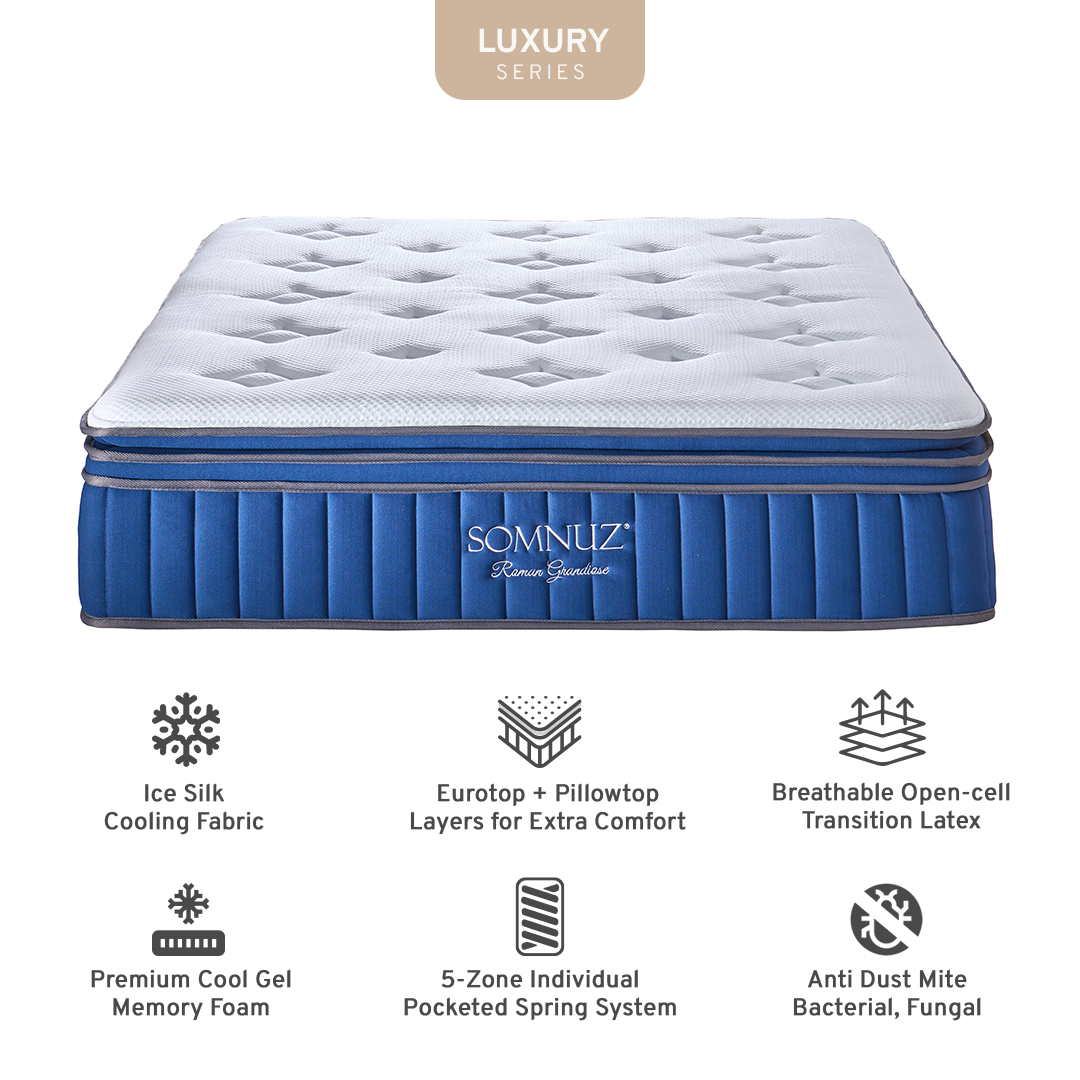


Mattress layers can change how soft, firm, cool, or supportive a mattress feels. Two mattresses may look similar from the outside, yet feel very different once you lie down.
The difference often comes from the materials inside. Comfort layers shape the first feel. Deeper layers affect support, stability, and how well the mattress works for your sleep style.
For Singapore homes, this matters even more. Humid nights, shared beds, HDB rooms, condo bedrooms, and family routines can all affect what feels comfortable. The right mattress is not about picking the thickest or softest option. It is about finding the layers that suit how you sleep.
What Are Mattress Layers?
Mattress layers are the different sections inside a mattress. Each layer has its own role, but they work together to create the final feel.
Most mattresses include:
- Comfort layers: The top section you feel first
- Transition layers: The middle section that balances softness and support
- Support core: The deeper section that gives the mattress structure
Comfort Layers
Comfort layers sit near the surface of the mattress. They affect softness, cushioning, contouring, and the first level of comfort.
These layers may use memory foam, latex, quilted foam, cooling fabric, or other comfort materials. Softer comfort layers can feel more cushioned. More responsive layers can feel steadier and easier to move on.
Transition Layers
Transition layers sit between the comfort surface and the support core. They help stop the mattress from feeling too soft or too hard.
This layer can make the mattress feel more balanced. It also helps spread body weight more evenly across the mattress.
Support Core
The support core gives the mattress its main structure. In many hybrid designs, this may include springs or a firmer foam base.
A pocketed spring mattress uses individual springs that move more independently. This can help reduce movement from one side of the bed to the other, which is useful for couples who share a mattress.
How Comfort Layers Affect Mattress Feel
Comfort layers shape the surface feel of a mattress. This is usually what shoppers notice first when they lie down.
A thicker comfort layer may feel more cushioned. A thinner comfort layer may feel firmer or more direct. Material choice also matters because each material responds to the body differently.
Softness And Cushioning
Softer layers create more surface cushioning. This can suit sleepers who prefer a gentler feel around the shoulders and hips.
Still, softness should not be confused with support. Some people enjoy a plush surface, while others sleep better on a steadier feel. The best choice depends on your comfort preference and sleeping position.
Contouring And Pressure Distribution
Memory foam is known for its closer contouring feel. It moulds to the body more slowly and can create a cushioned, cradled surface.
A memory foam mattress may suit sleepers who like a closer body-hugging feel. It can also help absorb movement, which may be helpful for shared sleep.
Responsiveness And Bounce
Latex usually feels more responsive than memory foam. It cushions the body while springing back more quickly.
A latex mattress can suit sleepers who prefer a buoyant feel and easier movement. Latex can also support better airflow, which may feel more comfortable during humid Singapore nights.
Why Mattress Layers Matter For Singapore Sleepers
Mattress layers affect more than softness. They can also influence cooling comfort, movement control, and how steady the mattress feels through the night.
Singapore’s climate makes breathability an important part of the buying decision. Shared sleeping spaces also make motion control worth considering.
Key local concerns include:
- Warm and humid nights
- Shared beds for couples
- Practical HDB and condo room layouts
- Long-term comfort for family households
- Clear support before and after purchase
Breathability For Humid Nights
Breathable layers help reduce heat build-up across the mattress surface. This can make the mattress feel more comfortable in warm rooms.
Cooling features should still be viewed realistically. Materials can help with airflow and heat dispersion, but comfort also depends on your bedding, room ventilation, and personal sleep habits.
Reduced Partner Disturbance For Shared Sleep
Some mattress layers absorb movement better than others. Memory foam can help dampen movement. Pocketed springs can help limit movement transfer because each spring responds more independently.
This can be helpful if one person changes position often or gets up earlier. It does not remove all movement, but it can create a steadier feel for shared sleep.
Mattress Layers, Firmness, And Support Are Not The Same Thing
Mattress firmness and support are related, but they are not the same.
Firmness describes how soft or firm the mattress feels when you lie down. Support describes how well the mattress helps keep your body steady.
A mattress can feel plush on top but still offer dependable support underneath. A firm mattress can feel steady, but it may not suit everyone.
Use firmness as one guide, not the only guide. It helps to compare mattress layers and firmness levels side by side before choosing.
How To Read Firmness More Clearly
Different sleepers need different levels of firmness.
Side sleepers may prefer more cushioning around the shoulders and hips. Back sleepers may prefer balanced support. Stomach sleepers often need a steadier surface. Couples may need a middle ground that works for both people.
Comfort should feel supportive, not forced. The right mattress should match your body, sleep style, and preference.
How To Choose Mattress Layers That Suit You
Start with how you want the mattress to feel. Then look at the materials and support system that create that feel.
Use this simple checklist before buying:
- Do you prefer plush, balanced, or firmer comfort?
- Do you sleep warm at night?
- Do you share a bed with a partner?
- Do you prefer close contouring or a more responsive feel?
- Do you want stronger edge support or a steadier surface?
- Do you need showroom guidance before deciding?
The best mattress layers for you should support your comfort preference, not someone else’s. A mattress that suits a couple in a condo may not suit a single sleeper in an HDB room or a family buying for several bedrooms.
Choosing Mattress Layers With More Confidence In Singapore
Mattress layers are easier to understand once you connect each material to how it feels. Comfort layers shape cushioning and surface feel. Transition layers add balance. The support core gives the mattress its structure.
Online research can help narrow your choices, but mattress feel is personal. Trying different comfort levels in person can help you compare cushioning, firmness, motion control, and support with more confidence.
Somnuz keeps the process clear and reassuring, with mattress options made for real sleep needs, humid Singapore nights, and shared bedrooms. Good guidance can help you choose with less guesswork and more peace of mind.
Find The Mattress Layers That Feel Right For You
View the Somnuz mattress collection to compare comfort, support, and breathable materials for your sleep needs. For more confidence, visit our mattress showroom Singapore and try the range in person with clear guidance from our sleep team. Somnuz is here to help you choose with comfort, support, and peace of mind before and after purchase.
Frequently Asked Questions
What are the main layers in a mattress?
The main layers are the comfort layer, transition layer, and support core. The comfort layer affects the first feel. The transition layer adds balance. The support core gives the mattress structure.
Do thicker mattress layers mean better comfort?
Thicker layers do not always mean better comfort. Material quality, support design, firmness, and personal preference all matter. A balanced mattress can feel more comfortable than one that is simply thicker.
Which comfort layer is better for hot sleepers in Singapore?
Breathable materials are often helpful in Singapore’s humid climate. Latex and cooling fabrics may feel more comfortable for sleepers who dislike heat build-up. The right choice still depends on your preferred feel.
How do mattress layers affect firmness?
Top layers affect surface softness. Deeper layers affect stability and support. This is why two mattresses with the same firmness rating can still feel different.
Are memory foam and latex comfort layers different?
Yes. Memory foam usually feels closer and more contouring. Latex usually feels more responsive and easier to move on. Both can suit different sleepers.
Should i try mattress layers in person before buying?
In-person testing can help if you are unsure about firmness, cushioning, or support. It also helps couples compare comfort levels together before choosing.