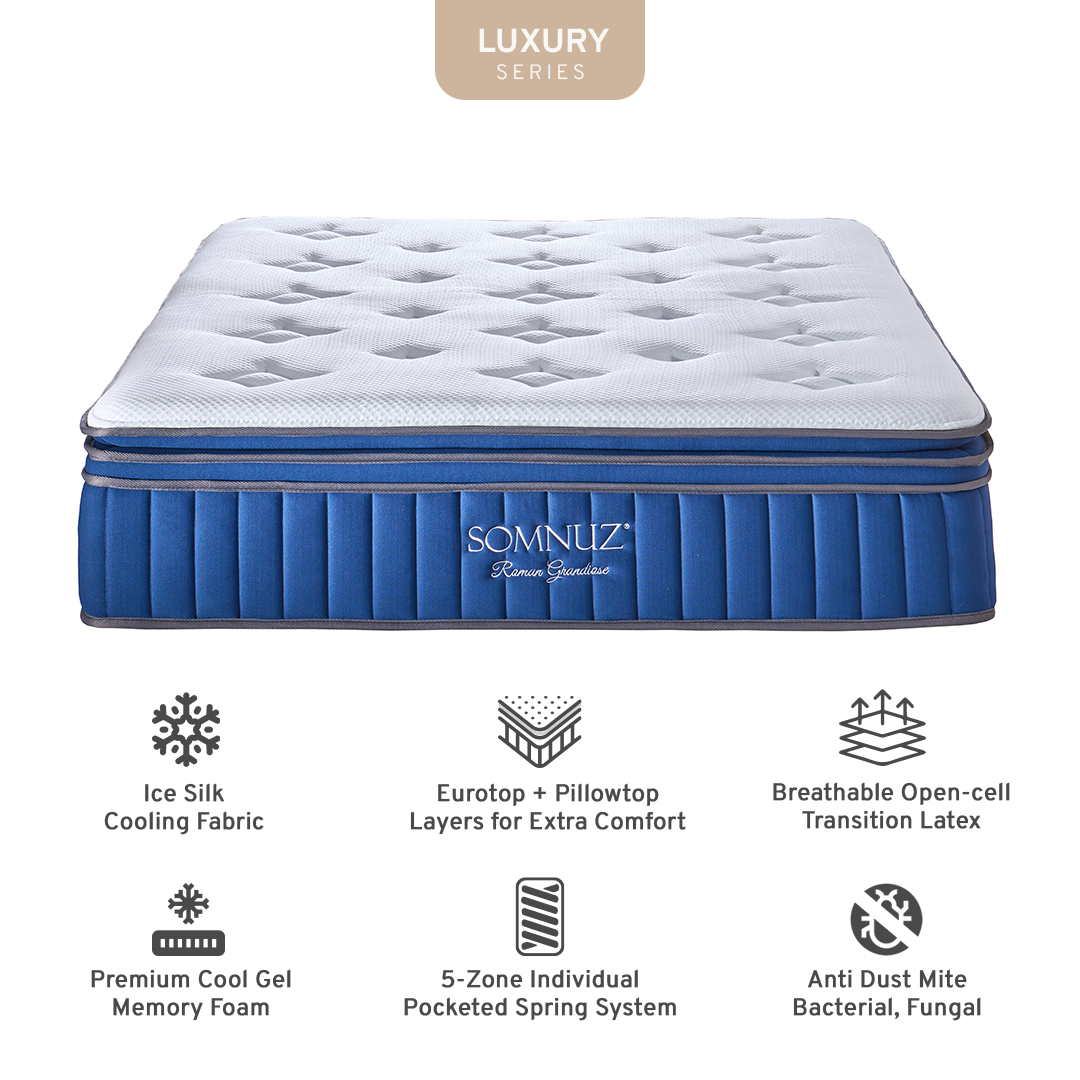


Choosing a mattress can feel harder than it should. Material names sound simple at first, but each one changes how a mattress feels, how much heat it holds, and how well it suits your sleep habits.
This matters even more in Singapore, where humid nights, shared sleeping spaces, and practical bedroom layouts can shape what feels comfortable over time. If you want a broad starting point before comparing the details, browse our mattress collection.
Why Mattress Material Matters More Than Most Shoppers Think
Mattress material shapes more than the label on the product page. It affects how supported you feel, how easily air moves through the bed, how much movement travels across the surface, and how simple it feels to change position during the night.
No single mattress material suits everyone. Some sleepers want a closer, more cushioned feel. Others want a steadier, more lifted surface. Couples may care more about movement control, while warm sleepers may focus first on breathability.
Key differences usually come down to four things:
- Mattress material changes how soft, buoyant, or cushioned the surface feels.
- Mattress material affects how much warmth builds up during the night.
- Mattress material influences how steady or contouring the support feels.
- Mattress material can reduce or pass on movement across the bed.
Foam Mattress Material Explained
Foam is often chosen by sleepers who want a softer, more cushioned feel. It tends to shape itself more closely around the body, so it can feel gentler at the shoulders, hips, and other areas that press more deeply into the mattress.
What Foam Feels Like
Foam usually feels quieter and less bouncy than spring-based designs. Many people describe it as more contouring, with a slightly hugged-in feel compared with latex or pocket springs.
Who Foam May Suit Best
Foam can be a helpful fit for side sleepers, couples, and anyone who prefers a calmer, less springy sleep surface. It can also suit shoppers who want more cushioning instead of a lifted feel.
What to Consider in Singapore’s Climate
Heat is the main trade-off many shoppers ask about. Dense foam can feel warmer over time, especially in bedrooms with less airflow. Construction matters a lot here. Cooling covers, breathable top layers, and hybrid builds can make a noticeable difference.
- Foam usually suits sleepers who like contouring comfort.
- Foam can help reduce the movement felt from a partner.
- Foam may feel warmer than more breathable materials.
- Foam often feels less responsive when you move.
If you want to compare that feel in more detail, read the memory foam mattress guide.
Spring Mattress Material Explained
Spring mattresses appeal to shoppers who want a steadier and more breathable feel. They usually keep you more on top of the surface rather than letting you sink in deeply.
How Spring Construction Works
Pocket springs use individual springs wrapped in their own fabric pockets. Each spring can respond more independently, instead of pulling the rest of the bed into the same movement.
Why Many Sleepers Like the Feel Of Springs
Spring mattresses often feel easier to move on. This can help if you change position during the night or prefer a bed that feels more supportive and less close-contouring.
Why Springs Can Work Well for Couples and Warm Sleepers
Air tends to move more easily through spring-based designs than through dense foam alone. Pocket spring construction can also help limit how much movement spreads from one side of the bed to the other.
- Springs usually feel more breathable than dense foam.
- Springs often create a steadier and more lifted surface feel.
- Pocket springs can help reduce partner disturbance.
- Springs can be useful for sleepers who move often at night.
For readers comparing shared sleep and support, the pocket spring mattress guide is the clearest next step.
Latex Mattress Material Explained
Latex often sits in the middle ground between deep contouring and firm lift. It usually feels more responsive than memory foam, while still offering comfort and pressure balance.
What Latex Feels Like
Latex tends to feel springier and easier to move on than traditional foam. Many sleepers like that it cushions the body without creating too much sink.
Why Latex Appeals to Practical Buyers
Latex is often chosen by shoppers who want breathability, responsiveness, and everyday ease of movement. It can feel supportive without feeling heavy or slow.
When Latex May Be a Good Fit for Singapore Homes
Warm, humid nights push many shoppers towards materials that feel cooler and less heat-retentive. Latex is often preferred for this reason because its structure allows more air movement than dense foam.
- Latex usually feels buoyant and responsive.
- Latex can feel cooler than denser foam materials.
- Latex suits sleepers who want support without a deep cradle.
- Latex may appeal to warm sleepers and restless sleepers.
If that sounds closer to your comfort preference, the latex mattress guide covers it in more detail.
Hybrid Mattress Material Explained
Hybrid mattresses are often a strong fit for shoppers who do not want to lean too far in one direction. They combine more than one material to create a more balanced sleep surface.
What Makes a Mattress Hybrid
Hybrid mattresses usually combine comfort layers, such as foam or latex, with a spring support core underneath. Each layer does a different job, which is why hybrids can feel more balanced across support, cushioning, airflow, and ease of movement.
What Kind of Sleep Experience Can a Hybrid Offer
A hybrid mattress can feel more cushioned than a spring-only design, but more breathable and responsive than dense foam on its own. This can make it easier to live with if your sleep needs sit somewhere in the middle.
Who Hybrid May Suit Best
Hybrid mattresses often suit couples, mixed comfort preferences, and shoppers who want pressure relief without giving up too much support or airflow.
- Hybrid mattresses combine different comfort traits in one build.
- Hybrids often balance cushioning, support, and breathability well.
- Hybrids can suit couples with different sleep preferences.
- Hybrids may feel like a safer middle ground for uncertain buyers.
For readers who want that balanced option, the hybrid mattress guide is worth reviewing.
How to Choose the Right Mattress Material for Your Sleep Needs
Material becomes easier to choose once you connect it to your daily sleep habits. Start with how you actually sleep, not with what sounds most technical.
For Warm Sleepers and Humid Bedrooms
Latex and many spring-based designs often feel more breathable. Foam can still work, but cooling layers and room ventilation matter more.
For Couples and Shared Sleeping Spaces
Pocket springs and foam usually get the most attention here. Foam often absorbs movement well, while pocket springs can help limit movement without losing support.
For HDB, Condo, and Landed Homes
Room size does not decide the best material on its own. Sleep temperature, partner movement, and comfort preference matter more. Still, many Singapore shoppers in HDBs and condos prefer materials that feel breathable and practical for nightly use.
When In-Person Comparison Helps Most
Descriptions can only take you so far. Material feel is personal, especially when you are choosing for two people or trying to balance cooling, comfort, and support.
Somnuz’s comparison page shows different builds, types, and firmness levels side by side, including memory foam, pocket spring, and hybrid options, which makes shortlisting easier before you test them in person. Use compare our mattresses when you want a clearer first filter.
Best Mattress Material for Comfort and Cooling in Singapore
Best choice comes down to fit, not hype. Foam can feel more cushioned and movement-friendly. Springs can feel steadier and more breathable. Latex can feel cooler and more responsive. Hybrid builds can bring those traits together in a more balanced way.
For many Singapore shoppers, climate and shared sleep matter just as much as softness. Those details are easier to judge when you can compare different materials side by side.
If you want more confidence before buying, visit the mattress showroom Singapore page and plan an in-person comparison. Somnuz’s showroom page highlights trying different mattress types, comparing firmness levels, and getting help from the team before deciding.
Shop the Collection or Compare in Person
Browse the range online if you want a clearer first shortlist. Visit the showroom if you want to compare materials and firmness levels with more confidence. Talk to the Somnuz team if you want calm guidance before choosing what suits your home and sleep style.
Frequently Asked Questions
What is the best mattress material for hot weather?
Latex and many spring-based mattresses are often preferred by warm sleepers because they usually allow more airflow. Hybrid mattresses can also work well if they combine breathable comfort layers with a spring core.
Is foam or spring better for couples?
Both can work. Foam often absorbs movement well, while pocket springs can help reduce movement without losing a steadier support feel. The best choice depends on how much cushioning and bounce you prefer.
Does latex feel firmer than memory foam?
Latex usually feels more responsive and lifted than memory foam. Memory foam tends to feel more contouring and closer to the body.
What is the difference between a hybrid mattress and a spring mattress?
A spring mattress focuses mainly on the spring support system. A hybrid mattress adds comfort layers such as foam or latex on top of springs, which can change the balance of cushioning, airflow, and support.
Which mattress material lasts longer?
Longevity depends on build quality, material quality, and daily use, not just one material name. Latex, pocket springs, and well-made hybrid builds are often chosen by shoppers who want dependable long-term comfort.
Should I try a mattress in person before buying?
Yes, especially if you are choosing between different materials or buying for shared sleep. In-person testing makes it easier to judge heat feel, support, surface response, and overall comfort.