

Getting mattress measurements right is one of those things that feels minor until you get it wrong. A mattress that is a few centimetres too wide for the frame. A fitted sheet that pools on one side. A topper that does not reach the foot of the bed. These are all measurement problems, and they are easy to avoid.
This article covers how to measure a mattress correctly, what dimensions matter beyond just width and length, and how to use those measurements when buying frames, bedding, and accessories.
The Three Dimensions You Need
Width (also called breadth): The measurement across the short side of the mattress.
Length: The measurement along the long side of the mattress.
Height (also called depth or thickness): The measurement from the bottom of the mattress to the top surface.
Most people think only about width and length. Height is just as important when buying fitted sheets, mattress protectors, bed frames with storage, and toppers.
How to Measure Correctly
Place the mattress flat on a hard surface if possible. Measure width at the widest point, which is typically the middle of the mattress. Some mattresses taper slightly at the corners, so measuring at the very edge can give you a slightly narrow reading.
Measure length at the longest point. Measure from the floor or the base of the mattress to the top surface for height. Measure with the mattress uncompressed, not pressed down.
Use a tape measure rather than a ruler and measure twice if you want to be sure. A centimetre difference in your measurement can sometimes be the difference between a sheet that fits and one that does not.
Why Height Matters More Than People Realise
Standard fitted sheets fit mattresses up to about 25 to 30 cm in height. Many modern mattresses with thick comfort layers or pillow tops can exceed this. If your mattress is 30 cm or taller, you need deep-pocket sheets specifically designed for that depth.
Bed frames with under-bed storage drawers are sometimes designed for a specific mattress height range. A very thick mattress on a storage frame can make the drawer difficult to open if the base sits lower than expected. Confirm both measurements before buying.
Mattress toppers add to the total height. A 3-inch topper on a 25 cm mattress creates a 33 cm total depth. Your existing sheets may no longer fit. Account for this before buying a topper or new bedding.
Measuring Your Bed Frame
When buying a new mattress for an existing frame, measure the interior sleeping area of the frame, not the outer dimensions. Rails and headboards add to the total external size of the frame. What you need is the internal dimensions that the mattress sits in.
Measure width between the inside faces of the side rails. Measure length between the inside of the headboard and the foot rail. Write these numbers down before you shop.
A mattress that is too wide will not sit properly in the frame. A mattress that is too narrow will shift around. Aim for a snug fit with at most 1 to 2 cm of clearance.
Mattress Measurements for Bedding and Accessories
Fitted sheets: Need to match width, length, and pocket depth (height). Always check all three against the product spec.
Mattress protectors: Same as fitted sheets. Check depth compatibility.
Toppers: Match width and length exactly. A topper that is a few centimetres short at the foot creates an uncomfortable surface transition.
Mattress covers or encasements: These zip around the entire mattress and need to match all three dimensions.
Standard Singapore Mattress Measurements for Reference
Single: 91 cm x 190 cm, typically 15 to 25 cm in height
Super Single: 107 cm x 190 to 200 cm, typically 18 to 30 cm in height
Queen: 152 cm x 190 to 200 cm, typically 20 to 30 cm in height
King: 183 cm x 190 to 200 cm, typically 20 to 32 cm in height
These are general guides. The height in particular varies significantly between mattress types. A basic foam mattress may be 15 cm tall. A luxury pocketed spring with multiple comfort layers may reach 30 cm or more.
How to Use Measurements When Buying a New Mattress
When looking at a new mattress, the listed dimensions should be verified against your frame before purchasing. If you are buying both a mattress and a frame at the same time, confirm that they match before the order is placed.
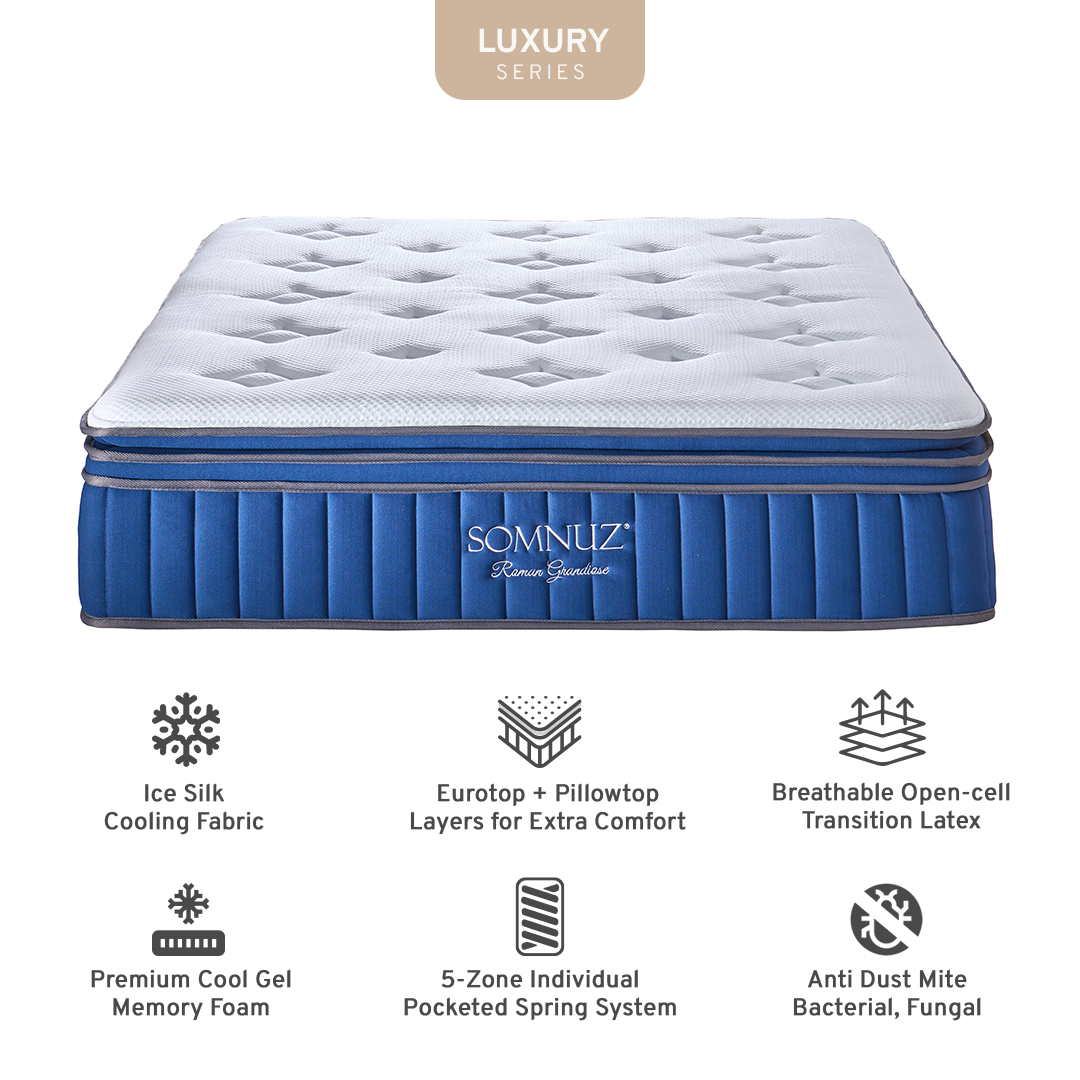
The Somnuz mattress collection lists specific dimensions for each product. Comparing those to your frame measurements is straightforward once you have both sets of numbers in front of you.
If you are building a new room setup and not sure which size to go with, the Premium Series covers multiple sizes and configurations that work across different room layouts.
When Measurements Do Not Match
If your measurements fall between standard sizes, options include custom sizing from specialist retailers, choosing the next size down and using a frame that accommodates that size, or choosing the next size up and accepting slightly more overhang.
Custom sizing adds cost and lead time. For most situations, choosing the standard size closest to your requirement and adjusting the frame or room layout slightly is the more practical path.
Final Thoughts
Measuring a mattress correctly before buying a frame, topper, or bedding saves money and frustration. Width and length are the starting point, but height determines whether your sheets fit and whether the bed works with your frame.
Take the time to measure, write down all three dimensions, and verify them against any accessory or frame specification before placing an order.