

A mattress tool can make mattress shopping feel clearer when there are too many options to compare. Instead of guessing from product names, you can focus on what really matters: comfort, support, cooling, firmness, size, and how the mattress fits your daily life.
For Singapore homes, this kind of guidance is useful. Humid nights, shared sleeping spaces, compact HDB or condo rooms, and delivery access can all affect the right mattress choice.
A good mattress tool should not push you towards one answer too quickly. It should help you understand your sleep needs, narrow your choices, and feel more confident before you buy.
This guide explains how to use mattress tools wisely, what details to compare, and when an in-person showroom visit can help you make the final decision with more peace of mind.
What Is A Mattress Tool?
A mattress tool is any guide, checklist, comparison page, quiz, or showroom support system that helps you choose a mattress more clearly.
It may help you compare firmness levels. It may guide you through mattress size, materials, cooling, or shared-sleep needs. It may also help you decide whether you prefer foam, latex, pocket spring, or hybrid construction.
The purpose is simple: to reduce guesswork.
A useful mattress tool should help you think about:
- Your usual sleeping position
- Your firmness preference
- Whether you sleep warm
- Whether you share the bed
- Your bedroom size
- Your preferred mattress feel
- Delivery and setup needs
- Long-term support and care
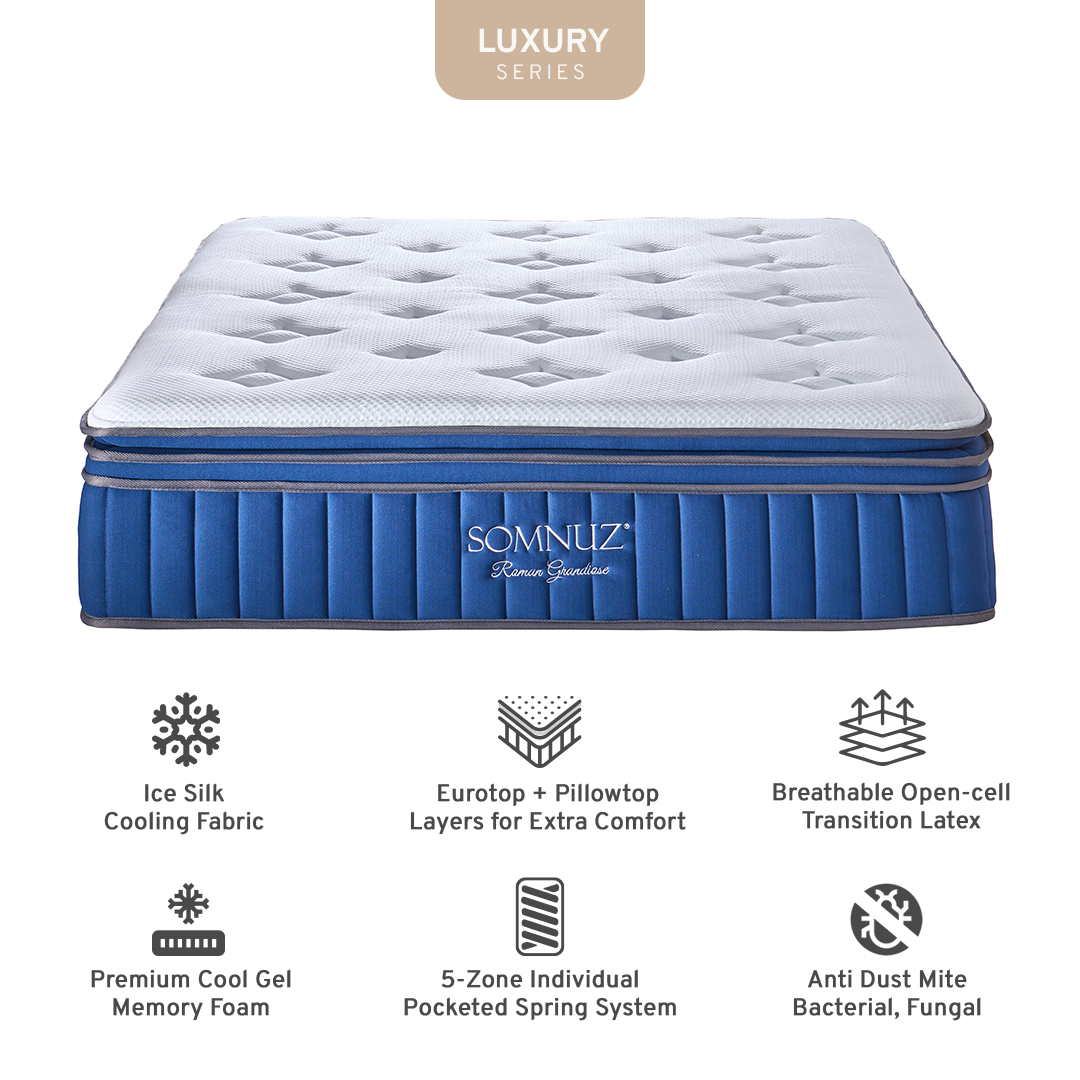
If you are just starting, the Somnuz mattress collection gives you a clear place to browse supportive and breathable options before narrowing your choice.
Why A Mattress Tool Helps Singapore Shoppers
Mattress shopping can feel overwhelming because many descriptions sound similar. Words like firm, plush, cooling, hybrid, latex, and support can be helpful, but only when you understand what they mean for your sleep.
A mattress tool helps turn those words into practical decisions.
For Singapore shoppers, this matters because comfort is not only about how the mattress feels in the first few seconds. It also needs to work with your room, climate, sleep position, and household needs.
A mattress tool can help you avoid common mistakes such as:
- Choosing only by price
- Picking the firmest option without testing comfort
- Buying a larger size without checking room space
- Ignoring cooling needs in humid weather
- Forgetting partner movement for shared sleep
- Overlooking mattress height and bed frame fit
- Choosing based on one feature instead of the full mattress
The goal is not to make the choice complicated. It is to make it calmer and more structured.
What A Good Mattress Tool Should Compare
A good mattress tool should guide you through the features that affect real sleep comfort. It should not only ask whether you want soft or firm.
Firmness And Comfort Feel
Firmness is how hard or soft the mattress feels when you lie down. Comfort feel is how the surface responds to your body.
Some people like a cushioned, close feel. Others prefer a lifted and responsive feel. Couples may need a balanced firmness that both sleepers can accept.
A good tool should help you compare these options without assuming that one firmness suits everyone.
Support
Support is different from firmness. It is about how steady your body feels through the night.
A mattress can feel soft at the surface and still be supportive underneath. A mattress can also feel firm but not comfortable for your body.
A good mattress tool should help you understand whether the mattress supports your usual sleeping position, not just whether it feels firm.
Cooling
Singapore’s humid weather makes cooling comfort important. A mattress that feels cosy in a cool showroom may feel warmer at home if it traps heat or does not allow enough airflow.
Look for breathable covers, responsive comfort layers, and construction that does not feel overly heat-trapping.
The cooling mattress Singapore guide can help you understand how airflow, materials, and support work together for humid nights.
Motion Control
If you share your bed, movement matters. A mattress tool should help you consider how much movement travels across the bed when one person turns, sits up, or gets out of bed.
This is especially useful for couples with different sleep schedules or light sleepers who wake easily.
Use A Mattress Tool To Choose The Right Size
Size is one of the most practical parts of mattress shopping. A larger mattress can feel more comfortable, but only if it fits the room properly.
In Singapore, room layouts can be compact. A queen mattress may suit many couples, while a king mattress may feel spacious only if the room has enough walking space. A single or super single may work better for children, teenagers, guest rooms, or solo sleepers.
Before choosing, measure:
- Bedroom width and length
- Bed frame dimensions
- Wardrobe and drawer clearance
- Walking space around the bed
- Space for bedside tables
- Lift, corridor, and doorway access
A good mattress tool should help you think beyond the mattress itself. It should help you decide whether the size works in everyday life.
For local dimensions, this guide to mattress sizes in Singapore can help you compare single, super single, queen, and king sizes.
Match The Mattress Tool To Your Sleep Style
Your sleep style should guide your choice. A mattress that works well for one sleeper may not feel right for another.
Side Sleepers
Side sleepers often need more cushioning around the shoulders and hips. A mattress tool should help side sleepers compare comfort layers and support, not just firmness labels.
A surface that is too firm may feel less forgiving. A surface that is too soft may feel less steady. The best option usually feels balanced for the body.
Back Sleepers
Back sleepers often prefer support that feels even and steady. A mattress tool can help compare medium, medium-firm, and firmer options based on comfort preference.
The goal is support without a harsh surface feel.
Combination Sleepers
Combination sleepers move between positions. A mattress tool should help them compare ease of movement, responsiveness, and support.
A mattress that feels too deep or too stiff may be harder to move on.
Couples
Couples need to compare two sets of needs. A mattress tool should help both people think about firmness, cooling, width, motion control, and edge support.
If both sleepers want different feels, a balanced mattress may be easier to share than an extreme soft or firm choice.
Compare Mattress Types With More Clarity
A mattress tool is most useful when it helps you understand mattress types in plain language.
|
Mattress Type |
General Feel |
What To Compare |
|
Foam |
Cushioned and contouring |
Heat, sink, and surface comfort |
|
Latex |
Responsive and buoyant |
Breathability and cushioning |
|
Pocket Spring |
Lifted and supportive |
Motion control and airflow |
|
Hybrid |
Balanced and layered |
Comfort layers with support underneath |
Foam may suit sleepers who like a closer surface feel. Latex may suit those who prefer responsiveness. Pocket spring mattresses may suit those who want airflow and steadier support. Hybrid options may suit shoppers who want comfort on top with stronger structure underneath.
If you want a clearer side-by-side view, use Compare Our Mattresses to review firmness, thickness, cooling features, mattress type, and support feel in one place.
When A Mattress Tool Is Not Enough
A mattress tool can narrow your options, but it may not answer everything. Mattress comfort is physical. Sometimes, the final decision becomes clearer only when you lie down and compare the feel in person.
This is especially true if:
- You are choosing for a couple
- You are unsure between two firmness levels
- You sleep warm and want to compare cooling feel
- You are changing mattress type
- You are upgrading from an old or sagging mattress
- You are buying for a main bedroom
- You want reassurance before committing
Online tools are useful for shortlisting. Showroom testing helps confirm the feel.
When testing in person, lie down in your usual sleeping position. Turn as you normally would at night. Sit near the edge. If you share the bed, test it together.
For broader buying support, this mattress buying guide can help you think through the full decision more calmly.
How To Use A Mattress Tool With Confidence
A mattress tool works best when you answer honestly. Do not choose what sounds impressive. Choose what matches your real sleep habits.
Start with your current mattress. Ask what you like and dislike about it. Is it too warm? Too soft? Too firm? Too small? Does it transfer too much movement? Does it still feel supportive?
Then compare your next mattress around those answers.
A simple process looks like this:
- Identify your main sleep concern
- Choose your preferred firmness range
- Check your room size
- Compare mattress types
- Review cooling needs
- Consider partner movement
- Shortlist two or three options
- Try the range in person if unsure
This keeps the process practical. It also helps you avoid buying based only on one feature.
Mattress Tool Buying Guide For Singapore Homes
A mattress tool can make mattress shopping feel simpler, clearer, and less overwhelming. It helps you compare comfort, support, cooling, size, materials, and shared-sleep needs in a more practical way.
For Singapore homes, this is especially helpful. Humid weather, compact layouts, and shared bedrooms can all affect how a mattress feels after the first night.
Use online tools to narrow your choices. Compare firmness, mattress type, cooling features, and room fit. Then, if you want extra confidence, test the mattress in person before deciding.
You can visit our showroom to compare different mattress feels with calm guidance from the Somnuz sleep team.
Somnuz is here to help you choose with supportive comfort, breathable options, reduced partner disturbance, clear guidance, and dependable local service before and after purchase.
FAQs
What is a mattress tool?
A mattress tool is a guide, checklist, comparison page, quiz, or showroom support process that helps you choose a mattress based on comfort, support, size, cooling, and sleep habits.
How can a mattress tool help me choose better?
It helps you compare the features that matter most, such as firmness, mattress type, cooling, motion control, and room fit. This makes the buying process feel clearer and less based on guesswork.
Should I rely only on a mattress tool?
A mattress tool is helpful for shortlisting options, but trying a mattress in person can give extra confidence. This is especially useful for couples, hot sleepers, or anyone unsure about firmness.
What should I compare before buying a mattress?
Compare firmness, support, comfort feel, cooling, mattress type, edge support, partner movement, mattress size, delivery access, and after-sales support.
Is a mattress tool useful for couples?
Yes. Couples can use a mattress tool to compare firmness preferences, motion control, cooling needs, size, and edge support before choosing a shared mattress.
Can a mattress tool tell me the right size?
A mattress tool can help you narrow your size, but you should still measure your bedroom, bed frame, walkway space, wardrobe clearance, and delivery access before buying.