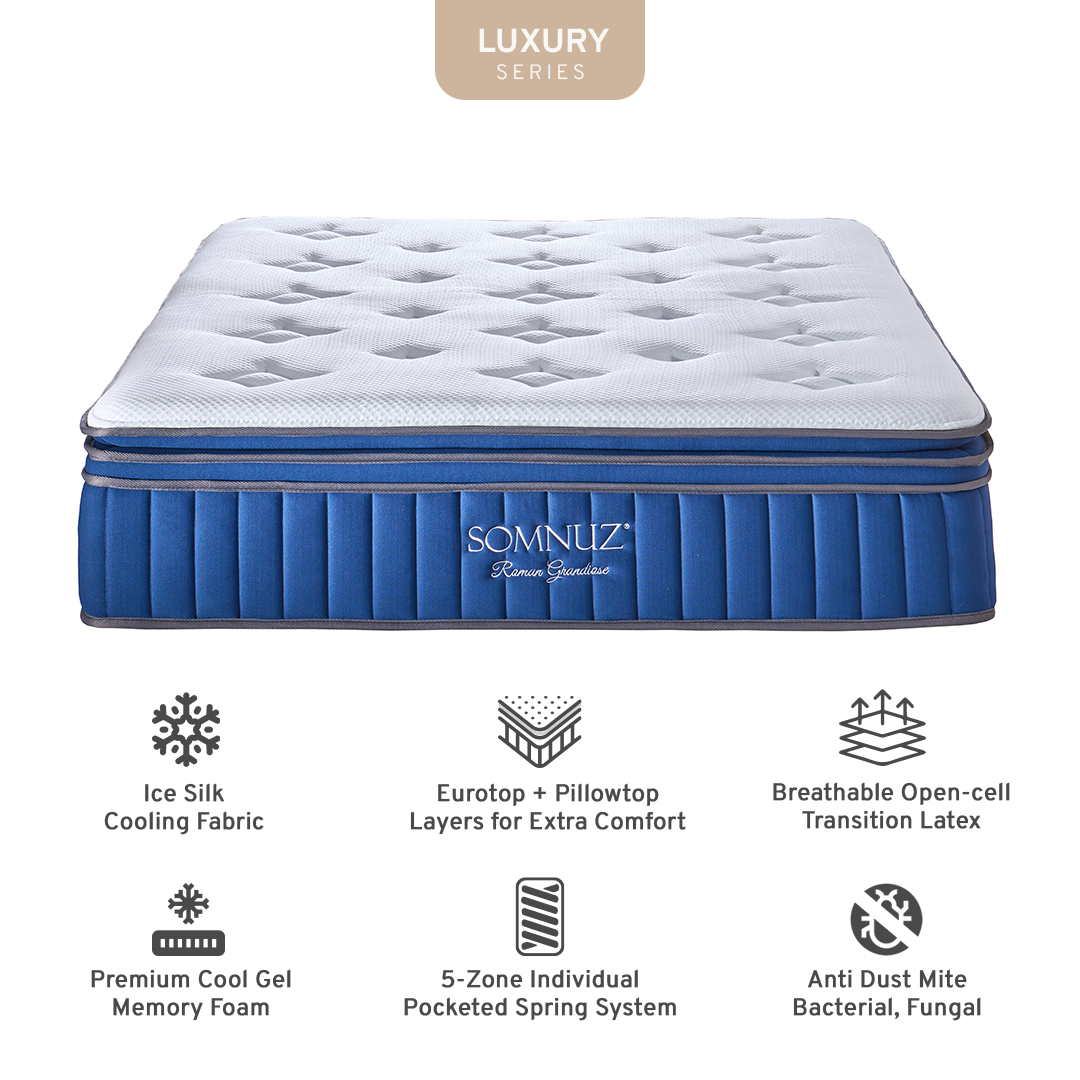


This mattress type comparison guide is written for Singapore homes, where humid nights, shared bedrooms, and practical room layouts can affect what feels comfortable. Walk into any mattress store or browse online, and you will quickly encounter three main types: latex, memory foam, and pocketed spring. Each is positioned as the right choice, and each has genuine advocates who sleep on it happily for years. So which one is actually best?
The answer, as with most things in sleep, is that it depends on you. Each mattress type has distinct qualities that suit different sleeping profiles, preferences, and environments. Understanding those differences is the most useful thing you can do before making a buying decision.
This guide gives you a clear, honest mattress type comparison so you can work out which option is likely to suit you best, rather than choosing based on marketing claims or someone else's experience.
Why Mattress Type Matters More Than Most People Expect
The type of mattress determines almost everything about how it feels and performs. Firmness, temperature regulation, motion isolation, durability, and how the mattress responds when you move are all shaped primarily by the material inside.
Two mattresses at the same price point, the same size, and the same stated firmness level can feel remarkably different if they are made from different materials. This is why comparing mattress types is a more useful starting point than comparing individual products.
In Singapore's warm and humid climate, material choice also affects one of the most practically important aspects of sleep comfort: how well the mattress manages heat overnight. This is a consideration that goes beyond personal preference and into genuine sleep quality, so it deserves attention throughout this comparison.
Latex Mattresses: Responsive, Breathable, and Long-Lasting
A latex mattress is made from natural or synthetic rubber, processed into a foam-like material that is both cushioning and resilient. Natural latex in particular has a distinct feel that sets it apart from other types.
How it feels. Latex has a buoyant, springy quality. When you press into it, it pushes back with gentle resistance rather than contouring closely around the body. This gives a sense of sleeping on the mattress rather than sinking into it. The response is quick, which means latex adjusts naturally as you shift position during the night rather than holding you in one place.
Temperature regulation. Latex is naturally breathable. Air circulates through the open-cell structure of the material, which helps dissipate body heat rather than retaining it. For Singapore's warm nights, this is a meaningful practical advantage over denser foam alternatives.
Motion isolation. Latex absorbs movement reasonably well, making it a decent choice for shared beds. It is not quite as effective as pocketed spring in this respect, but couples who are not particularly sensitive to motion will generally find it comfortable.
Durability. Natural latex is one of the most durable mattress materials available. It holds its shape and support reliably over many years without developing significant body impressions. This makes it a strong long-term investment.
Best suited to: Combination sleepers who move through the night, those who sleep warm, and buyers looking for a durable, low-maintenance option. Also a strong choice for those who prefer a responsive, supportive feel over a cradling one.
Memory Foam Mattresses: Contouring, Pressure-Relieving, and Quiet
Memory foam was originally developed for use in aircraft seats and became widely adopted in bedding for its distinctive pressure-relieving qualities. It is now one of the most widely recognised mattress materials in the world.
How it feels. Memory foam responds to body heat and weight by softening and contouring closely to the shape of the sleeper. The sensation is often described as cradling, with the mattress moulding around the body's curves. For many people, this close contact feels very comfortable, particularly at pressure points like the shoulder and hip.
Temperature regulation. This is the most significant practical limitation of memory foam, particularly in Singapore. Denser memory foam retains body heat and can create a noticeably warm sleeping surface over the course of a night. Open-cell and gel-infused memory foam options manage this better, but heat retention remains more of a consideration with foam than with latex or spring constructions. If you sleep warm or run air conditioning only intermittently, this is worth weighing carefully.
Motion isolation. Memory foam excels at motion isolation. Its density absorbs movement effectively, meaning that when one person shifts position, the other is very unlikely to feel it. This makes memory foam one of the best choices for couples where motion disturbance is a concern.
Durability. Quality varies considerably across memory foam products. Higher-density foam tends to hold its shape better over time. Lower-density options can soften and develop body impressions more quickly. It is worth paying attention to foam density specifications rather than just price when evaluating memory foam options.
Best suited to: Side sleepers who benefit from cushioning at the shoulder and hip, those who are sensitive to motion disturbance from a partner, and sleepers who prefer a cradling, close-contact feel. Less suited to those who sleep warm or who prefer a more responsive, easy-to-move-on surface.
Pocketed Spring Mattresses: Supportive, Breathable, and Ideal for Couples
A pocketed spring mattress uses individually wrapped coils, each one sewn into its own fabric pocket. Unlike older bonded spring systems where coils are connected and move together, pocketed springs respond independently to pressure from different parts of the body.
How it feels. A pocketed spring mattress has a supportive, responsive feel with a gentle bounce. It does not contour as closely as memory foam, but it provides a comfortable balance of cushioning and support across the sleeping surface. Many people find this feel familiar and naturally comfortable, particularly those who have grown up sleeping on spring-based mattresses.
Temperature regulation. Pocketed spring mattresses tend to sleep cool. Air circulates freely through the spaces between the coils, which prevents heat from building up in the way it can with foam. For Singapore's climate, this is a practical advantage that contributes to more comfortable sleep on warmer nights.
Motion isolation. This is where pocketed springs excel in a shared sleeping context. Because each coil moves independently, movement on one side of the bed is absorbed locally rather than transmitted across the entire surface. For couples where one person moves frequently or gets up during the night, pocketed spring construction makes a meaningful difference to the other person's sleep.
Durability. A well-made pocketed spring mattress maintains its support reliably over many years. The quality of the coil gauge and the materials in the comfort layers above the springs determine how well the mattress holds up over time.
Best suited to: Couples who want strong motion isolation, back sleepers who need a supportive surface, those who sleep warm and need good airflow, and anyone who prefers a traditional spring feel with the added benefit of independent coil response.
Side-by-Side: How the Three Types Compare
To make this mattress type comparison concrete, here is how each option stacks up across the factors that matter most.
Feel and surface response: Latex is buoyant and responsive. Memory foam is cradling and slow to respond. Pocketed spring is supportive with a gentle bounce.
Pressure relief: Memory foam leads for close contouring and pressure relief. Latex provides good pressure relief with more responsiveness. Pocketed spring provides support-led comfort rather than deep cushioning.
Temperature regulation: Latex and pocketed spring both manage heat well. Memory foam, particularly in denser forms, retains more warmth. In Singapore's climate, this distinction matters practically.
Motion isolation: Memory foam is the strongest performer. Pocketed spring is very effective, particularly for couples. Latex is adequate for most sleepers.
Durability: Latex tends to be the most durable. High-quality pocketed spring is also very durable. Memory foam varies by density and quality.
Ease of movement: Latex and pocketed spring are easier to move on. Memory foam's slow response can make shifting position feel slightly more effortful.
How to Narrow Down Which Type Suits You
Rather than trying to identify a single best type, use your own sleeping profile as the guide.
If you are a side sleeper who values pressure relief at the shoulder and hip, and motion disturbance is a concern, memory foam or a softer latex option are the most natural starting points.
If you sleep warm or your bedroom is not heavily air-conditioned, prioritise latex or pocketed spring for their breathability.
If you share a bed and your partner moves frequently, pocketed spring offers the most effective motion isolation of the three types, with latex as a reasonable alternative.
If you prefer a responsive, easy-to-move surface and want a mattress that will hold its shape and support over many years, latex is worth looking at closely.
If you want a familiar, supported feel with good airflow and strong couple-friendly performance, pocketed spring is a strong and practical choice.
See the Difference for Yourself
A mattress type comparison on paper is useful for narrowing your thinking, but the most reliable guide is how each type actually feels when you lie on it. The difference between latex, memory foam, and pocketed spring is distinct enough that most people have a clear preference after spending a few minutes on each.
At our mattress showroom in Singapore, you can try all three types in person, take your time, and ask our team anything you need to know based on your specific situation. There is no pressure to decide on the day. The visit is there to inform your choice, not to rush it.
You can also browse the full Somnuz mattress collection online to compare options across all three types before visiting. For broader guidance on sleep quality and what contributes to a more restful night, our Sleep Well guide is a useful companion resource.
FAQs
Which mattress type is best for hot sleepers in Singapore?
Latex and pocketed spring mattresses both manage heat well due to their naturally breathable constructions. Latex allows air to circulate through its open-cell structure, while pocketed spring allows airflow between the coils. Memory foam, particularly in denser forms, tends to retain more body heat and is generally less suited to those who sleep warm.
Is memory foam or latex better for side sleepers?
Both can work well for side sleepers. Memory foam provides close contouring that cushions pressure points at the shoulder and hip. Latex offers similar pressure relief with a more responsive, springy feel. If you move around during the night as well as sleeping on your side, latex may suit you better for its ease of movement. If you tend to stay still and prefer a cradling feel, memory foam is worth considering.
Do pocketed spring mattresses feel too bouncy?
Not in the way older spring mattresses sometimes did. Pocketed spring mattresses use individually wrapped coils that absorb and respond to movement independently, which creates a more controlled and even feel than older bonded spring systems. Most people find the feel supportive and comfortable rather than excessively bouncy.
Which mattress type lasts the longest?
Natural latex tends to be the most durable of the three, holding its shape and support reliably over many years. High-quality pocketed spring mattresses are also very durable. Memory foam durability varies considerably by density, with higher-density foam generally lasting longer than lower-density options.
Can I use any mattress type on any bed base?
Most mattress types work with most standard bases, but it is worth confirming compatibility before buying. Memory foam and latex mattresses generally do well on slatted bases, platform bases, and divan bases. Pocketed spring mattresses also work well across these options. If you are using an adjustable base, check that the specific mattress is compatible with articulating movement.
Is it worth spending more on a natural latex mattress?
Natural latex tends to cost more than synthetic alternatives, but it offers meaningful advantages in breathability, durability, and feel. For those who are sensitive to heat or who want a mattress that maintains its comfort over many years, the additional investment in natural latex often makes practical sense over the lifetime of the product.
Find the Right Type for Your Sleep
A clear mattress type comparison helps you move from confusion to a confident, well-informed decision. Whether latex, memory foam, or pocketed spring turns out to be the right fit, the choice becomes much easier when you understand what each one actually does.
Browse the Somnuz mattress collection to compare options across all three types, or visit our showroom to try the range in person and get guidance tailored to your situation. We are here to help you find what works.