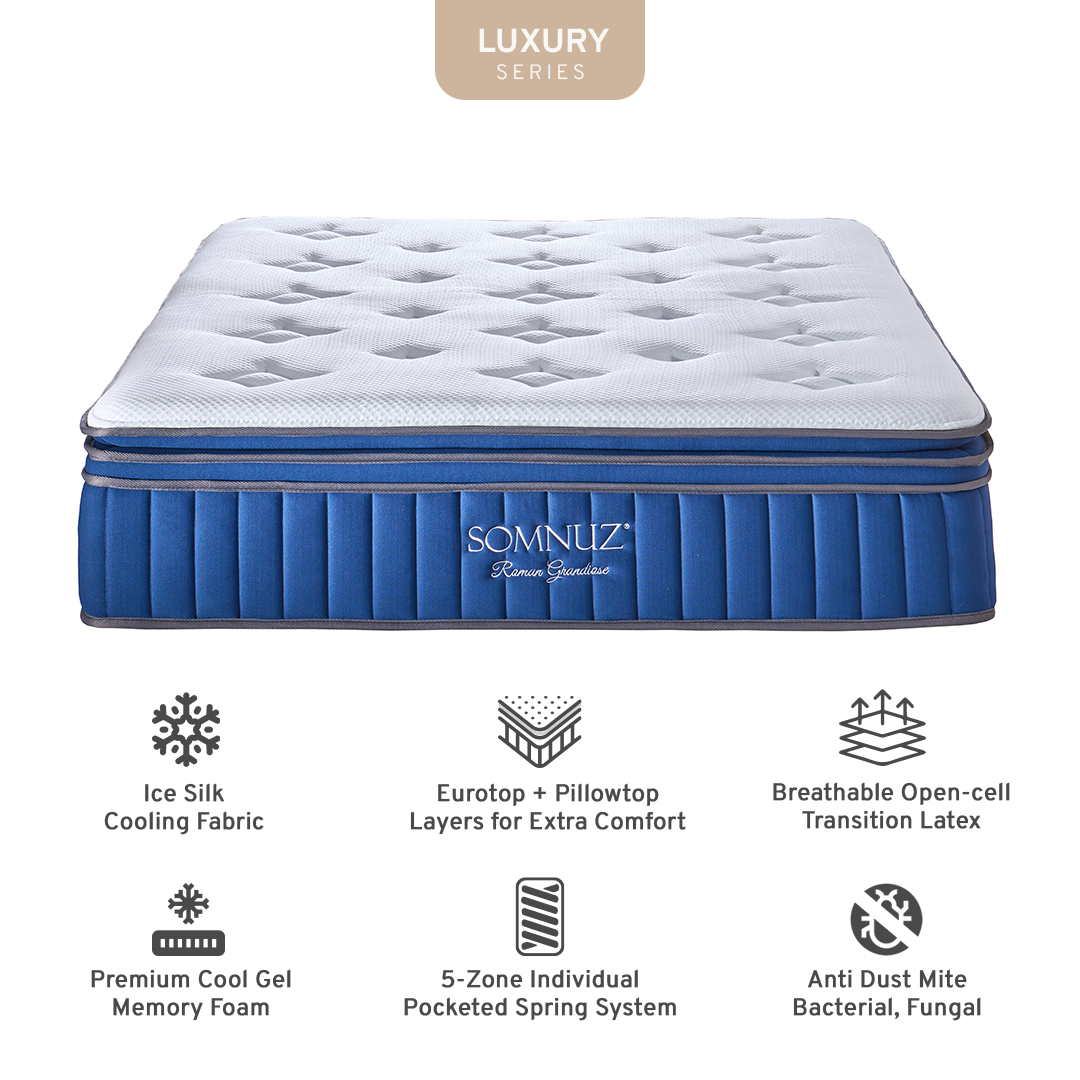


Choosing a mattress can feel harder when you already know you do not want springs. Some sleepers want a quieter surface with less bounce. Others want comfort that feels steadier, more cushioned, or easier to settle into at night.
Singapore homes add a few extra considerations. Warm, humid nights can affect comfort. Shared sleep matters too, especially for couples and families who want less movement across the bed. In many cases, a non spring mattress can make more sense than a spring model, but only when the feel matches the way you sleep.
What is a non-spring mattress?
Non-spring mattresses do not use a coil system for their main support layer. Support and comfort come from materials such as foam or latex instead.
Common types include:
- Memory foam for a more cushioned, body-contouring feel
- Latex for a more responsive and breathable feel
- Foam-led builds that focus on a quieter, less bouncy sleep surface
Feel can still vary a lot. Some non-spring mattresses feel plush and gently cradling. Some feel balanced and supportive. Some feel firmer and more lifted. Material alone does not tell the full story, so it helps to look at how the mattress feels in real use.
What Counts As A Non Spring Mattress?
Memory foam mattresses are the clearest example. They rely on foam layers rather than springs to shape comfort and support. Somnuz also offers guidance on memory foam mattresses in Singapore for shoppers who want to understand how that feels in local bedrooms.
How It Feels Different From A Spring Mattress
Biggest difference usually comes down to movement and surface feel. Non-spring mattresses often feel quieter and less bouncy. Many sleepers also notice a more settled feeling when they lie down. Spring mattresses, by contrast, often feel more lifted and more responsive.
Neither feel is automatically better. Better choice depends on what helps you rest more comfortably through the night.
When a Non-Spring Mattress Makes More Sense
This is the heart of the decision. Spring-free comfort tends to suit certain sleep preferences especially well.
A non-spring mattress may make more sense if you want:
- less bounce when you move
- less partner disturbance during the night
- a more cushioned or body-hugging feel
- a quieter, steadier sleep surface
- a simpler choice between foam-led and latex-led comfort
For Couples Who Want Less Movement Across The Bed
Movement transfer is one of the most common reasons people move away from springs. If one person turns often, gets up earlier, or settles into bed later, a non-spring mattress may help reduce how much of that movement is felt on the other side.
Memory foam is often the first material people look at here because it tends to absorb motion well. Sleep can feel calmer when the mattress does not react as sharply to every shift.
For Sleepers Who Prefer A More Cushioned Or Steadier Feel
Some sleepers enjoy a surface that shapes more closely around the body. Some simply do not like the lifted feel of springs. Non-spring mattresses can suit both preferences.
Memory foam often suits people who want:
- more contouring
- a quieter feel
- less bounce
- a more settled surface
Latex often suits people who want:
- a spring-free mattress
- a more responsive surface
- breathable comfort
- less sink than traditional foam
For Homes Where Quiet, Low-Motion Comfort Matters
Shared sleeping spaces are common in Singapore, and comfort needs can overlap with practical daily life. Lower movement transfer can matter in HDB flats, condo bedrooms, and family homes where sleep schedules do not always match. Spring-free comfort can feel more controlled and less disruptive in these situations.
Latex Vs Memory Foam In A Spring-Free Bed
Most shoppers looking for a non-spring mattress end up comparing latex and memory foam. Both can work well. They just feel different.
Quick comparison:
- Memory foam usually feels more contouring and more cushioned
- Latex usually feels more buoyant and more breathable
- Memory foam often reduces felt motion more strongly
- Latex often feels easier to move on during the night
When Memory Foam May Suit You Better
Memory foam may be the better fit if you like a more cradled feel and want less movement across the bed. It can be especially appealing for side sleepers, couples, and anyone who wants a calmer surface with less bounce. Readers who want to compare actual models can browse Somnuz’s memory foam mattress options.
When Latex May Suit You Better
Latex may suit you better if you want a spring-free bed that still feels more responsive. It tends to feel more lifted than memory foam, which many sleepers find easier to move on. Shoppers who care more about airflow and a less stuffy surface often look first at latex mattress in Singapore or the wider natural latex mattress range.
Why Personal Comfort Preference Still Matters Most
Comfort labels only take you part of the way. Two people can want a non spring mattress for completely different reasons. One person may want more cushioning around the shoulders and hips. Another may want less heat build-up and an easier surface to turn on. The best decision comes from matching the feel to your routine, not just picking the most popular material.
How a Non-Spring Mattress Fits Singapore Sleep Needs
Local context matters here. Climate, room layout, and shared sleeping habits can all influence what feels comfortable over time.
Breathability Matters On Humid Nights
Humid nights can make any mattress feel warmer, but some materials and builds manage heat better than others. Hot sleepers often lean toward a spring-free surface only when it still feels breathable enough for local conditions. Latex is often considered for this reason, while foam shoppers usually pay closer attention to cover fabric, comfort layers, and overall build.
Shared Sleeping Spaces Need Better Movement Control
Many couples want sleep that feels less disrupted, not just softer. Smaller bedrooms and shared beds make movement more noticeable. Non-spring designs can help here because they often create a steadier sleep surface, especially when motion control matters more than bounce.
Why Trying Different Feels In Person Helps
Small feel differences matter more than many people expect. One mattress may feel gently cushioned. Another may feel more lifted and easier to move on. Side-by-side testing makes those differences clearer, which is why it helps to compare our mattresses before you commit.
How To Choose A Non Spring Mattress With More Confidence
Start with feeling first. Mattress type should support that decision, not replace it.
Use this simple checklist:
- Think about your comfort preference. Do you like a cushioned, balanced, or firmer feel?
- Think about movement. Do you wake easily when your partner turns or gets out of bed?
- Think about heat. Do warm nights already make it harder for you to sleep?
- Think about ease of movement. Do you prefer a mattress that feels easier to turn on?
- Think about daily use. Do you want a master bedroom upgrade, a family bedroom option, or a mattress for a guest room?
Start With Feel, Not Just Mattress Type
Words like foam and latex help narrow the search, but they should not be the final answer on their own. One foam mattress can feel quite different from another. Same goes for latex. Focus first on what you want to feel when you lie down.
Think About Heat, Movement, And Everyday Use
Real-life sleep matters more than showroom labels alone. Couples may place movement control first. Hot sleepers may care more about airflow. Family buyers may want a mattress that feels supportive, quiet, and easy to live with every day.
Use Guidance To Narrow Down The Right Fit
Choosing with confidence is easier when the process stays clear. Shortlists help. Side-by-side comparison helps. Guidance helps most when you are torn between cushioned comfort and a more responsive spring-free feel.
Non-Spring Mattress Singapore: Who It Suits Best
Non spring mattresses make a lot of sense for sleepers who want less bounce, lower movement transfer, and a more controlled surface feel. Memory foam can suit those who want more contouring and a quieter feel. Latex can suit those who want spring-free comfort with more responsiveness and breathability.
Right choice still depends on how you sleep, how warm your room feels at night, and how much movement or sink you notice in bed. Better results usually come from matching the mattress to your routine, your comfort preference, and your household setup.
With the right guidance, a spring-free bed can feel simpler to choose than many shoppers expect.
Find A Spring-Free Mattress That Suits You
If a non spring mattress sounds closer to what you want, Shop the Collection to compare comfort styles and materials online. If you want extra reassurance before buying, visit the Showroom and try different feels side by side. Somnuz can help you choose with clearer guidance and dependable support before and after purchase.
Frequently Asked Questions
Is a non-spring mattress good for couples?
Yes, it can be. Many couples choose a non-spring mattress because it often feels steadier and may reduce how much movement is felt from one side of the bed to the other.
What Is The Difference Between A Non Spring Mattress And A Spring Mattress?
The main difference is in the support core and surface feel. Non-spring mattresses use materials like foam or latex instead of coils, so they often feel less bouncy and more controlled.
Is Memory Foam Or Latex Better For Humid Singapore Weather?
Latex is often preferred by shoppers who want a more breathable and responsive feel. Memory foam can still work well, but build, cover fabric, and room conditions all play a part in how warm it feels.
Does A Non Spring Mattress Feel Firmer Or Softer?
It can feel either way. Some non-spring mattresses feel soft and cushioned, while others feel balanced or firm. Material type helps, but overall construction matters more than the label alone.
Should I Try a Non-Spring Mattress In Person Before Buying?
Yes, if possible. In-person testing helps you notice comfort, movement control, sink level, and heat feel more clearly, which makes the decision easier.