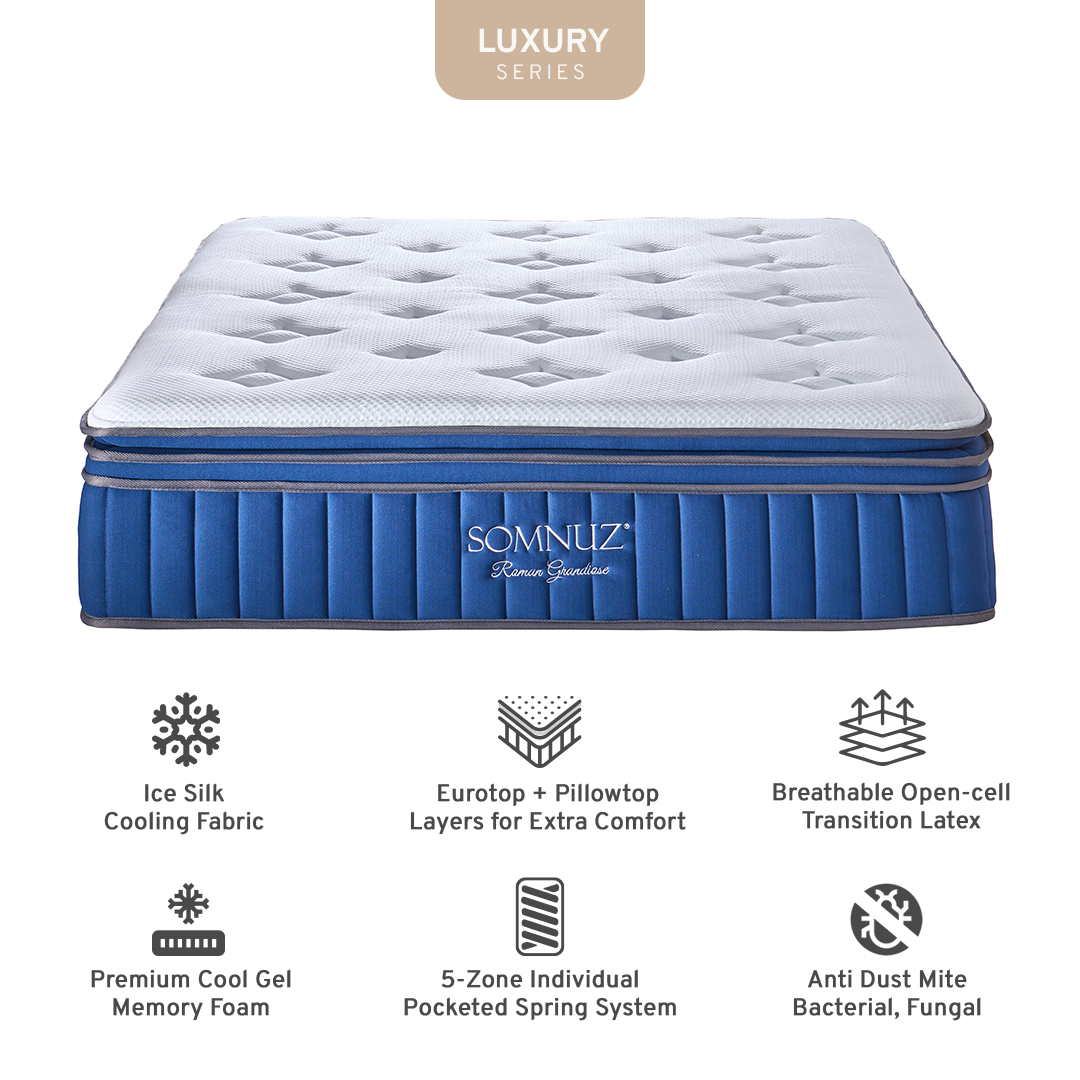


Waking up with a stiff or aching back is one of the most common reasons people start thinking seriously about their mattress. The connection makes sense. You spend seven to nine hours on the same surface every night, and if that surface is not supporting your body well, the effects accumulate in ways that show up each morning.
An orthopaedic mattress for back pain is a category many people turn to at this point, and for good reason. But it is worth approaching it with clear expectations, because the term orthopaedic is not regulated in the mattress industry. It is a descriptor that manufacturers use to indicate a mattress designed with support and spinal alignment as a priority, rather than a clinically certified product.
This guide explains what a supportive mattress can genuinely do, what to look for, and how to make a well-informed choice that suits your sleeping style and Singapore's conditions.
Why Your Mattress Can Affect How Your Back Feels
Before looking at solutions, it helps to understand the relationship between a mattress and back comfort clearly.
When you sleep, your spine needs to rest in a position that does not place sustained load on the muscles, joints, and tissues that support it during the day. A mattress that allows the heavier parts of your body to sink too deeply relative to lighter areas pulls the spine out of this neutral resting position. Held there for hours, that misalignment can translate into the stiffness and tension you feel when you wake.
Equally, a mattress that is too firm without any surface cushioning can create pressure points at the hips, shoulders, and lower back, particularly for side sleepers, that lead to their own kind of discomfort.
The goal is a mattress that keeps the spine in a comfortable, neutral position for your specific sleeping posture, whether that is on your back, your side, or your stomach. What achieves this varies considerably depending on the individual.
It is also worth saying clearly: persistent back discomfort has many possible causes, and a mattress is one factor among several. If you are experiencing significant or ongoing back problems, speaking with a medical professional is the right first step alongside any changes to your sleep setup.
What "Orthopaedic" Actually Means in a Mattress Context
The word orthopaedic on a mattress label is a marketing descriptor rather than a certified category. No independent body awards orthopaedic status to a mattress in the way that clinical devices are certified.
What the term generally signals is a mattress engineered with support as a primary design consideration, typically with a firmer construction and materials chosen to provide consistent spinal support across the sleeping surface. This is a legitimate and useful design goal. It is simply not a guarantee of any specific clinical outcome.
Understanding this lets you look past the label and evaluate what matters: the actual construction of the mattress, the firmness level, the materials used, and how those qualities suit your sleeping position and body type.
Firmness and Support: Not Quite the Same Thing
This distinction is important and often misunderstood.
Support refers to a mattress's ability to keep the spine in a neutral position for your body weight and sleeping posture. A well-supported spine means the mattress holds you in a comfortable resting position without requiring muscles to compensate for an awkward angle.
Firmness refers to how the surface of a mattress feels. A firm mattress resists pressure and does not allow much give. A soft mattress yields more readily.
These qualities interact but they are not the same. A mattress can be firm on the surface and still have a support structure that does not serve your body well. A mattress can have some surface cushioning while still providing excellent underlying support.
For most people dealing with back discomfort, the most useful target is a mattress with strong underlying support paired with an appropriate surface feel for their sleeping position. That tends to mean medium-firm to firm for back sleepers, and medium to medium-firm for side sleepers who need pressure relief at the shoulder and hip alongside their support.
Which Mattress Materials Work Well for Back Support
Material choice shapes both how a mattress feels and how consistently it provides support over time. Here is an honest look at the main options.
Pocketed Spring
A pocketed spring mattress in a medium-firm or firm configuration is one of the most consistently well-suited options for those seeking back support. Each individually wrapped coil responds independently, which means the mattress adjusts to the contours of the body across the sleeping surface rather than treating it as a uniform weight. This creates a supportive feel that is responsive to the body's shape rather than simply uniformly hard.
Pocketed spring also allows good airflow through the coil structure, which is a practical advantage in Singapore's warm and humid climate. A mattress that manages heat overnight contributes to more continuous sleep, which in turn gives the body more opportunity to rest fully.
For couples, the independent coil response also provides strong motion isolation. If your partner moves during the night, you are far less likely to feel it, which means neither person's sleep is unnecessarily disrupted.
Latex
A firm latex mattress provides excellent support with a responsive, buoyant quality. Natural latex pushes back against pressure rather than cradling around the body the way foam does, which creates a well-supported feel for back sleepers in particular. It holds its shape reliably over time and does not develop the body impressions that softer foam can.
Latex is also naturally breathable, making it a sound choice for Singapore's climate. It tends to sleep cooler than foam alternatives, which matters for comfort across a full night.
For those who want consistent, durable support without significant surface cushioning, a firm natural latex option is worth serious consideration.
Memory Foam
Memory foam contours closely to the body and provides good pressure relief, which suits side sleepers dealing with discomfort at the hip and shoulder. For back pain specifically, the effectiveness of memory foam depends on the density and construction. Higher-density foam provides more support and resists bottoming out under body weight. Lower-density foam may feel comfortable initially but compress too readily over time.
The main consideration in Singapore is heat. Memory foam tends to retain body warmth, which can disrupt sleep overnight. For those who sleep warm, this is worth weighing alongside the support characteristics. Open-cell or ventilated memory foam options manage this better than standard dense foam.
How Sleeping Position Affects What You Need
Your primary sleeping position is one of the most useful guides to choosing the right supportive mattress for back comfort.
Back sleepers benefit most from a medium-firm to firm surface that keeps the lower back supported without excessive sinking. The goal is to maintain the natural curve of the lumbar spine in its resting position. Pocketed spring and firm latex options tend to work particularly well here.
Side sleepers need a balance of support and cushioning. Too firm a surface creates pressure at the shoulder and hip, which leads to its own discomfort. A medium to medium-firm mattress that gives a little at those contact points while maintaining underlying support for the spine is usually the most comfortable option. A pocketed spring mattress in a medium-firm configuration, or a medium-firm latex option, can work well for side sleepers who want back support without excessive firmness.
Stomach sleepers generally need a firmer surface to prevent the hips from sinking below the rest of the body, which strains the lower back. This is worth considering alongside the general understanding that stomach sleeping places the spine in a more challenging position overnight.
Combination sleepers who move between positions tend to benefit from a responsive mattress that adjusts as they shift, rather than holding them in one position. A medium-firm pocketed spring or latex option often suits this profile well.
Other Factors Worth Considering
A mattress is one part of the picture. A few other practical considerations are worth keeping in mind.
Pillow height and support affect how the neck and upper spine rest overnight. A mattress that provides good lower back support paired with a pillow that is poorly suited to your sleeping position can still produce tension in the upper back and neck. Both are worth reviewing together.
Bed base condition affects how the mattress performs. A base with broken or unevenly spaced slats, or a divan with compromised support in one area, will cause even a good mattress to perform inconsistently. If your base is worn or damaged, addressing it alongside a new mattress is worthwhile.
Mattress age is relevant too. A mattress that is seven to eight years old and has developed visible sagging or body impressions is unlikely to provide consistent support regardless of what it felt like when new. If your current mattress has reached this stage, a replacement is usually the more practical step.
Finding the Right Option for Your Situation
The range of supportive mattress options is wide enough that the most reliable way to identify what suits you is to experience the options directly. Firmness, surface feel, and material response are all qualities that read very differently on a product page than they feel in person.
At our mattress showroom in Singapore, you can try a range of supportive options in your natural sleeping position, take your time, and speak with our team about your specific concerns. We can help you think through the options based on your sleeping posture, body type, and any particular areas of discomfort you want to address. There is no pressure to decide on the day.
You can also browse the full Somnuz mattress collection online to compare materials and support characteristics before visiting.
For guidance on building a more restful and comfortable sleep environment beyond the mattress itself, our Sleep Well guide is a useful companion resource.
FAQs
Can a mattress cause back pain?
A mattress that does not support your body well in your sleeping position can contribute to tension and discomfort that shows up as back pain in the morning. However, back discomfort has many possible causes, and a mattress is one factor among several. If you are experiencing significant or persistent back pain, speaking with a medical professional is the right course of action alongside any changes to your sleep setup.
Is a firm mattress always better for back pain?
Not necessarily. A firm mattress suits back sleepers and stomach sleepers well, but can create pressure problems for side sleepers who need cushioning at the shoulder and hip. The right level of firmness depends on your sleeping position and body type. Medium-firm is often the most practical choice for a wider range of sleepers because it combines support with a degree of surface cushioning.
What does "orthopaedic" on a mattress label actually guarantee?
In most markets, including Singapore, the term orthopaedic is not independently regulated for mattresses. It indicates a mattress designed with support and spinal alignment as priorities, but it does not carry clinical certification. Evaluating the actual construction, materials, and firmness of a mattress is more reliable than relying on the label alone.
How long does it take to know if a mattress is helping with back discomfort?
Allow at least two to three weeks before drawing conclusions. The first week on a new mattress often feels unfamiliar as your body adjusts. Consistent improvement, or consistent discomfort, that continues beyond the adjustment period is the most meaningful signal.
Does sleeping position matter when choosing a supportive mattress?
Yes, significantly. Back sleepers and stomach sleepers generally do well with medium-firm to firm options. Side sleepers need a balance of support and surface cushioning, which typically means a medium to medium-firm construction. Matching the mattress to your sleeping position is as important as the firmness level itself.
Should I see a doctor before buying an orthopaedic mattress for back pain?
If your back discomfort is significant, persistent, or worsening, seeing a medical professional is the right first step. A healthcare provider can help identify the underlying cause and advise on whether a mattress change is likely to help as part of a broader approach. A supportive mattress can contribute to better sleep and overnight rest, but it is not a substitute for professional advice on back health concerns.
Find a Mattress That Supports Your Sleep
A well-chosen, supportive mattress suited to your sleeping position can make a real and practical difference to how your back feels in the morning.
Browse the Somnuz mattress collection to compare supportive options across pocketed spring, latex, and memory foam, or visit our showroom to try the range in person with guidance from our team. We are here to help you find what genuinely works for your sleep.