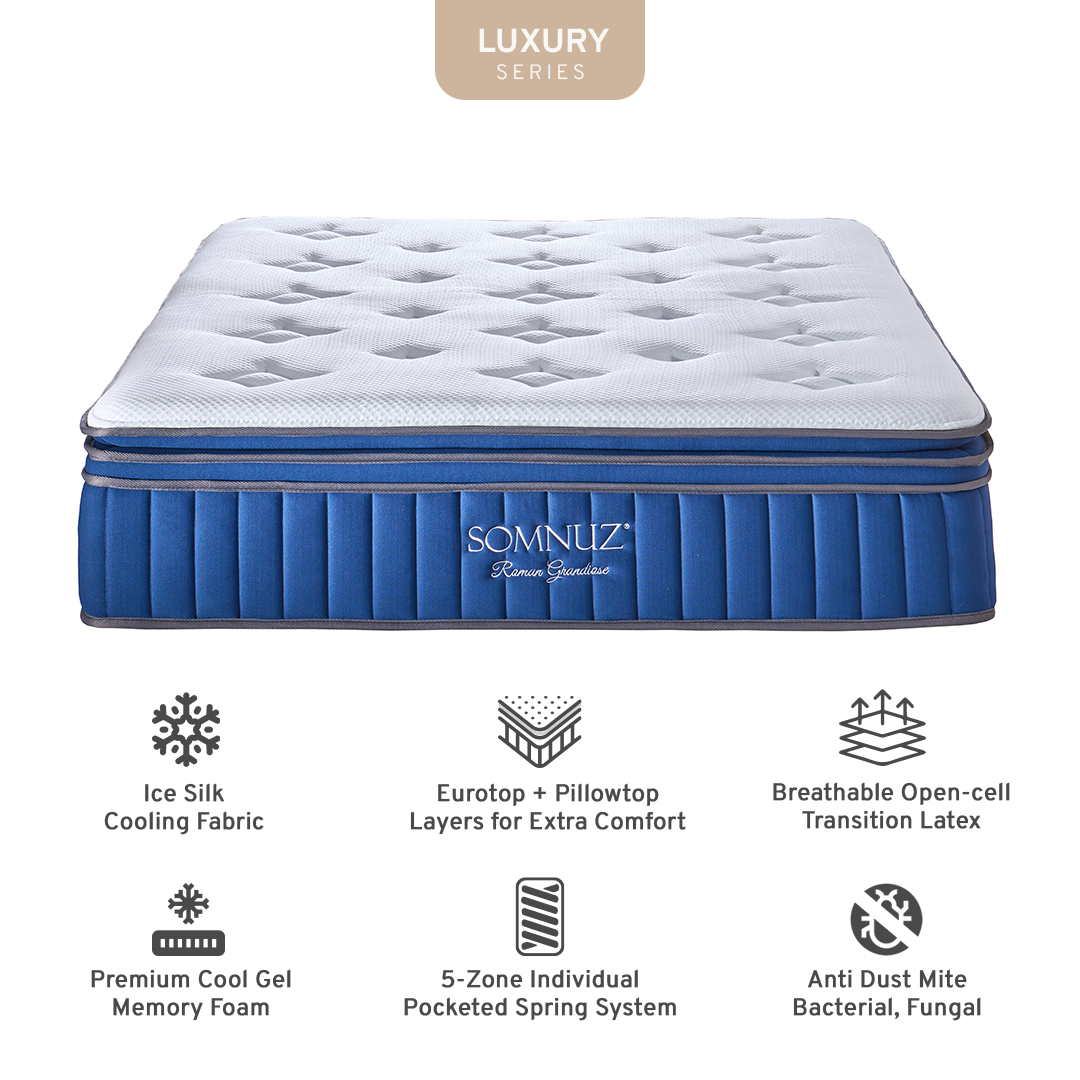


A queen size mattress topper is often considered when a mattress is no longer quite as comfortable as it once was, or when you want to adjust the feel of your sleeping surface without replacing the mattress itself. Used correctly, a topper can genuinely improve comfort. Used incorrectly, it adds cost without solving the underlying issue.
This guide helps you understand what toppers offer, which type suits different needs, and when a topper is the right solution, as well as when it is not.
What a Mattress Topper Actually Does
A mattress topper is an additional layer placed on top of your existing mattress, beneath the fitted sheet. It changes the feel of the sleeping surface, adding cushioning, adjusting firmness, or providing additional pressure relief depending on the material.
A topper does not fix a mattress that has fundamentally worn out. If your queen mattress has significant sagging, broken-down support foam, or spring issues, a topper will conform to those problems rather than resolving them. In this case, replacing the mattress is the more practical path.
Where a topper genuinely helps is when the mattress itself is still structurally sound but the surface feel is not quite right. Perhaps it feels slightly too firm, or the top layer has softened over time in a localised area. In these situations, a well-chosen topper can extend the useful life of a good mattress by improving surface comfort.
Types of Queen Mattress Toppers
Memory Foam Topper
A memory foam topper adds a contouring, cushioning layer to the sleeping surface. It responds to body heat and weight, softening the surface and reducing pressure at the shoulders, hips, and other contact points. It is a good option for a mattress that feels too firm, or for a side sleeper who wants more cushioning without replacing the mattress.
In Singapore's warm climate, breathability is a consideration with memory foam. Look for open-cell foam construction or a topper with a breathable cover rather than a dense, sealed foam that retains heat. For a queen mattress shared by two people, a topper that retains warmth can make the sleeping surface uncomfortable on warm nights.
Latex Topper
A latex topper has a more responsive, buoyant feel compared to memory foam. It provides cushioning without the close-contouring effect, which some sleepers find more comfortable, particularly those who dislike the feeling of sinking deeply into the mattress.
Natural latex is inherently breathable and durable, making it well-suited to Singapore's humid conditions. It is also naturally resistant to dust mites, which is a practical benefit in any sleeping environment. A latex topper tends to be more durable than a foam alternative and holds its shape over a longer period.
Wool Topper
A wool topper uses natural wool filling for cushioning. Wool is naturally breathable and moisture-wicking, which makes it a surprisingly good choice for warm climates. It regulates temperature by drawing moisture away from the sleeping surface, which can help manage the warmth generated by two sleepers sharing a queen.
Wool toppers are also naturally resistant to dust mites and require less frequent washing than synthetic alternatives, though they do benefit from regular airing.
Feather and Down Topper
A feather and down topper provides a soft, cloud-like cushioning layer. It is most associated with a plush, luxurious feel and suits those who want significant softness added to the sleeping surface. In Singapore's heat, feather and down can retain warmth, which some people find too warm. It is better suited to air-conditioned bedrooms.
Microfibre Topper
A microfibre topper is the most affordable common option. It adds a modest amount of softness and is easy to wash and dry. It is a practical choice for a guest room or as a temporary solution. For everyday primary use in Singapore's climate, a breathable natural material will generally perform better over time.
Sizing a Queen Mattress Topper
A queen topper should match the dimensions of your mattress as closely as possible: approximately 152 to 153 centimetres wide by 190 centimetres long. Toppers that are too small will leave areas of the mattress uncovered. Toppers that overhang the edges significantly will shift during the night.
Topper thickness typically ranges from about 3 to 8 centimetres. A thicker topper provides more cushioning but also raises the total sleeping height. If your queen bed is already on a higher base or uses a thicker mattress, adding a substantial topper may bring the total height to a level that is awkward to get in and out of comfortably. Factor this in when choosing.
Also check that your fitted sheets and mattress cover have sufficient pocket depth to accommodate the combined height of the mattress and the topper. If your current sheets fit snugly on the mattress alone, a topper may require sheets with deeper pockets.
When a Topper Is Not the Answer
A topper is not a substitute for replacing a mattress that has genuinely reached the end of its useful life. Signs that a replacement is the better solution include significant sagging or body impressions in the mattress, a spring system that is audibly or physically compromised, or a sleeping surface that is simply too old, typically eight to ten years or more of nightly use.
If you are finding that poor sleep is consistent despite trying different bedding and sleeping positions, the mattress itself may be the source of the issue rather than the surface feel. In this case, exploring the Somnuz mattress collection for a queen size replacement is a more effective step than adding a topper to a worn mattress.
For guidance on when to replace versus when to supplement, the Sleep Well resource page covers useful considerations. If you would like to try different options in person, including toppers and mattresses at queen size, visit our mattress showroom in Singapore for honest guidance with no pressure to decide on the day.
Frequently Asked Questions
What is the best type of queen mattress topper for Singapore?
Natural latex and wool are particularly well-suited to Singapore's warm and humid conditions due to their breathability and moisture management. Memory foam works well if you choose an open-cell construction with a breathable cover. Feather and down are better suited to heavily air-conditioned bedrooms.
Will a queen mattress topper fix a sagging mattress?
No. A topper adds a surface layer but does not address structural problems within the mattress. If your mattress has sagging or broken-down support, replacing the mattress is the more effective solution.
How thick should a queen mattress topper be?
Most toppers range from 3 to 8 centimetres. A thicker topper provides more cushioning but raises the total sleeping height and requires sheets with deeper pockets. A 4 to 5 centimetre topper is a practical midpoint for most setups.
How do I keep a queen mattress topper in place?
Most toppers can be secured with a fitted sheet pulled tightly over both the topper and the mattress. Some toppers have elasticated straps at the corners for additional security. If the topper shifts during the night, a topper grip mat placed between the topper and mattress can help.
Can I use a queen topper on a king mattress?
No. A queen topper at approximately 152 by 190 centimetres will not cover a king mattress at approximately 183 by 190 centimetres. Always match the topper size to the mattress dimensions.
How often should I wash a mattress topper?
Washing frequency depends on the material. Many toppers can be washed every two to three months with regular airing in between. Check the care label for the specific topper. Using a mattress protector over the topper reduces how frequently the topper itself needs washing.
Complete Your Queen Bed Setup
A well-chosen topper can extend the comfort of a good mattress. If the mattress itself needs replacing, a new one is the more effective investment.
Browse the Somnuz mattress collection to explore queen size options suited to Singapore's climate. Or visit our showroom in Singapore to try the range in person and get practical, honest guidance.