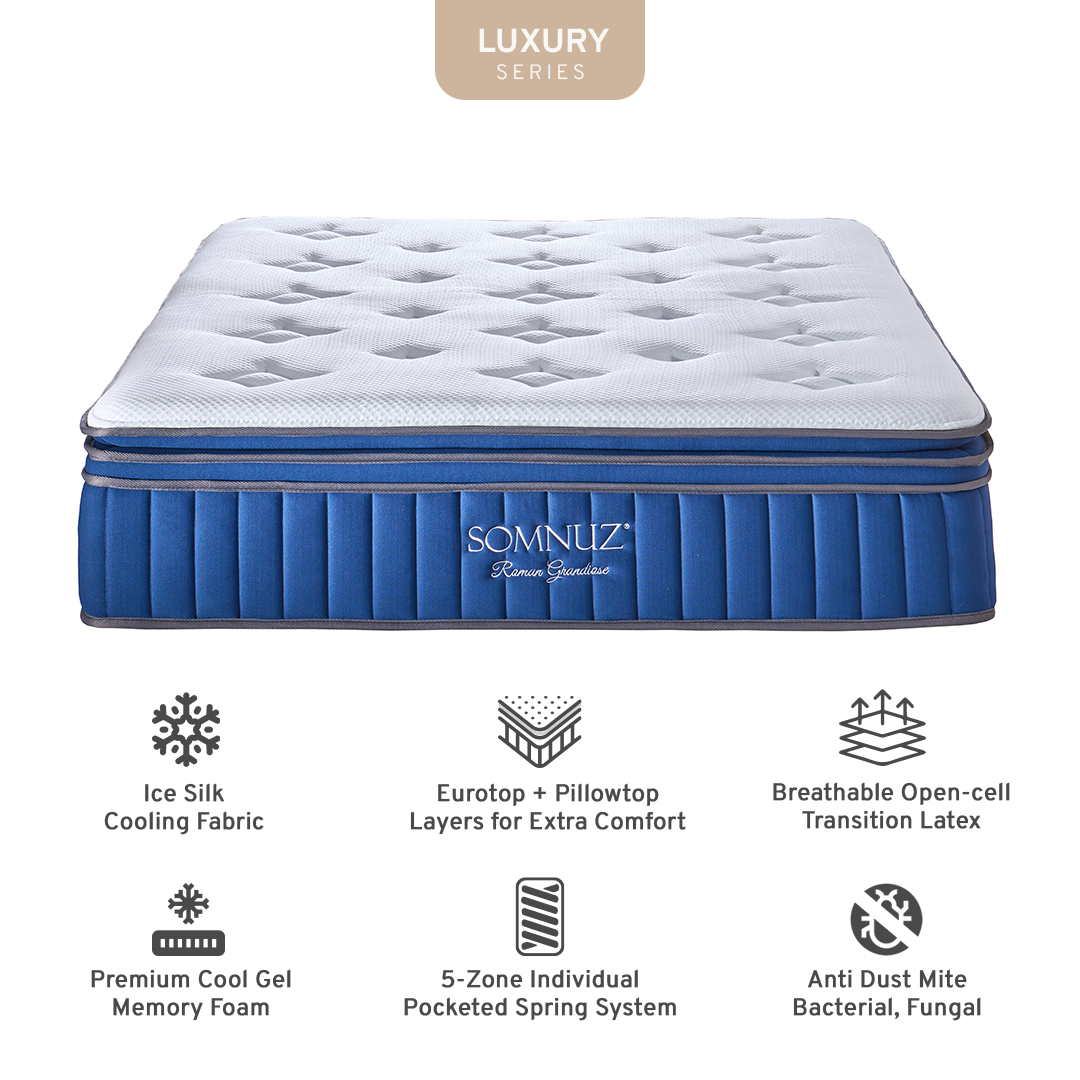


A queen size memory foam mattress is one of the most popular choices for couples and solo sleepers in Singapore. The material's ability to contour to the body, absorb movement, and provide even pressure relief has made it a well-regarded option across different sleeping profiles. But memory foam covers a wide spectrum of quality, and knowing what to look for makes it considerably easier to choose well.
This guide explains how memory foam works in practice, what distinguishes a quality queen memory foam mattress from a lower-specification one, and how to make a confident decision for your bedroom in Singapore.
How Memory Foam Works
Memory foam is a viscoelastic material, meaning it responds to both pressure and temperature. When you lie on it, body heat causes the foam to soften slightly in the areas where your weight is concentrated, allowing it to conform to your body's shape. When you move or lift your weight, it returns to its original shape.
This contouring effect distributes body weight across a larger surface area, which reduces localised pressure at the shoulders, hips, and other contact points. For side sleepers in particular, this pressure relief is one of the clearest practical benefits of memory foam.
The absorption of movement is another well-known characteristic. When one partner shifts position or gets up during the night, the foam absorbs the motion locally rather than transmitting it across the surface. For light sleepers sharing a queen mattress, this is a meaningful advantage.
What Distinguishes a Quality Memory Foam Mattress
Not all memory foam is the same, and the differences matter for both comfort and longevity.
Foam Density
Foam density, measured in kilograms per cubic metre, is one of the clearest indicators of quality. Higher-density foam has more material per unit of volume, which means it holds its shape better over time rather than compressing and softening prematurely.
Low-density memory foam, typically below 50 kg/m³, may feel comfortable initially but will wear faster, developing body impressions and softening in the areas of heaviest use within a few years. Higher-density foam, at 60 kg/m³ or above, maintains its properties over a longer period and provides more consistent support throughout the mattress's life.
When evaluating a queen memory foam mattress, looking for clear specification of foam density rather than relying on vague descriptions of high-quality or premium foam is a more reliable approach.
Layering and Construction
A good memory foam mattress is not made from a single block of uniform foam. It uses different foam types in different layers, each contributing a specific function.
The top comfort layer uses memory foam to provide the contouring and pressure-relief properties. Beneath this, one or more transition layers of denser or more supportive foam help prevent the sleeper from sinking too deeply into the mattress. The base layer provides the overall structural support.
The thickness and quality of each layer, and how they interact with each other, determine the overall feel and how the mattress holds up over time. A mattress that describes only the total depth without detailing what the layers are made from is not providing the information needed to evaluate it properly.
Breathability for Singapore's Climate
Dense memory foam can retain warmth. In Singapore's year-round heat and humidity, a queen memory foam mattress that traps body heat and moisture will be uncomfortable to sleep on and less hygienic over time, particularly when shared by two people.
Open-cell foam construction allows more airflow through the material than closed-cell alternatives. This helps dissipate heat rather than retaining it. A breathable outer cover, made from a natural fabric or a well-ventilated knitted material, also contributes to a cooler sleeping surface.
Some memory foam mattresses incorporate gel-infused layers intended to manage temperature. This can be effective when combined with open-cell construction, though gel infusion alone without open-cell foam provides limited benefit.
For a queen memory foam mattress in Singapore, prioritising open-cell foam and breathable cover materials is a practical way to ensure the mattress remains comfortable in warm and humid conditions.
Who a Queen Memory Foam Mattress Suits
Memory foam suits a broad range of sleepers, but certain profiles benefit most clearly.
Side sleepers typically find memory foam well-suited to their needs because the contouring effect cushions the shoulder and hip, which are the primary pressure points in this position. The foam accommodates the body's shape rather than creating resistance at these contact points.
Couples who are light sleepers or who have different sleep schedules benefit from memory foam's motion isolation. A partner getting up during the night or shifting position causes much less disturbance on a memory foam surface than on a traditional spring mattress.
Those who prefer a quieter sleeping surface, with no spring sounds or movement feedback, will find memory foam a good fit.
Memory foam is generally less well-suited to those who sleep very hot and are in a room without strong air-conditioning, given the heat retention concerns in Singapore's climate. In this case, a pocketed spring mattress or a latex mattress with better natural airflow is worth considering.
Caring for a Queen Memory Foam Mattress
A few straightforward habits extend the life of a memory foam mattress considerably.
Use a mattress protector from the first night. In Singapore's humidity, protecting the surface from moisture accumulation keeps the foam in better condition over time. A breathable, waterproof protector provides protection without adding warmth.
Rotate the mattress every three to six months to distribute wear more evenly. Most memory foam mattresses are one-sided by design and should be rotated, not flipped. Check the manufacturer's guidance.
Ensure the mattress is on a suitable base. For slatted frames, gaps of no more than 6 to 7 centimetres prevent the foam from sinking unevenly between slats.
Exploring Your Options
The Somnuz mattress collection includes queen size memory foam options with clear specifications on foam density and layering. For a sense of how different constructions feel in practice, visit our mattress showroom in Singapore to try the range in person before deciding. The team is there to help you find what works for your specific sleep style and bedroom. For broader guidance on sleep environments, the Sleep Well resource page is a useful reference.
Frequently Asked Questions
Is a memory foam mattress good for Singapore's climate? It can be, provided you choose one with open-cell foam construction and a breathable cover. Dense, closed-cell memory foam retains warmth, which is uncomfortable in Singapore's heat. A well-specified memory foam mattress with breathability built into the construction suits Singapore's conditions well.
What foam density should I look for in a quality queen memory foam mattress? Look for memory foam with a density of 50 to 60 kg/m³ or higher in the comfort layers. Higher-density foam holds its shape better over time. Avoid mattresses that do not specify foam density at all, as this is often a sign of lower-specification materials.
How does a memory foam mattress compare to a spring mattress for couples? Both handle motion transfer well in quality specifications. Memory foam achieves this through material absorption. Pocketed spring achieves it through independent coil movement. Spring mattresses tend to offer better natural airflow, which is a practical advantage in Singapore's climate. Memory foam suits those who prefer a softer, more contouring feel.
Will a memory foam mattress sag over time? Lower-density foam will compress and develop body impressions faster than high-density alternatives. A well-specified queen memory foam mattress with high-density foam throughout will hold its shape considerably longer. Regular rotation also helps distribute wear evenly.
What is the lifespan of a queen memory foam mattress? A quality queen memory foam mattress with proper care typically lasts eight to ten years. Material density, a suitable base, a mattress protector, and regular rotation all contribute to its longevity.
Does memory foam make a queen bed hotter to sleep on? Dense memory foam can retain body heat. Open-cell construction mitigates this significantly. For Singapore's climate, choosing a memory foam mattress with open-cell foam and a breathable cover is important if sleeping temperature is a concern.
Find the Right Queen Memory Foam Mattress for Your Bedroom
A well-chosen queen memory foam mattress provides consistent pressure relief, quiet motion isolation, and lasting support for your specific sleep style.
Browse the Somnuz mattress collection to explore queen size memory foam options with clear construction details. Or visit our showroom in Singapore to try the range in person and find what works best for you.