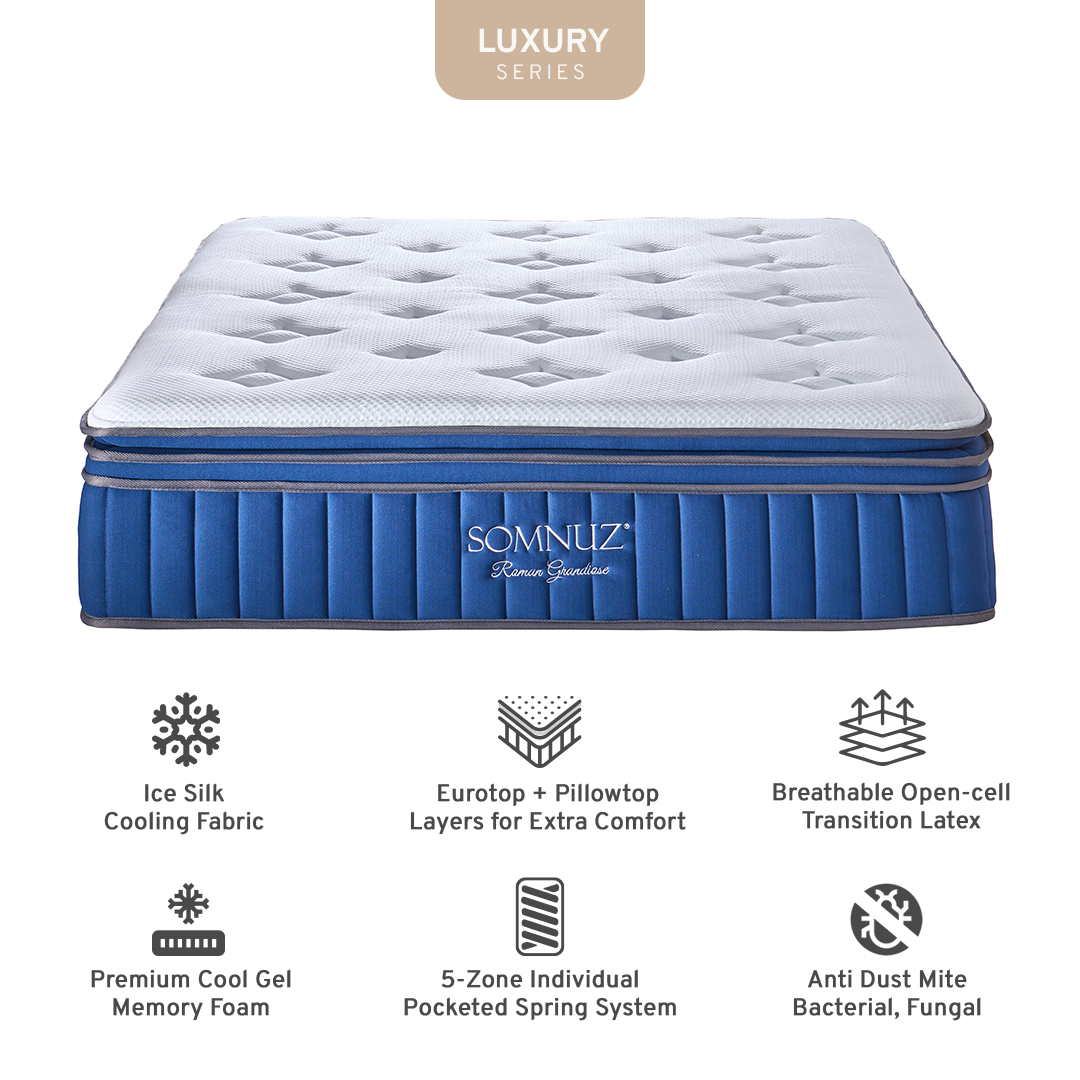


Side sleeping is the most common sleeping position. If you sleep on your side, the mattress you choose has a direct effect on how comfortable you are during the night and how your body feels when you wake up in the morning.
Choosing a mattress for a side sleeper involves understanding what the position actually requires from a sleeping surface, and matching that to the available options in Singapore's climate.
What Side Sleeping Requires From a Mattress
When you sleep on your side, the primary contact points between your body and the mattress are the shoulder and the hip. These are narrower areas that carry significant body weight when you are lying laterally rather than the broader, more even distribution of a back or front sleeping position.
A mattress that is too firm does not allow sufficient give at these pressure points. The shoulder and hip are pressed against a resistant surface, creating pressure that can cause discomfort, numbness, or stiffness during and after sleep.
A mattress that is too soft allows the shoulder and hip to sink too deeply, causing the spine to curve out of alignment. While the pressure is reduced, the spinal alignment issue creates its own discomfort over a full night of sleep.
The right mattress for a side sleeper provides enough cushioning at the shoulder and hip to reduce pressure, while maintaining sufficient support to keep the spine in a reasonably neutral alignment from shoulder to hip. This typically means a medium to medium-soft firmness range for most side sleepers, though body weight influences this significantly.
How Body Weight Affects the Right Firmness for Side Sleepers
A lighter person puts less downward pressure on the mattress. A softer mattress that would feel appropriate for a lighter side sleeper may compress excessively under a heavier person, allowing too much sinking.
As a general guide, lighter side sleepers, typically under 60 kilograms, often do well on a softer to medium-soft option. Medium-weight side sleepers between 60 and 90 kilograms typically do best on a medium to medium-firm option. Heavier side sleepers above 90 kilograms may need a medium-firm to firm option that provides enough resistance despite the greater compression force.
These are starting points rather than fixed rules. Personal comfort remains the best guide, and trying different firmness levels in a showroom in your actual sleeping position is the most reliable approach.
Construction Types That Work for Side Sleepers
Memory Foam
A memory foam mattress is often recommended for side sleepers because its contouring properties allow it to accommodate the shoulder and hip shape, reducing pressure at these points. The foam softens under body heat and weight, providing cushioning that distributes load more evenly than a firm, non-contouring surface.
For Singapore's climate, open-cell memory foam with a breathable cover is the practical choice to avoid the heat retention that dense foam can create.
Pocketed Spring and Hybrid
A pocketed spring mattress at a softer to medium specification can also work well for side sleepers. The independent springs allow more give beneath the shoulder and hip, and the natural airflow through the spring core is a meaningful advantage in Singapore's warmth.
A hybrid option, combining pocketed springs with foam comfort layers, often provides the best of both: the pressure relief of foam at the surface with the breathability and responsiveness of springs beneath.
Latex
A latex mattress in a softer specification provides a responsive, buoyant cushioning that suits many side sleepers. Natural latex is breathable, which is a practical advantage in Singapore's climate. Some side sleepers prefer the responsive feel of latex to the slower contouring of memory foam.
Shoulder Accommodation
For side sleepers, shoulder accommodation is worth specific attention. The shoulder is typically the wider contact point and bears significant load. A mattress that is too firm at the shoulder creates pressure that can radiate through the shoulder and upper arm during the night.
When trying a mattress in a showroom, lie on your side in your normal sleeping position and notice whether the shoulder feels cushioned or whether you are pressing against the surface. The shoulder should sink slightly without the whole upper body collapsing.
The Somnuz mattress collection includes options across different constructions and firmness levels suited to different sleeping positions including side sleeping. For guidance on what suits your body weight and position, visit our mattress showroom in Singapore to try the range in person. The Sleep Well resource page provides further guidance on sleep environments.
Frequently Asked Questions
What firmness is best for a side sleeper?
Most side sleepers do best on a medium to medium-soft firmness. Body weight influences this significantly. Lighter sleepers may prefer softer options. Heavier sleepers need more firmness to prevent excessive sinking. Trying options in your actual sleeping position is the most reliable guide.
Is memory foam good for side sleepers?
Yes, memory foam's contouring properties accommodate the shoulder and hip well, reducing pressure at these points. In Singapore's climate, open-cell foam with a breathable cover is the practical choice to manage heat.
What is the best mattress for couples where one is a side sleeper?
A medium to medium-firm mattress with good pressure relief in the comfort layers suits a couple where one partner is a side sleeper and the other is a back sleeper. A pocketed spring hybrid often provides a good balance. The side sleeper partner should try the mattress in their sleeping position before committing.
Can a firm mattress work for a side sleeper?
A firm mattress typically creates too much pressure at the shoulder and hip for most side sleepers. It can work for heavier side sleepers whose weight compresses even firm foam to a workable level, but for most, a firm mattress leads to pressure-related discomfort.
How do I know if my current mattress is causing side sleeping problems?
Signs include waking with shoulder or hip pain or numbness, difficulty finding a comfortable position during the night, or consistently sleeping better on other surfaces such as hotel beds. These indicate that the mattress is not providing appropriate pressure relief for your sleeping position.
Does pillow choice matter for side sleepers?
Yes. A pillow that keeps the head and neck aligned with the spine is as important as the mattress for side sleepers. A pillow that is too flat or too high creates neck misalignment that compounds any mattress-related issues.
Find the Right Mattress for How You Sleep
Side sleeping places specific demands on a mattress. Choosing one that meets those demands makes a real difference to how you feel after a full night's rest.
Browse the Somnuz mattress collection to explore options for side sleepers. Or visit our showroom in Singapore to try different firmness levels in your sleeping position and find what works.