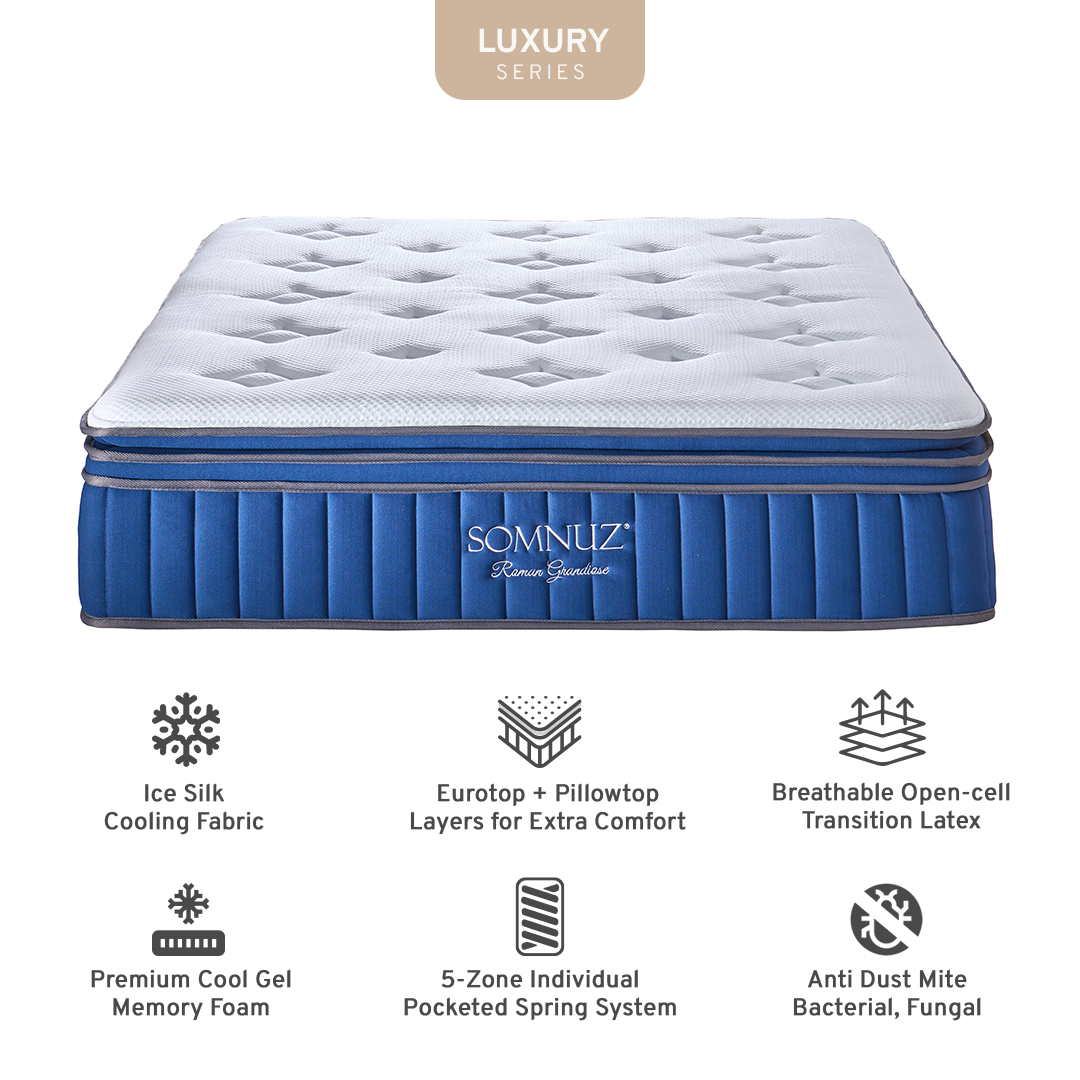


Choosing a spring or foam mattress for back pain concerns can feel confusing, especially when every mattress type seems to promise support in a different way.
Some people prefer the lifted feel of springs. Others like the cushioning feel of foam. Both can feel supportive when the firmness, comfort layers, and overall build suit your body. Both can also feel uncomfortable when they are too soft, too hard, too warm, or not suited to how you sleep.
For Singapore homes, the decision is not only about back comfort. Humid nights, shared sleeping spaces, HDB and condo room sizes, movement from a partner, and after-sales support can all shape what feels right in daily life.
This guide compares spring and foam mattresses in simple terms, so you can choose with more confidence and avoid treating any mattress as a one-size-fits-all answer.
Why Mattress Support Matters For Back Pain Concerns
Back comfort often starts with support, but support does not simply mean choosing the firmest mattress.
A supportive mattress should help your body feel evenly held. Your shoulders, hips, and lower back should not feel as if they are sinking too deeply or resting on a surface that feels harsh.
Firmness is how the mattress feels on top. Support is how well the mattress holds your body through the night. A mattress can feel firm at first but still lack comfort. Another can feel softer but still offer steady support if the base is stable.
For many sleepers, the aim is balance. You want enough cushioning to ease pressure, but enough stability to avoid feeling uneven.
This is why it helps to compare mattress firmness levels before deciding. A clear comparison can show how different mattresses vary in feel, cooling, motion control, and support.
Spring Mattresses: Lifted Support With A More Responsive Feel
Spring mattresses are often chosen by sleepers who prefer a lifted, responsive surface.
A spring mattress uses a support system made of coils. In a pocketed spring mattress, the springs are usually wrapped individually, so they can move more independently. This can help the mattress respond to different parts of the body with better control.
For back pain concerns, a spring mattress may feel helpful if you dislike deep sinking. The surface can feel steadier and easier to move on, which may suit back sleepers, stomach sleepers, and combination sleepers who change positions often.
Spring mattresses can also feel more breathable than some all-foam designs. Air can move through the spring structure more easily, which may be useful for warm and humid Singapore nights.
You may prefer spring if you want:
- A more lifted sleeping surface
- A steadier feel with less deep sink
- Easier movement when turning in bed
- Better airflow through the mattress
- Reduced partner disturbance with pocketed springs
For couples, pocketed springs can be practical because they help reduce movement from one side of the bed to the other. This matters when one person turns often or gets in and out of bed at a different time.
You can view pocketed spring mattress options if you prefer a mattress that feels responsive, breathable, and steady.
Foam Mattresses: Close Cushioning With A More Contouring Feel
Foam mattresses are often chosen by sleepers who prefer a closer, more cushioned feel.
Foam responds to body weight by contouring around pressure points. This can feel comforting around the shoulders, hips, and lower back, especially for side sleepers or anyone who dislikes a very firm surface.
For back pain concerns, foam may feel suitable when it cushions without letting the body sink too far. The key is balance. If the foam is too soft or too slow to respond, some sleepers may feel stuck or unsupported. If it is too firm, it may not provide enough pressure comfort.
Foam can also help reduce partner disturbance because it absorbs movement well. This can be helpful in shared beds, especially in compact bedrooms where every movement feels more noticeable.
You may prefer foam if you want:
- A more cushioned surface feel
- Better pressure comfort around the shoulders and hips
- Lower motion transfer from a partner
- A quieter, less bouncy mattress feel
- A softer comfort impression without sharp pressure points
In Singapore, cooling is an important factor to consider. Some foam mattresses may feel warmer than spring or hybrid options, depending on the foam type, cover, and overall construction. If you sleep hot, look for breathable materials and avoid choosing based only on softness.
You can review memory foam mattress options if you prefer a more contouring feel with motion absorption.
Spring Or Foam Mattress For Back Pain: Which Should You Choose?
The better choice depends on how your body feels on the mattress, not only the mattress type.
A spring mattress may suit you better if you prefer a lifted surface, want easier movement, or often feel uncomfortable when a mattress sinks too much. It may also suit shared sleepers who want support, airflow, and reduced partner disturbance in one build.
A foam mattress may suit you better if you prefer cushioning, sleep mostly on your side, or want a mattress that absorbs movement well. It may also feel more comfortable if firm spring surfaces feel too sharp around your shoulders or hips.
Neither option should be treated as a guaranteed answer for back pain. Mattress comfort is personal, and back pain can come from many causes. If pain is ongoing, severe, or affecting daily movement, it is better to seek advice from a qualified healthcare professional.
For mattress shopping, use these checks:
- Does your lower back feel evenly supported?
- Do your hips sink too deeply?
- Do your shoulders feel compressed?
- Can you turn without strain?
- Does the mattress feel too warm after a few minutes?
- Does your partner’s movement disturb you?
- Does the firmness suit your sleep position?
A mattress should feel supportive enough for your body, but comfortable enough for nightly use. If you have to force yourself to like the feel, it may not be the right fit.
What Singapore Sleepers Should Consider Before Buying
Local home life can change what feels practical over time.
In an HDB or condo bedroom, space may be limited. If the mattress edges feel weak, sitting at the side of the bed or getting up in a smaller room can feel less stable. For couples, motion control also matters because shared sleeping spaces make movement more noticeable.
Singapore’s warm weather is another factor. A mattress that feels comfortable in an air-conditioned showroom may feel different on humid nights at home. Breathable covers, spring structures, latex layers, and cooling materials can all help create a more comfortable sleep environment.
It is also worth thinking about who uses the mattress. A young couple may need motion control and balanced comfort. A family may care more about durability and daily practicality. A landed home may need consistent support across several bedrooms, especially when buying for different age groups and comfort preferences.
For broader guidance, the Sleep Well guidance hub can help you think through comfort, cooling, support, and fit before making a decision.
Choose A Spring Or Foam Mattress For Back Pain With More Confidence
A spring or foam mattress for back pain concerns should be chosen with care, not pressure.
Spring can feel more lifted, breathable, and responsive. Foam can feel more cushioned, contouring, and motion-absorbing. Both can work well when the firmness, support, and comfort layers suit your body. Both can feel wrong if they do not match how you sleep.
The best next step is to compare how each type feels in real life. Lie down in your usual sleep position. Turn from side to back. Sit at the edge. Notice whether your lower back feels held, whether your shoulders feel comfortable, and whether the surface feels too warm or too firm.
Somnuz is built around clear guidance, supportive comfort, and peace of mind before and after purchase. You can start online, compare your options calmly, then visit our showroom when you want to try the range in person.
Shop The Collection
Compare supportive, breathable Somnuz mattresses designed for different comfort preferences, sleep styles, and Singapore homes.
Compare Our Mattresses
See how different mattress types and firmness levels compare, so you can choose with clearer expectations.
Visit The Showroom
Try the range in person and get calm guidance before deciding what feels right for you.
Frequently Asked Questions
Is a spring or foam mattress better for back pain?
Neither is automatically better for everyone. A spring mattress may feel better if you prefer lifted support and easier movement. A foam mattress may feel better if you prefer cushioning and motion absorption. The right choice depends on your sleep position, body weight, firmness preference, and comfort needs.
Can a mattress cure back pain?
No mattress should be treated as a cure for back pain. A better-fitting mattress may help you rest with more support and comfort, but ongoing or severe pain should be discussed with a qualified healthcare professional.
Is a firm mattress always better for back pain concerns?
Not always. A very firm mattress may feel too harsh for some sleepers, especially around the shoulders and hips. A very soft mattress may allow too much sinking. Many sleepers prefer a balanced medium-firm or firmer feel, but the right choice is personal.
Is memory foam good for back support?
Memory foam can feel supportive when it cushions the body without allowing deep sinking. It may suit sleepers who like a closer, more contouring feel. For better back comfort, the foam should still have a stable base and suitable firmness.
Are pocketed springs good for couples with back comfort concerns?
Pocketed springs can be useful for couples because they move more independently than traditional connected springs. This can help reduce partner disturbance while offering a more responsive and breathable feel.
Should I try a mattress in person before buying?
Trying a mattress in person can help reduce guesswork, especially when comparing spring and foam for back comfort. It lets you test firmness, edge support, cooling feel, and movement before choosing.