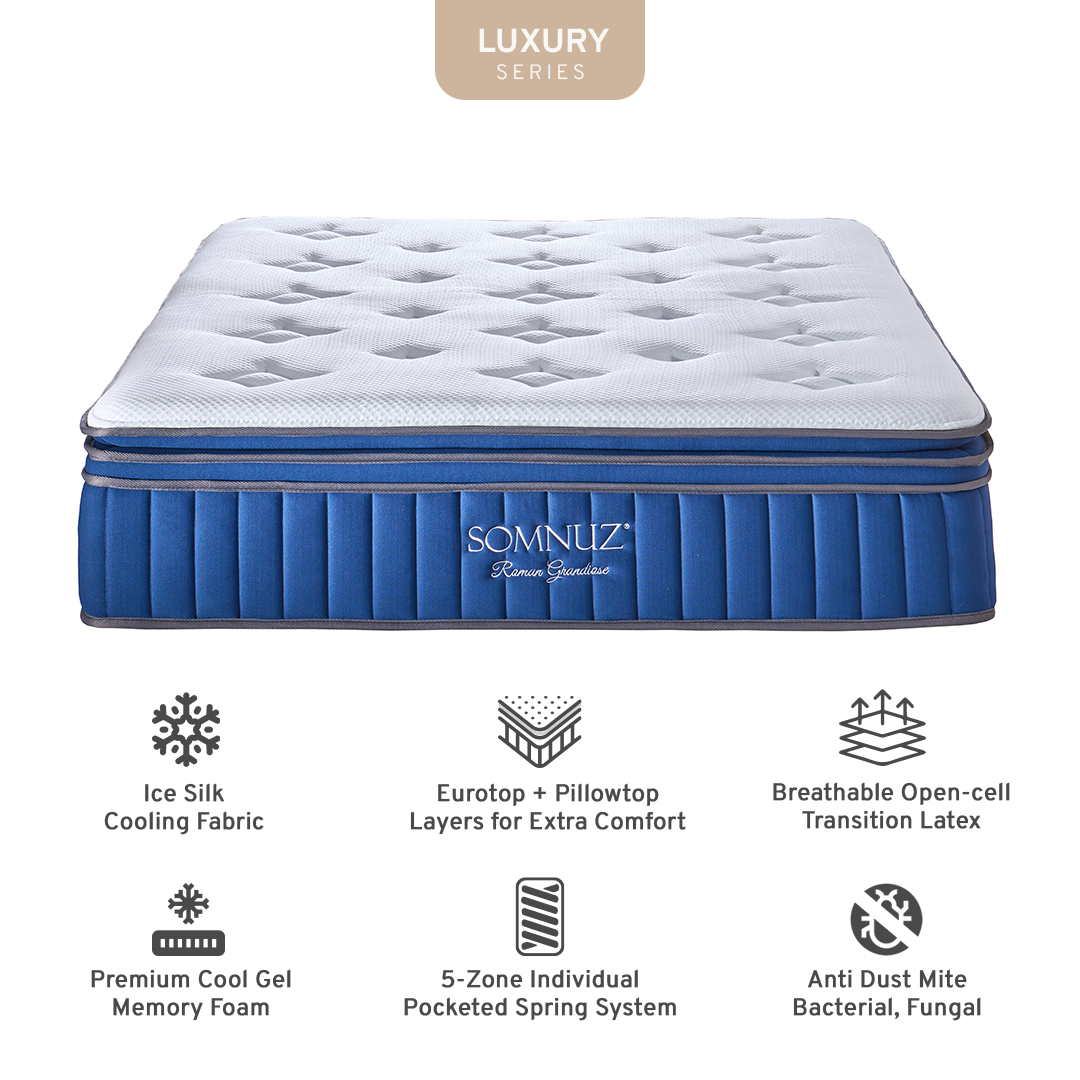


Choosing a mattress can feel easier when you understand the basics. One detail that often gets overlooked is standard mattress thickness.
Thickness affects more than how tall the mattress looks. It can influence how cushioned the surface feels, how steady the support feels, how easy it is to get in and out of bed, and how well the mattress suits your bedroom setup.
For Singapore homes, this matters because comfort has to work with real room layouts, humid nights, and everyday routines. The right mattress thickness should feel comfortable for sleep, sensible for your bed frame, and easy to live with.
What Is Considered Standard Mattress Thickness?
Standard mattress thickness usually refers to the common height range most shoppers see when comparing adult mattresses. Many everyday mattresses sit around 8 to 12 inches thick, while more elevated designs may go to 14 inches or more.
A thinner mattress is not automatically less comfortable, and a thicker mattress is not automatically better. What matters is how the layers are built, how the mattress supports your body, and whether the height suits your bed frame and room.
As a simple guide:
- 6 to 8 inches can suit lighter use, guest rooms, children’s rooms, or lower-profile setups.
- 10 inches is a common everyday thickness for many adult mattresses.
- 12 inches often gives more room for comfort layers and a fuller feel.
- 14 inches and above usually creates a taller, more cushioned profile.
The best choice depends on your sleep preference, body build, room layout, and how you use the bed.
Why Mattress Thickness Matters Beyond The Number
Mattress thickness is easy to measure, but it should not be judged by the number alone. Two mattresses with the same thickness can still feel very different.
The feel depends on what sits inside the mattress. A 10-inch mattress with pocket springs may feel more responsive and airy. A 10-inch foam mattress may feel more cushioned and close-fitting. A 12-inch hybrid mattress may combine contouring layers with a steadier support core.
Thickness can affect daily comfort in a few practical ways:
- Surface comfort: thicker mattresses may allow more room for cushioning layers.
- Support feel: the support core helps the mattress feel steady across the body.
- Bed height: a thicker mattress can make your bed easier or harder to get into.
- Room appearance: a taller mattress can make the bed look fuller.
- Sheet fit: deeper mattresses may need fitted sheets with deeper pockets.
For couples, thickness can also affect how the mattress handles movement and edge use. A well-built mattress with motion-control features can help reduce how much movement travels across the bed.
How To Choose Thickness For Your Singapore Bedroom
A good mattress should suit your home as much as your sleep style. In Singapore, where bedrooms can vary from compact HDB rooms to larger condo and landed bedrooms, bed height and walking space matter.
Start with your bed frame. A thick mattress on a high frame may feel too tall. A thinner mattress on a low platform frame may create a neater look, but may not give the fuller comfort feel some sleepers prefer.
Think about these practical checks before choosing:
- Measure from the floor to the top of your current mattress.
- Check whether your knees feel comfortable when sitting at the edge.
- Make sure drawers, wardrobes, and nearby furniture still open easily.
- Consider whether children, older family members, or shorter sleepers will use the bed.
- Check fitted sheet depth before choosing a thicker mattress.
If your room is compact, standard mattress thickness around 10 to 12 inches often feels practical because it gives a balanced bed height without overwhelming the space. In a larger master bedroom, a 12-inch or 14-inch profile may feel more visually balanced.
Matching Thickness With Comfort, Support, And Cooling
Thickness can create room for more layers, but the layer quality matters more than height alone. A supportive mattress should help your body feel balanced, not overly sunken or overly stiff.
For Supportive Comfort
If you prefer a steadier feel, look at how the mattress is built below the surface. Pocket springs, foam cores, latex layers, and hybrid builds each support the body differently.
A pocket spring mattress uses individually wrapped springs that move more independently. This can help the mattress respond to different areas of the body while reducing movement across the bed. You can read more about pocket spring support if you want to understand how this type of build may suit couples and everyday sleepers.
For Humid Nights
Singapore’s humid weather can make warmth a key concern. A thicker mattress with dense, heat-holding layers may not feel right for every warm sleeper. At the same time, a well-designed thicker mattress can still feel comfortable when it uses breathable materials and cooling-focused fabrics.
If you often sleep warm, focus on airflow, cover fabric, and material response. For more local guidance, see Somnuz’s page on cooling mattress choices for Singapore.
For Shared Sleep
Couples may want to think about both thickness and motion control. A mattress that is too thin may not give enough layered comfort for two people. A mattress that is too soft or too tall may feel less steady when one person turns or gets out of bed.
The right choice should reduce partner disturbance, support both sleepers comfortably, and still feel easy to move on.
Standard Mattress Thickness By Sleep Preference
Different sleepers may prefer different mattress heights. There is no single thickness that suits everyone, so it helps to connect the number to the way you sleep.
Side sleepers often like a surface with enough cushioning around the shoulders and hips. A 10-inch or 12-inch mattress may work well when the comfort layers feel gentle but still supportive.
Back sleepers often prefer a more even, steady feel. They may not need the thickest mattress, but they should look for support that feels consistent from shoulders to hips.
Stomach sleepers often prefer a firmer, flatter feel so the body does not sink too deeply. For this group, firmness and support design may matter more than thickness alone.
Combination sleepers need a surface that feels easy to move on. A very soft, deep mattress may feel comfortable at first but harder to shift on at night.
Couples should compare how the mattress feels for both people. If one person prefers cushioning and the other wants stronger support, a medium or medium-firm feel with good motion control may be worth considering.
How To Compare Mattress Thickness With More Confidence
When shopping, try not to choose by thickness alone. A mattress should be judged by the full sleep experience.
Look at the mattress as a complete system:
- The top comfort layer affects softness and cushioning.
- The middle layers affect contouring and transition support.
- The support core affects steadiness and durability.
- The cover fabric affects surface feel and breathability.
- The overall height affects bed access and room fit.
This is where clear guidance helps. Somnuz’s Sleep Well guidance explains comfort, support, cooling, and mattress choice in a simple way, so shoppers can compare with less guesswork.
If possible, test the mattress in person. Lie down in your usual sleep position. Turn from side to side. Sit at the edge. Notice whether the height feels natural when getting on and off the bed.
Standard Mattress Thickness For Better Sleep Confidence
Standard mattress thickness is a helpful starting point, but it should not be the only reason you choose a mattress. For many Singapore homes, 10 to 12 inches offers a practical balance of comfort, support, and bed height. Thicker options can feel fuller and more cushioned, while lower-profile options may suit simpler rooms, guest beds, or sleepers who prefer a lower setup.
The most reassuring choice is the one that fits your body, your room, your climate, and your daily routine. Think about how the mattress feels when you lie down, how steady it feels when you move, and how comfortable the bed height feels in your home.
At Somnuz, mattress shopping is designed to feel clearer and calmer. You can compare comfort levels, understand the differences between mattress builds, and choose with support before and after purchase.
Shop The Collection
Browse the Somnuz mattress collection to see different mattress heights, materials, and comfort styles in one place.
Compare Our Mattresses
Use Compare Our Mattresses to review thickness, firmness, support style, cooling features, and comfort differences more easily.
Visit The Showroom
For a clearer feel before choosing, visit our mattress showroom Singapore and try the range in person with guidance from the Somnuz team.
Frequently Asked Questions
What is the most common mattress thickness?
A common mattress thickness for adult beds is around 8 to 12 inches. Many shoppers choose around 10 to 12 inches because it can offer a practical balance of comfort, support, and bed height.
Is a 10-inch mattress thick enough?
A 10-inch mattress can be thick enough for many sleepers when it is well built. The comfort layers, support core, and firmness level matter just as much as the total height.
Is a thicker mattress always more comfortable?
Not always. A thicker mattress may feel more cushioned, but comfort depends on the materials, support design, firmness, and how the mattress suits your sleep style.
What mattress thickness is good for couples?
Many couples prefer 10 to 12 inches or more, especially when the mattress has good motion control and steady support. The best choice should feel comfortable for both sleepers.
Does mattress thickness affect cooling?
It can. A thicker mattress with dense layers may feel warmer for some sleepers, while a breathable build with cooling-focused materials can feel more comfortable in humid Singapore weather.
Should I try mattress thickness in person?
Yes, if you can. Trying a mattress in person helps you check comfort, support, edge feel, and bed height before deciding.