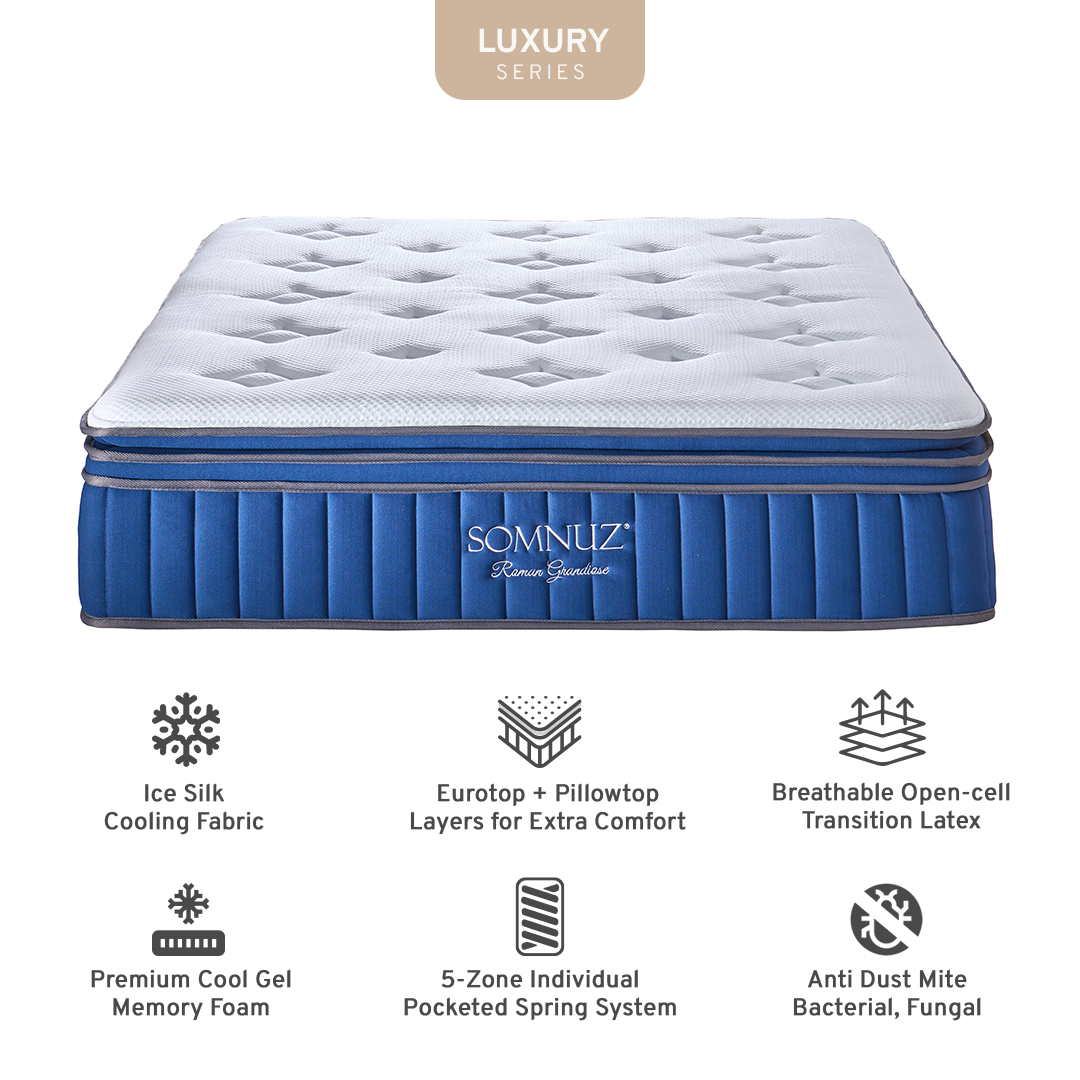


A memory foam mattress is a mattress made with foam layers that gently respond to your body shape, weight, and warmth. It is known for its cushioned, contouring feel, which many sleepers describe as steady, quiet, and supportive.
If you have heard people talk about memory foam, you may already know that it feels different from a traditional spring mattress. Instead of a strong bounce, memory foam usually has a slower, more body-hugging response. When you lie down, the surface gently adapts to your shape. When you move away, it slowly returns to its original form.
For Singapore homes, memory foam can be a comfortable choice for some sleepers, especially those who enjoy a softer, more cushioned surface or want better motion absorption for shared sleep. However, it is not automatically the right choice for everyone. Climate, sleeping position, room ventilation, firmness, and personal comfort all matter.
This guide explains what memory foam mattress means, how it feels, who it may suit, and what to consider before choosing one for your home.
What Is a Memory Foam Mattress?
A memory foam mattress is made using viscoelastic foam, a type of foam designed to respond to pressure and warmth. In simple terms, it softens slightly under your body and shapes itself around you.
Most memory foam mattresses are not made from one single block of foam. They usually have multiple layers. The upper layer provides the familiar contouring feel. Underneath, firmer support layers help keep the mattress stable and comfortable.
A typical memory foam mattress may include:
-
A soft comfort layer for cushioning
-
A transition layer for balanced support
-
A firmer base layer for structure and stability
- A breathable cover or cooling feature, depending on the design
The exact feel depends on the quality, thickness, and density of the foam layers. Some memory foam mattresses feel deeply contouring. Others feel lighter, firmer, or more responsive.
If you are exploring this mattress type, you can compare options in the memory foam mattress collection to understand how memory foam can fit different comfort preferences.
A memory foam mattress is best understood by its feel: cushioned, pressure-sensitive, and less bouncy than many spring-based mattresses.
How Does a Memory Foam Mattress Feel?
A memory foam mattress often feels close, cushioned, and steady. When you lie down, the foam responds gradually instead of pushing back immediately. This gives the mattress a more cradling feel.
Some sleepers enjoy this because it helps them feel settled. Others may prefer a more lifted or springy surface. Neither is better for everyone. It depends on your comfort preference and how you move during sleep.
Memory foam usually has less bounce than spring or latex mattresses. This can make it feel calm and quiet, especially for people who do not like a mattress that moves too much. It can also be helpful for couples because the foam may absorb movement when one person turns or gets out of bed.
However, some sleepers may find deeper memory foam harder to move on. If you change positions often, you may prefer a firmer or more responsive memory foam feel rather than one that allows too much sinking.
When testing memory foam, spend time in your usual sleeping position. Notice whether your shoulders, hips, and lower body feel comfortably supported. Also check whether you can turn easily and whether the surface feels too warm or too soft.
A good memory foam mattress should feel reassuring, not restrictive.
Who Might Like a Memory Foam Mattress?
A memory foam mattress may suit sleepers who enjoy a cushioned surface and reduced movement across the bed.
It may be a good option if you:
-
Like a mattress that gently contours to your body
-
Prefer a quieter, less bouncy sleep surface
-
Share a bed and want better motion absorption
-
Sleep on your side and enjoy cushioning around the shoulders and hips
-
Want a steady surface that feels calm and settled
- Prefer a comfort layer that adapts gradually
For couples in Singapore, motion control can be especially useful. If one partner wakes earlier, turns often, or has a different sleep schedule, a memory foam mattress may help reduce the feeling of movement travelling across the bed.
For families, memory foam can also feel comfortable in master bedrooms, guest rooms, or rooms where a quieter sleep surface is preferred.
Still, memory foam is not for everyone. If you prefer a very responsive, springy mattress, you may want to compare it with a pocketed spring mattress. If you like a buoyant and naturally lifted feel, you may also want to compare it with a latex mattress.
The right mattress is the one that suits your body, your room, and your nightly routine.
Is Memory Foam Mattress Good for Singapore Weather?
Memory foam can be comfortable in Singapore, but breathability is an important consideration. Singapore’s humid weather can make some mattresses feel warmer, especially if the foam is dense or paired with heavy bedding.
Modern memory foam designs may include features that improve airflow, such as breathable covers, open-cell foam structures, or cooling comfort layers. These can help the mattress feel more suitable for warm nights, but your room setup still matters.
For Singapore homes, consider:
-
Whether the bedroom has good ventilation
-
Whether you use air-conditioning, a fan, or dry mode
-
Whether your bed frame allows airflow underneath
-
Whether your bedding is light and breathable
- Whether your mattress protector traps heat
In HDBs and condos, bedrooms can sometimes feel enclosed, especially if the bed is placed against a wall or on a storage base. These setups are practical, but they may reduce airflow around the mattress.
To keep a memory foam mattress fresher, air the room when possible, wash bedding regularly, and let the mattress breathe when changing sheets. A breathable mattress protector can also help protect the mattress without making the bed feel overly warm.
A memory foam mattress can work well in Singapore when breathability, bedding, and room ventilation are considered together.
Memory Foam Mattress vs Other Mattress Types
When choosing a mattress, it helps to compare memory foam with other common types. This makes the decision easier and less confusing.
Memory foam vs pocketed spring mattress
Memory foam usually feels more cushioned and contouring. A pocketed spring mattress tends to feel more responsive and lifted. Pocketed springs can also offer support with reduced motion transfer because the springs move more independently.
If you like a steadier, less bouncy surface, memory foam may appeal to you. If you prefer a mattress with more bounce and airflow through the spring structure, pocketed spring may be worth considering.
Memory foam vs latex mattress
Memory foam usually responds slowly and contours closely. Latex tends to respond more quickly and feel more buoyant. If you move often during sleep, latex may feel easier to shift on. If you prefer a closer cushioned feel, memory foam may feel more comfortable.
Memory foam vs hybrid mattress
A hybrid mattress combines support systems, often springs with foam or latex comfort layers. It may be suitable for sleepers who want cushioning on top with more responsiveness underneath.
There is no single right answer for everyone. A mattress should be chosen by comfort, support, heat preference, motion control, and how well it fits your home.
If you want to compare mattress types more broadly, the Somnuz mattress collection is a practical place to explore different comfort options.
What Should You Check Before Buying a Memory Foam Mattress?
Before buying a memory foam mattress, look beyond the name. Not all memory foam mattresses feel the same.
Here are the key points to check.
Firmness level
Memory foam can be soft, medium, or firm. A softer feel may suit some side sleepers, while a firmer design may appeal to those who prefer steadier support.
Support layers
The top comfort layer matters, but the support layers underneath are just as important. A mattress should not let you sink too deeply or feel uneven.
Breathability
In Singapore, this is important. Look for breathable design details and think about how the mattress will work with your room temperature and bedding.
Motion control
If you share the bed, test whether movement travels across the mattress. Memory foam is often chosen for motion absorption, but the exact performance depends on the design.
Edge support
If you sit on the edge of the bed or share a queen or king mattress, stable edges can make the bed feel more usable from side to side.
Mattress size and room fit
A comfortable mattress should also fit your bedroom properly. Measure your bed frame, walking space, wardrobe clearance, and delivery access before buying.
Care and service support
Ask about care instructions, delivery, warranty, and after-sales support. A mattress is used every night, so dependable guidance matters.
For simple comfort and fit advice, you can read more through Sleep Well, where mattress feel and sleep needs are explained in a practical way.
How to Care for a Memory Foam Mattress
Memory foam mattresses need simple but consistent care. Good habits can help keep the mattress comfortable and fresh.
Use a suitable mattress protector to protect against sweat, spills, and everyday marks. Choose one that is breathable, especially in Singapore’s humid climate.
Keep the mattress on a supportive bed base. Check whether the mattress is suitable for your frame, platform, or adjustable setup. A poor base can affect how the mattress feels over time.
Air the mattress when changing sheets. Leave it uncovered for a short while so warmth and moisture can disperse. This is especially helpful in rooms with limited airflow.
Avoid soaking the mattress when cleaning. If there is a small spill, blot gently and let the area dry fully before covering it again. Too much moisture can be difficult for foam to release.
Rotate the mattress if the care instructions recommend it. This can help the surface wear more evenly.
Good care does not need to be complicated. It simply helps your mattress stay more comfortable and reassuring for daily use.
Should You Try a Memory Foam Mattress Before Buying?
Trying a memory foam mattress in person is helpful because the feel can vary widely. Some designs feel soft and deeply contouring. Others feel firmer, cooler, or more responsive.
When testing, do not only sit on the edge for a few seconds. Lie down in your usual sleeping position. If you sleep on your side, test it on your side. If you sleep on your back, stay there long enough to notice whether your body feels supported.
If you share the bed, test it with your partner. Ask one person to move while the other stays still. This gives you a better sense of motion transfer.
Also ask about breathability, support, care, delivery, and after-sales service. A good buying experience should help you feel informed, not pressured.
At a mattress showroom Singapore, you can try the range in person and receive calm showroom guidance based on your sleeping habits, comfort preference, and home setup.
A memory foam mattress can be a thoughtful choice when it suits your body and your room. The best decision is one made with time, clarity, and confidence.
Is a Memory Foam Mattress Right for You?
A memory foam mattress may be right for you if you enjoy a cushioned, contouring, and steady sleep surface. It may also suit couples who want better motion absorption and sleepers who prefer less bounce.
It may not be the best fit if you prefer a very springy feel, move frequently during sleep, or tend to feel too warm on dense foam surfaces. In that case, it may help to compare memory foam with latex, pocketed spring, or hybrid designs.
For Singapore homes, the best memory foam mattress is one that balances comfort with breathability, support, and practical care. It should feel comfortable in your usual sleeping position, fit your bedroom well, and come with clear guidance before and after purchase.
Choosing a mattress is personal. Take your time, compare the feel, and focus on what helps you rest comfortably in your own home.
Frequently Asked Question
What is memory foam mattress?
A memory foam mattress is a mattress made with foam layers that respond to body weight and warmth. It gently contours to your shape and usually feels cushioned, steady, and less bouncy than a spring mattress.
Is a memory foam mattress good for Singapore?
A memory foam mattress can be suitable for Singapore if it is designed with breathability in mind and used in a well-ventilated room. Bedding, mattress protector choice, and room airflow also affect how warm or fresh the bed feels.
Is memory foam mattress good for couples?
Memory foam may suit couples because it often absorbs movement well. This can help reduce disturbance when one person turns, sits up, or gets out of bed.
Does memory foam mattress feel hot?
Some memory foam mattresses may feel warmer than other mattress types, especially in humid rooms or with heavy bedding. Choosing breathable designs and lighter bedding can help improve comfort.
Is memory foam better than spring mattress?
Memory foam and spring mattresses feel different. Memory foam is usually more contouring and motion-absorbing, while spring mattresses often feel more responsive. The better choice depends on your comfort preference, support needs, and sleeping habits.
Who should choose a memory foam mattress?
A memory foam mattress may suit sleepers who like a cushioned, steady, and body-contouring feel. It may also suit people who prefer less bounce or want reduced movement disturbance in a shared bed.
Compare Somnuz mattresses designed for everyday comfort, support, and breathable rest in Singapore homes.
Explore Memory Foam Mattresses
Learn more about memory foam options and how they may suit your preferred sleep feel.
Read simple guidance to better understand mattress materials, firmness, and comfort needs.
Try the range in person and receive calm, practical showroom guidance before choosing your mattress.