

Back care mattress is a phrase that appears on a lot of product listings and in a lot of marketing copy. Like orthopaedic, it is a term without a fixed industry definition. Any mattress can carry it. That does not mean back care is not a real concept worth thinking about. It just means the label itself tells you nothing useful, and what you need to evaluate is the actual construction.
This article explains what genuinely matters for back support in a mattress, which construction types tend to help, and how to make a practical decision based on how you actually sleep.
Why Mattress Choice Affects Your Back
Your spine is not straight. It has a natural S-curve with a gentle inward curve at the lower back, an outward curve at the mid back, and another inward curve at the neck. When you sleep, the mattress needs to support that shape, not flatten it and not exaggerate it.
A mattress that is too soft allows the heaviest part of your body, usually the hips and midsection, to sink too deeply. This pulls the lumbar spine out of its natural position and into a downward arc that creates tension across the lower back over the course of a night. Multiply that by every night and it compounds.
A mattress that is too firm does the opposite problem. It does not allow the shoulders and hips to sink in at all, which means the spine has to bridge the gap between contact points. This creates pressure at the protruding parts of the body and leaves the lumbar spine unsupported in the space between.
The right mattress keeps the spine close to its natural shape regardless of sleeping position. That is what back care actually means in a practical sense.
What Construction Genuinely Helps
Individually Pocketed Springs
A pocketed spring core responds to pressure at each spring independently. When your hip presses down, the springs beneath it compress more than the springs beneath your lower back. This adaptive response keeps the heavier parts of the body from dragging the lighter parts out of position.
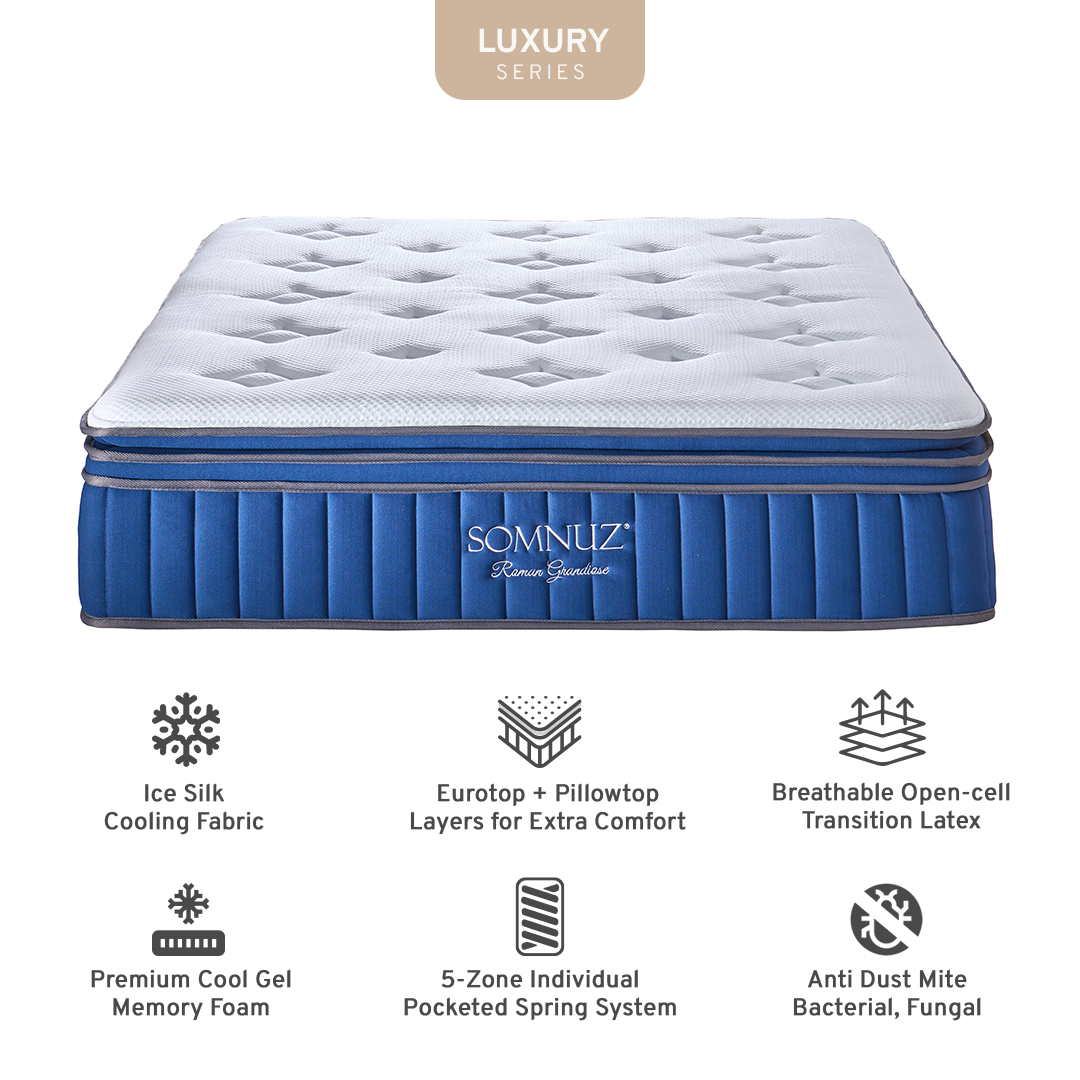
For back care, this independent response is more effective than a single interconnected spring system where pressure in one area pulls the surrounding area down too. The Somnuz pocketed spring collection is built on this principle, and it is worth comparing against foam-only options if spinal support is your main concern.
Zoned Comfort Layers
Some mattresses use different firmness zones across the sleeping surface. The shoulder zone is softer to allow the shoulder to sink in and keep the spine level for side sleepers. The lumbar zone is firmer to fill in the natural gap at the lower back. The hip zone is medium to handle the heaviest contact point without over-sinking.
This kind of construction does more for spinal alignment than a uniformly firm or uniformly soft mattress because it accounts for the fact that different parts of the body need different levels of give.
Latex Comfort Layer
Natural latex has a responsive quality that supports without enveloping. It fills the gap at the lower back without letting the hips sink deeply through it. For back sleepers especially, a latex comfort layer on top of a pocketed spring base provides consistent lumbar support through the night.
The Somnuz Comforto Latex Pocketed Spring Mattress combines individually pocketed springs with a latex comfort layer, which addresses back support from both directions. The spring core handles adaptive response across zones and the latex layer provides the surface contouring needed to maintain spinal position.
Memory Foam
Memory foam provides deep body contouring and redistributes pressure across a wide contact area. For side sleepers with lower back pain, this can help by supporting the shoulder and hip simultaneously and keeping the spine level. For back sleepers, it works well in medium firmness where it fills the lumbar gap without allowing the hips to sink too far.
The trade-off with memory foam is heat retention, which is a real consideration in Singapore's climate. Gel-infused versions sleep cooler. The Somnuz Memory Foam Mattress is worth looking at if foam contouring suits your sleep needs.
Firmness and Sleeping Position
Back sleepers do best on a medium to medium-firm surface. The hips need a little give, the lower back needs support, and the shoulders are a less critical pressure point in this position.
Side sleepers need more cushioning at the shoulder and hip to keep the spine level. A medium surface is often better than a firm one, because firm surfaces create a straight line that does not account for the width of the shoulder pushing the torso upward.
Stomach sleepers put the most strain on the lumbar region because the pelvis tends to sink and arch the lower back. A firmer surface reduces how far the pelvis sinks. Stomach sleeping is not ideal for back pain regardless of mattress choice, but a firmer mattress makes it less problematic.
Body weight also shifts the effective feel of any mattress. A heavier person will compress further into the same mattress than a lighter person on the same materials. A medium-firm that feels right to a lighter sleeper may feel too firm to a heavier one.
What to Avoid
Very soft mattresses feel comfortable in the showroom for five minutes and then cause problems during hours of sustained pressure. The sinking feel that seems luxurious briefly becomes a source of spinal strain overnight.
Old mattresses that have developed body impressions or sagging are a back problem regardless of how good they were originally. A body impression is a permanent deformation in the mattress that forces the spine into whatever shape was worn in. No amount of topper will fix this properly.
Mattresses marketed purely on the back care or orthopaedic label without any information about what is actually inside them are a reason to look elsewhere. Genuine back support comes from construction, not terminology.
Where to Start
The full Somnuz mattress collection covers options across pocketed spring, latex, and memory foam in different firmness levels. The Premium Series provides a clear mid-range benchmark of quality, and the Luxury Series covers higher-build options for those who want more refined materials. If you are comparing based on back care needs specifically, the Natural Latex Mattress collection and the pocketed spring range are the most relevant starting points.
Final Thoughts
A back care mattress is not a category defined by a label. It is defined by how well the mattress keeps your spine in its natural position while you sleep. Individually pocketed springs, quality comfort layers, appropriate firmness for your sleeping position, and the absence of sagging or body impressions are the real indicators. Focus on those and you will find something that actually helps your back, regardless of what the marketing says.