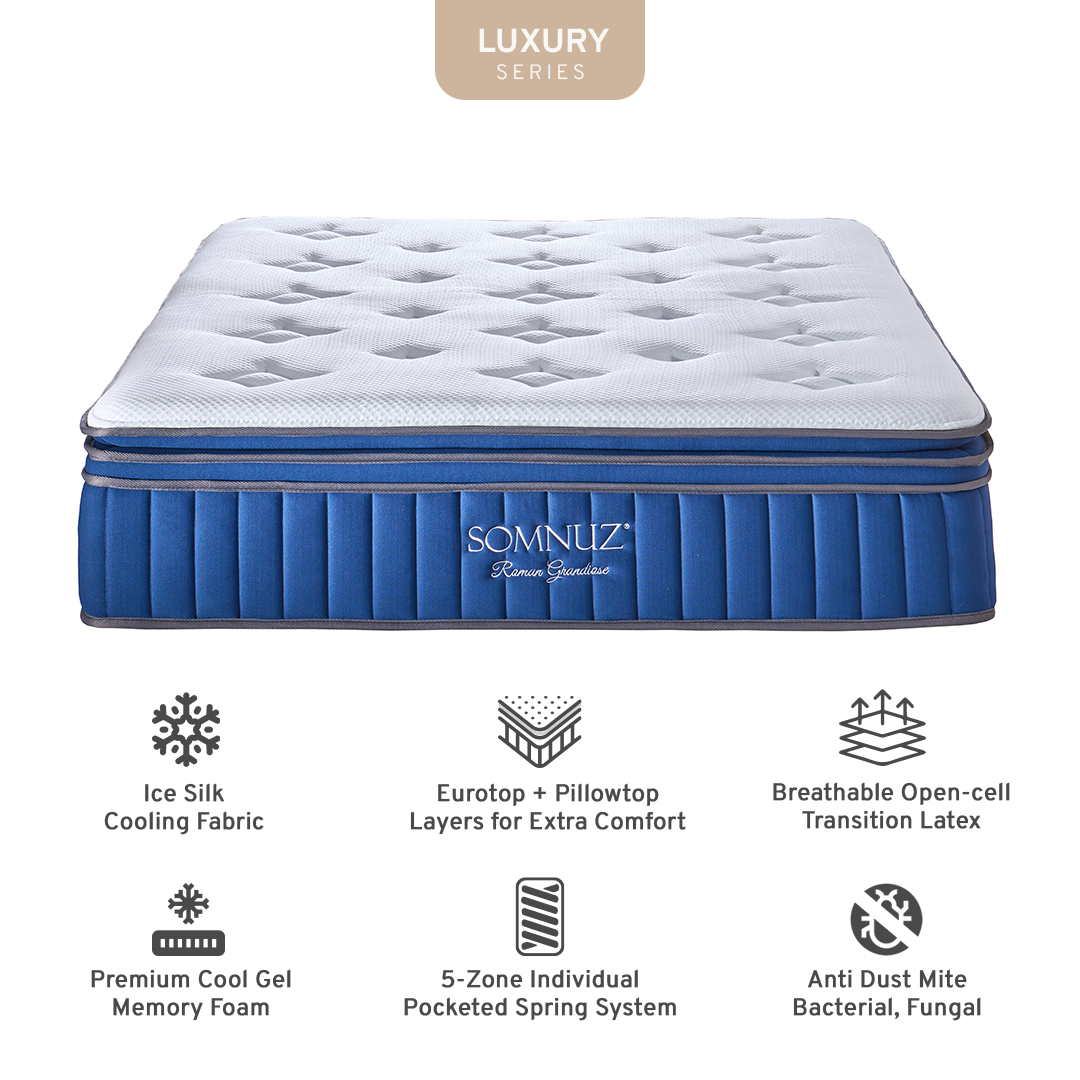


A mattress cover is one of the simplest and most practical investments you can make in the life of your mattress. It sits between you and the mattress surface, protecting the materials beneath from moisture, dust, and everyday wear without changing the way the mattress feels to sleep on.
For a super single mattress, finding the right cover requires a little more attention to sizing than it does for more common dimensions. The super single falls between a single and a queen on the size scale, and not every retailer stocks covers designed specifically for it.
This guide explains what to look for in a super single mattress cover, how to confirm the right fit, what materials work best in Singapore's climate, and how a good cover contributes to the long-term comfort and condition of your mattress.
What Is a Super Single Mattress Cover and What Does It Do?
A mattress cover sometimes called a mattress protector is a removable layer that fits over the top and sides of your mattress. Its primary role is protective: it creates a barrier between the mattress and the things that accumulate on any sleeping surface over time.
In practice, a good mattress cover guards against:
-
Perspiration and body moisture, which can penetrate the mattress surface and create conditions for mould or mildew a particular concern in Singapore's humidity.
-
Dust and dust mites, which accumulate in mattress materials over time and can affect air quality in the sleeping environment.
-
Accidental spills, which without a protective layer can soak through the surface and cause permanent staining or material damage.
-
General wear and surface soiling, which gradually affects how the mattress looks and smells even when it cannot be seen directly.
A mattress cover does not change the firmness or support of the mattress beneath. A well-chosen cover is thin enough that you barely notice it is there, while still doing its protective work every night.
Beyond protection, a cover also makes the sleeping environment easier to maintain. Rather than attempting to clean a mattress directly which is difficult and often ineffective you can simply remove the cover and wash it regularly, keeping the sleeping surface fresh with minimal effort.
Super Single Mattress Dimensions: Getting the Sizing Right
Sizing is the most important practical detail to confirm before purchasing a super single mattress cover. A cover that is even slightly too small will not fit properly, while one that is too large will bunch or shift during sleep.
A standard super single mattress in Singapore is typically 107 cm x 190 cm (approximately 42 x 75 inches). This is wider than a single mattress (91 cm x 190 cm) but narrower than a queen (153 cm x 190 cm), which means it occupies a size range that not all bedding brands cater to directly.
What to check before buying
Before purchasing a mattress cover, confirm the exact dimensions of your super single mattress not all super single mattresses are identical, and slight variations between brands do exist. Measure the length and width of the sleeping surface, and also check the depth (height) of the mattress.
Mattress covers are designed with a pocket depth the measurement that determines how deep the cover's fitted skirt extends to hold it securely in place. A cover with a pocket depth that is too shallow will not stay on a deeper mattress; one with a pocket depth that is too generous will leave excess fabric bunching under the mattress edges.
As a general guide, look for a cover with a pocket depth of at least 25 to 30 cm to accommodate most mattress heights comfortably, including those with a topper in place. If your mattress is particularly deep or you use a mattress topper, check the stated pocket depth carefully before ordering.
Super single vs single: why it matters
It is easy to mistake a super single cover for a single, particularly when browsing online. The 16 cm width difference between the two sizes is enough to make a single cover too narrow for a super single mattress meaning it will not stretch properly across the full surface and may pull off during the night.
Always confirm the listed dimensions of any cover before purchasing, and if you are ordering online, check the product specifications rather than relying on size labels alone.
Mattress Cover Materials: What Works Best in Singapore
Material choice has a significant effect on how comfortable a mattress cover feels and how well it performs in Singapore's warm, humid climate. The same cover that works well in a temperate country may feel uncomfortably warm here if the fabric does not breathe adequately.
Cotton and cotton-blend covers
Cotton is one of the most widely used materials for mattress covers and for good reason. It is soft against the skin, breathable, and easy to wash and dry. A cotton or cotton-blend cover allows reasonable airflow across the sleeping surface, which helps keep the bed feeling cooler and more comfortable on warm nights.
Percale-weave cotton covers tend to be particularly breathable and have a cool, crisp feel that many sleepers prefer in a warm climate. Sateen weaves are softer and slightly smoother but trap a little more warmth still comfortable, but worth considering if you run warm at night.
Bamboo-derived fabric covers
Covers made from bamboo-derived fabric such as bamboo viscose or bamboo rayon have become popular in Singapore for their naturally soft texture and moisture-wicking properties. Bamboo-derived fabrics are generally good at drawing moisture away from the skin surface, which can help keep the sleeping environment drier and more comfortable in humid conditions.
They tend to be lightweight and breathable, making them a practical choice for Singapore's climate. They are also relatively gentle on sensitive skin.
Waterproof and water-resistant covers
If protection against moisture is a priority for a child's bed, for someone who perspires heavily during sleep, or for a mattress in a room that experiences high humidity a waterproof or water-resistant cover adds an important additional layer of protection.
The key consideration with waterproof covers is breathability. Some older or lower-quality waterproof covers use a plastic or vinyl backing that creates a warm, uncomfortable sleeping surface. Look instead for covers with a breathable waterproof membrane typically a thin polyurethane layer which provides moisture protection without trapping body heat.
A good waterproof cover should feel like a regular fabric cover on the surface while providing full protection beneath. If the cover crinkles audibly when you move or feels noticeably warm, it is likely not breathable enough for comfortable everyday use in Singapore.
Tencel and microfibre covers
Tencel (lyocell) is a plant-based fabric known for its smooth texture, breathability, and moisture management. It tends to feel cool against the skin and washes well, making it a reliable option for humid climates. Microfibre covers are soft and relatively affordable, though they vary considerably in quality look for a tightly woven microfibre with a smooth finish for the best results.
Key Features to Look For in a Super Single Mattress Cover
Beyond sizing and material, there are a few practical features worth checking before you buy:
Secure fit mechanism
A fitted cover should stay in place throughout the night without shifting or bunching. Look for covers with deep elasticated corners or a full elasticated skirt around the entire perimeter of the base. A cover that fits well when first put on but shifts gradually during sleep will need frequent readjustment and provides less reliable protection over time.
Some covers use anchor straps or tie-down loops at the corners for additional security. These can be useful on very deep mattresses or in households where the bed is used actively for example, in a child's room.
Washability
A mattress cover does its job most effectively when it is washed regularly. In Singapore's climate, washing the cover every two to four weeks is a reasonable routine for most households. Check the care label before purchasing to confirm the cover can be machine washed comfortably and that it dries well covers that must be dry-cleaned or that take a long time to dry are less practical for regular maintenance.
Covers that lose their shape, shrink, or delaminate (where the waterproof layer separates from the fabric) after a few washes are not good long-term value, regardless of the upfront price.
Hypoallergenic properties
For sleepers with allergies or sensitivities, a cover with hypoallergenic properties provides an additional layer of reassurance. Covers with a tightly woven fabric construction help limit the passage of dust mites and allergens through to the mattress surface, which can make a practical difference to air quality in the sleeping environment over time.
Noise
A cover that rustles or crinkles every time you move can be surprisingly disruptive to sleep particularly for lighter sleepers. If noise is a concern, look for covers described as silent or noise-free, and be cautious of waterproof options that use a stiff backing material. The best waterproof covers are genuinely quiet in use.
How a Mattress Cover Protects Your Investment
A mattress is a considered purchase, and a good cover is one of the most practical ways to protect that investment over its full lifespan.
Moisture is the primary cause of mattress degradation in Singapore's climate. Perspiration even in moderate amounts works its way into mattress materials over time, creating conditions that can affect hygiene, material integrity, and how the mattress smells. A breathable, moisture-resistant cover manages this consistently every night without requiring any active effort beyond regular washing.
Dust mite accumulation is another practical concern. Mattresses that are not covered build up dust mite populations in the materials over time, which can contribute to disrupted sleep and poor air quality in the bedroom particularly for children and anyone with sensitivities. A close-fitting cover limits this accumulation and makes it much easier to maintain a cleaner sleeping environment.
Many mattress warranties also specify that the mattress must be used with a protector for the warranty to remain valid in the event of staining or moisture damage. If you have invested in a quality super single mattress, a cover protects not just the mattress itself but your right to warranty support if anything does go wrong.
If you have recently purchased a super single mattress or are considering one our mattress collection includes options designed with breathable materials and durable construction suited to Singapore's climate.
Fitted Sheet vs Mattress Cover vs Mattress Protector: What Is the Difference?
These terms are sometimes used interchangeably, but they refer to slightly different things:
Fitted sheet: A sheet that fits over the mattress surface to create a comfortable sleeping layer. A fitted sheet provides minimal protection to the mattress itself it is primarily a comfort layer and is changed frequently. It does not protect against moisture penetrating the mattress.
Mattress cover or mattress protector: A protective layer designed to sit beneath the fitted sheet. Its primary role is to protect the mattress from moisture, dust, and wear. A good mattress cover is thin enough that it does not significantly affect the feel of the bed but provides meaningful protection to the mattress beneath. The terms 'cover' and 'protector' are largely interchangeable.
Mattress topper: A thicker comfort layer typically 3 to 10 cm deep designed to change how the mattress feels rather than primarily to protect it. A topper adds cushioning or adjusts firmness. It is not a substitute for a mattress protector, and a mattress protector is often used on top of a topper to protect it as well.
For most everyday use, you need a mattress cover or protector beneath your fitted sheet. If you also use a topper, a separate cover for the topper is worth considering to protect that layer too.
Frequently Asked Questions
What size is a super single mattress cover in Singapore?
A super single mattress cover in Singapore is designed to fit a mattress measuring 107 cm x 190 cm (approximately 42 x 75 inches). This is wider than a standard single (91 cm) but narrower than a queen (153 cm). Always confirm the stated dimensions of any cover before purchasing, and check the pocket depth to ensure it accommodates the height of your mattress comfortably.
Can I use a single mattress cover on a super single mattress?
No. A single mattress cover at 91 cm wide is too narrow to fit a super single mattress properly. It will not stretch fully across the surface, and it will not stay in place securely during sleep. Always use a cover sized specifically for a super single mattress.
What is the best mattress cover material for Singapore's climate?
For Singapore's warm, humid climate, breathable materials are the priority. Cotton, bamboo-derived fabric, and Tencel covers all offer good breathability and moisture management. If waterproofing is important, look for covers with a breathable polyurethane membrane rather than a stiff plastic or vinyl backing these provide moisture protection without trapping body heat or creating an uncomfortable sleeping surface.
How often should I wash a super single mattress cover?
In Singapore's climate, washing your mattress cover every two to four weeks is a practical routine for most households. If the cover is used on a child's bed, or if the sleeper perspires heavily or has allergies, more frequent washing every one to two weeks is reasonable. Always follow the care label instructions to preserve the fabric and any waterproof membrane.
Does a mattress cover affect how firm or soft the mattress feels?
A well-chosen mattress cover is thin enough that it has very little effect on the feel of the mattress beneath. A standard protective cover should be barely noticeable in use. Thicker quilted covers can add a slight softness to the surface, but they are not a substitute for a mattress topper if you are looking to meaningfully change the comfort feel of your mattress.
Should I use a mattress cover if my mattress already has a removable cover?
Yes. Most mattresses come with a built-in cover that contributes to the comfort feel of the surface, but these covers are not designed to be removed and washed regularly. A separate mattress protector sits beneath your fitted sheet and over the mattress's built-in cover, providing the washable protective barrier that keeps the mattress clean and well-maintained over its full lifespan.
Protect Your Mattress and Sleep More Comfortably
A super single mattress cover is a simple addition that makes a meaningful difference to how long your mattress stays comfortable, hygienic, and in good condition. Getting the sizing right, choosing breathable materials suited to Singapore's climate, and washing it regularly are all it takes to keep your sleeping environment fresh night after night.
If you are also thinking about your super single mattress itself whether you are replacing an older one or choosing for the first time our team is here to help you find the right fit.
Explore our mattress range to see the options available, or visit our mattress showroom in Singapore to try the range in person and get guidance from our team before you decide.