

Waterbeds had their moment of popularity in the 1970s and 1980s and then faded from mainstream bedroom design. They are still made and sold, and they still have genuine advocates, but they are far less common than they once were. If you are curious about whether a waterbed mattress is worth considering, or if you have come across one and want to understand what it actually involves, this article covers the essentials.
What Is a Waterbed Mattress?
A waterbed mattress replaces conventional foam and spring construction with a water-filled chamber as the primary support medium. The sleeper rests on a vinyl or polyvinyl surface filled with water, which displutes body weight across the surface differently from any other mattress type.
There are two main categories. Hard-side waterbeds use a rigid wooden frame that contains a large water bladder. The frame itself is the bed structure. Soft-side waterbeds look more like a conventional mattress in a fabric casing and can fit into a standard bed frame. The soft-side design is more practical for modern bedrooms and accounts for most waterbed sales today.
Within these categories, waterbeds also come in free-flow and waveless versions. Free-flow means the water moves freely when the sleeper moves, creating the wave motion traditionally associated with waterbeds. Waveless versions use fibre fill layers inside the water chamber to dampen movement significantly, making them more suitable for uninterrupted sleep.
What Are the Claimed Benefits?
Waterbed proponents point to a few specific advantages. The water surface distributes body weight across a larger area than a conventional mattress, which can reduce pressure at the hips and shoulders. Heat adjustment is another claimed benefit: the water can be temperature-controlled, meaning a cold winter or warm summer night can be accommodated by adjusting the water temperature rather than adding or removing bedding.
For certain medical conditions, particularly those involving pressure sensitivity or circulatory issues, the even weight distribution of a waterbed has historically been cited by some practitioners as beneficial. Whether this applies to a given individual's situation is something to discuss with a healthcare provider rather than rely on general marketing claims.
What Are the Practical Challenges?
Weight is the most significant logistical issue. A fully filled king-size waterbed can weigh over 500 kg. Most residential buildings in Singapore are structurally capable of handling this, but it is worth confirming, especially in older HDB blocks or on upper floors where load-bearing considerations apply.
Heating costs add to the running expense. A waterbed heater runs constantly to maintain water temperature, adding to electricity consumption. In Singapore's warm climate, the heater is needed less than in colder countries, but it is still a consideration.
Leaks, while not common in well-maintained waterbeds, are a real risk. A slow leak in a hard-side waterbed can damage flooring and structure before it is noticed. A fast leak is immediately obvious but significantly more disruptive.
Filling and draining requires a pump and access to a water source. Repositioning a waterbed involves completely emptying it, moving the frame and bladder, and refilling it. This is a much bigger undertaking than moving a conventional mattress.
Who Uses Waterbeds Today?
The waterbed market today is niche. It serves people with specific sleep comfort needs who have found conventional mattresses unsatisfying, enthusiasts who prefer the feel for its own sake, and some specialist medical applications.
For most Singapore households looking for a comfortable and supportive sleep surface, a well-constructed conventional mattress provides the same pressure distribution benefits with considerably less logistical complexity.
What to Consider Instead
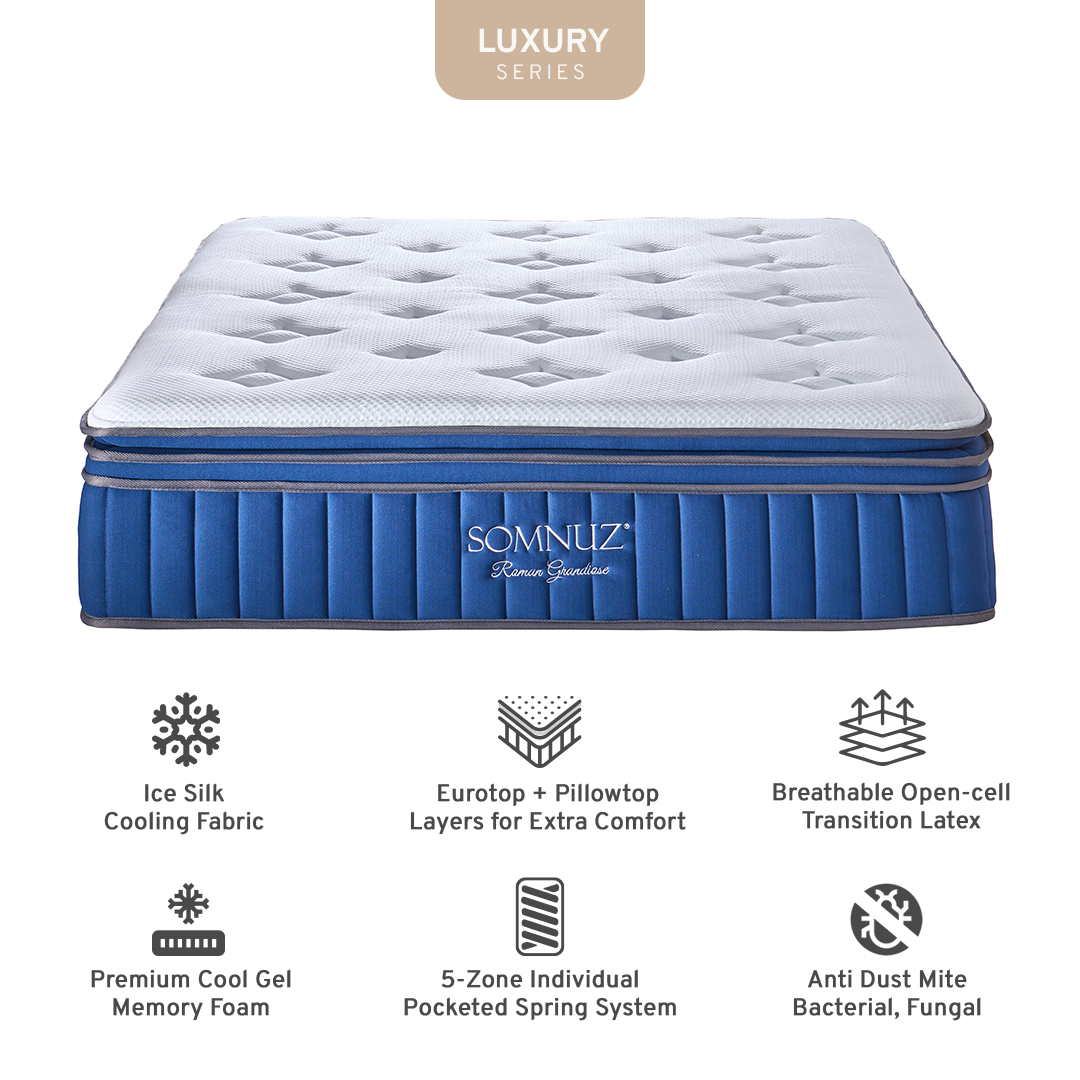
The pressure-relieving benefits often associated with waterbeds are achievable through modern mattress construction without the weight, leaking risk, and maintenance requirements. Natural latex mattresses offer buoyant pressure distribution across the body. Memory foam provides deep body contouring. Pocketed spring mattresses with quality comfort layers adapt to body contours independently across different zones.
For shoppers drawn to waterbeds primarily for pressure relief, the Natural Latex Mattress collection at Somnuz is worth exploring. Latex has a similarly buoyant, enveloping quality without the maintenance overhead. The Somnuz Comforto Latex Pocketed Spring Mattress adds a pocketed spring base for additional support and breathability.
For those whose interest is in temperature control during sleep, the adjustable bed collection at Somnuz covers beds with adjustable bases that offer other comfort features, and pairing those with breathable latex or pocketed spring mattresses addresses warmth concerns without water.
Final Thoughts
A waterbed mattress is a genuine product with specific benefits for specific users. For most Singapore households, the weight, maintenance requirements, and practical complexity make it a less attractive option than modern conventional mattresses that achieve similar pressure distribution through foam and spring technology. If you are curious about the feel, the soft-side waveless version is the most accessible entry point. If you are looking primarily for pressure relief or spinal support, modern latex and pocketed spring options are worth comparing first.