

A king size mattress topper can genuinely change how your bed feels to sleep on, or it can sit on top of your mattress doing very little. The difference usually comes down to choosing the right type and thickness for what you actually need.
This article covers the main topper materials, what thickness makes sense for different situations, and what to watch out for before buying.
What a Mattress Topper Does
A mattress topper adjusts the surface feel of your existing mattress. If your mattress is too firm, the right topper softens it. If it is too warm, a breathable topper can help manage heat. If you are dealing with pressure discomfort at the hips or shoulders, a contouring topper can take the edge off.
What a topper cannot do is fix a mattress that has structurally given out. If the core of your mattress has sagged or collapsed, a topper will simply follow those contours. In that case, replacing the mattress is the only real solution.
Toppers work best as upgrades or adjustments to a mattress that still has solid underlying support.
Material Options for a King Size Topper
Memory Foam
Memory foam is the most popular topper material because it is widely available and noticeably changes the feel of a firm mattress. It compresses under body weight and slowly recovers, which provides that body-hugging feel that relieves pressure at contact points.
The downside is heat. Dense memory foam holds body warmth. In Singapore's climate this can become uncomfortable, particularly in a room that does not get very cool at night. Gel-infused memory foam manages this better than standard foam, but latex tends to sleep cooler overall.
Latex
Latex toppers feel more responsive than memory foam. Instead of sinking and slowly recovering, latex pushes back against the body. This buoyant quality suits people who find memory foam too enveloping, and latex also sleeps noticeably cooler due to its open-cell structure.
Natural latex toppers tend to last longer than synthetic alternatives and hold their shape better over time. For a king size bed, where the topper spans a large surface area and sees heavy daily use, quality latex holds up better than cheaper foam options.
Wool and Down
Wool and down toppers add softness and insulation. They are not particularly suited to Singapore's warm climate for year-round use but can suit air-conditioned rooms that run very cold at night. They do not offer much structural cushioning compared to foam or latex.
Polyfoam
Polyfoam toppers are the most affordable option. Higher-density polyfoam holds its shape reasonably well and provides a moderate improvement in comfort. Low-density polyfoam is cheap for a reason. It compresses quickly and loses most of its effect within a few months.
If budget is a concern, mid-density polyfoam is serviceable. For a king size topper that you plan to use for several years, latex or quality memory foam is a better investment.
Which Thickness Is Right?
Two inches makes a subtle difference. It softens a firm surface slightly and adds a small layer of cushioning. Good if your mattress is mostly comfortable but just a touch too firm.
Three inches is the most commonly recommended thickness. It makes a meaningful change to how the mattress feels and provides noticeable pressure relief. This is the thickness most people end up satisfied with.
Four inches significantly transforms the feel of the mattress. This is the right choice if the mattress is quite firm and you want a substantial softening effect. At this thickness, make sure the topper has a non-slip base or is secured with a cover that holds it in place, because a thick topper on a large bed can shift around.
Sizing a Topper for a King
Always match the topper to your exact mattress dimensions. Singapore king sizes are typically 183 x 190 cm or 183 x 200 cm. A topper in the wrong length will leave exposed mattress at the foot, which looks untidy and means your feet land on a different surface.
Check the listed dimensions on the product carefully, not just the size label. King in one country is not king in another.
Keeping It in Place
King size toppers cover a large surface area and can migrate over the course of a night without something holding them. A fitted topper cover that wraps around both the topper and the mattress is the most secure solution. Straps that hook under the mattress corners also work but can lose tension over time.
When to Consider the Mattress Instead
If your mattress is older than 8 to 10 years, or if it has visible body impressions or sagging, a topper is not the right solution. You are better served investing in a new mattress that provides the right support from the core up.
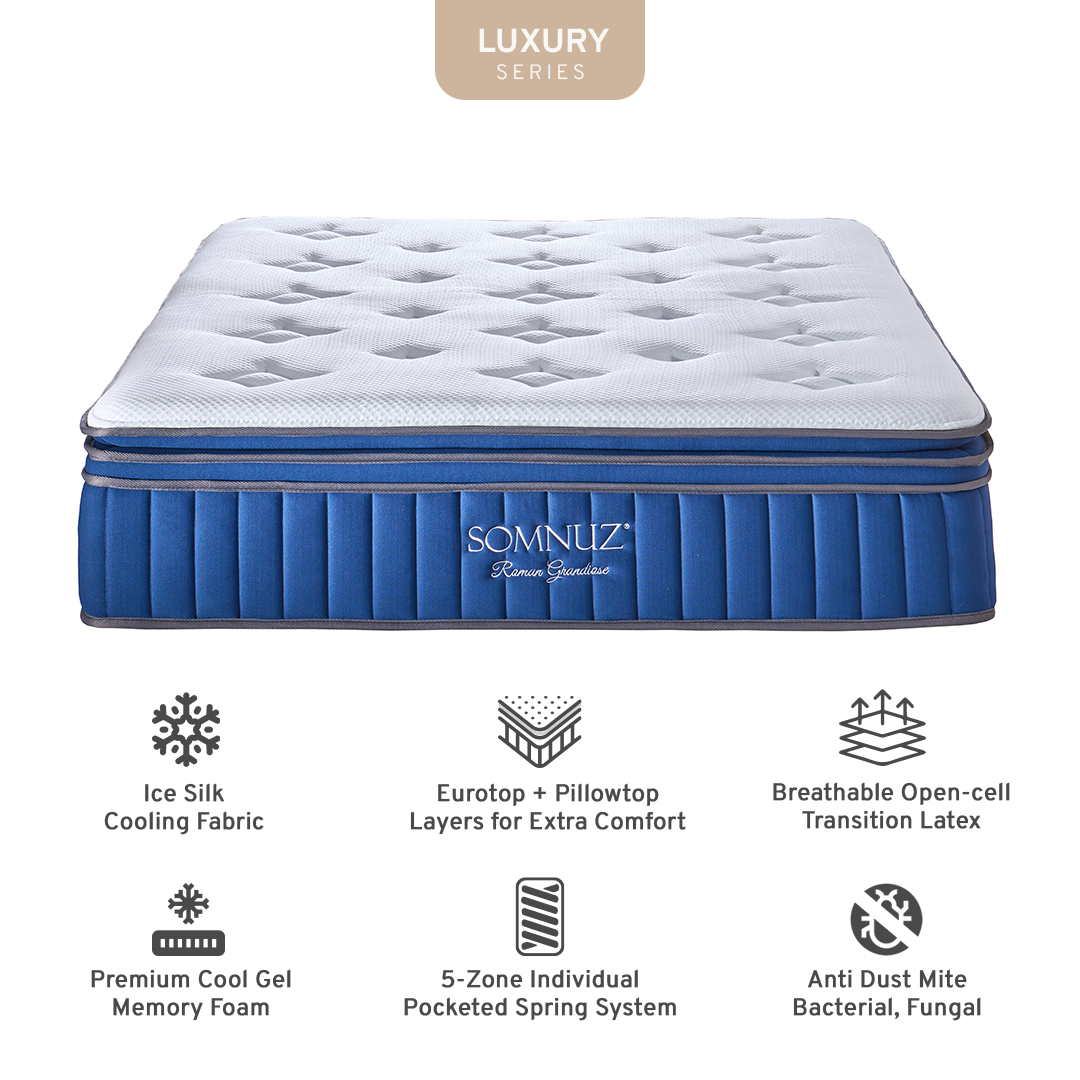
The Somnuz mattress collection covers king size options in pocketed spring, memory foam, and latex. If you are at the point where the mattress needs replacing, the Somnuz Comfy Pocketed Spring Mattress and the Comforto Latex Pocketed Spring Mattress are both strong options at the king size.
Final Thoughts
A king size mattress topper is a practical upgrade when the underlying mattress still has good structural support. Choose memory foam if you want pressure relief and body contouring. Choose latex if you want a cooler, more responsive feel. Match the thickness to how much change you want, and make sure the dimensions match your mattress exactly.
If you are sharing the king with a partner, keep breathability in mind. A mattress topper that sleeps warm is noticed more in a shared bed because there is double the body heat involved.